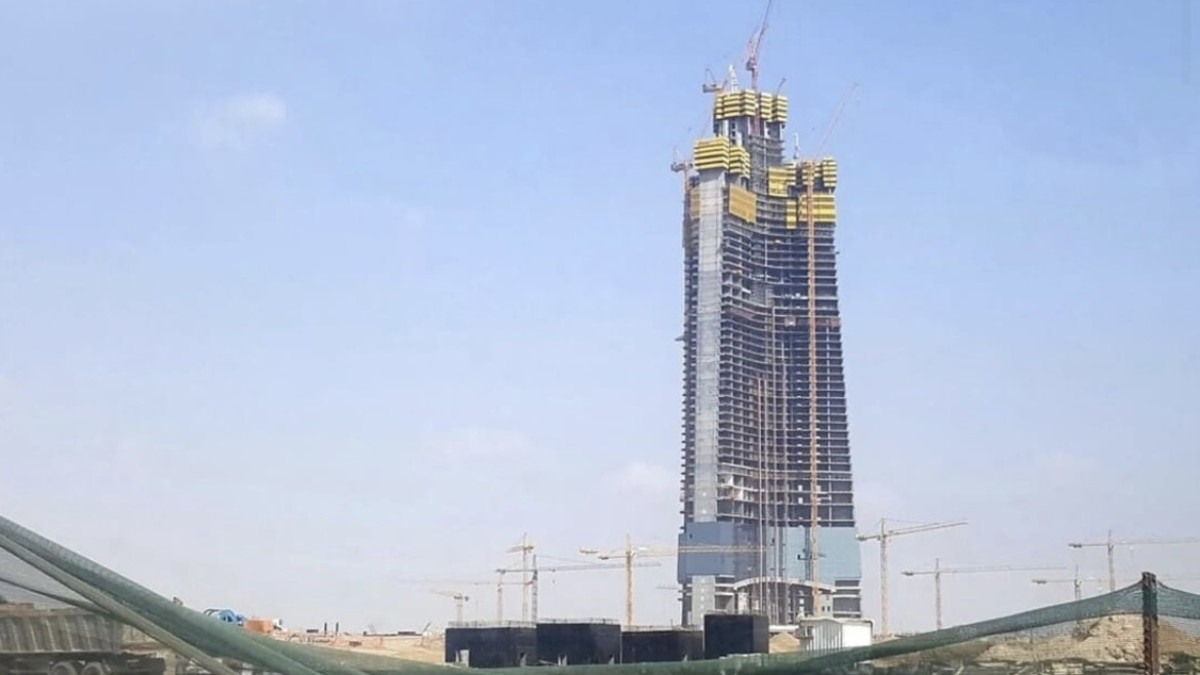
World’s first kilometer-tall skyscraper Jeddah Tower set to complete by 2028

EL.KZ Информационно-познавательный портал
The skyscraper is projected to be completed by 2028, overtaking Dubai’s Burj Khalifa as the world’s tallest building, El.kz cites interestingengineering.com.
This isn’t just any other skyscraper. It’s a serious attempt to build a kilometer-high structure, a milestone that engineers have dreamed about for decades.
When finished, it will dwarf Dubai’s current record-holder, the Burj Khalifa, by approximately 180 meters (591 feet), serving as the centerpiece of a $20 billion Jeddah Economic City development project.
The dream for building the tower began with grand ambitions. Originally known as the Kingdom Tower, it is destined to symbolize Saudi Arabia’s modernization and economic transformation. Adrian Smith of Adrian Smith + Gordon Hill Architecture is the main designer for this project – the same genius who plied his trade to design the Burj Khalifa.
Smith’s vision is strongly based on nature itself. The tower’s form resembles folded fronds of young desert plant growth, with a slender, subtly asymmetrical profile evoking a bundle of leaves shooting up from the ground.
The three-petal footprint arranged in a Y-shape isn’t just for aesthetic purposes. It was designed for aerodynamic efficiency, crucial for a structure facing intense winds at such unprecedented heights.
Then came the setback that nearly killed the dream. From 2018 to 2023, construction came to a halt.
But kingdoms don’t abandon their crown jewels easily.
In January 2025, construction officially resumed with renewed vigor. The Saudi Binladin Group, Dar Al-Handasah, and Turner Construction took over the project, bringing fresh expertise and resources.
As of September 2025, the tower has reached its 70th floor, with construction crews completing approximately one floor every four days – a pace that puts the 2028 completion target within reach.
Engineering the impossible
Building a kilometer-high tower isn’t just about stacking concrete and steel. It requires solving engineering challenges that have never been faced before.
The foundation alone is a marvel of engineering and a big challenge: a hybrid piled raft system featuring 270 piles ranging from 1.5 to 1.8 meters in diameter, extending up to 105 meters (344 feet).
The 5-meter thick raft foundation spans 3,200 sq.m and is designed to handle massive loads with differential settlement not exceeding 25mm – about the thickness of a quarter.
Unlike traditional skyscrapers that rely on outriggers and belt walls for stability, the Jeddah Tower employs a revolutionary buttressed core system with three wings flanking a tight hexagonal central core of high-performance concrete. The innovative design eliminates the need for complex structural elements using only 85 MPa concrete strength.
Perhaps most impressive is the vertical concrete-pumping technology that has already reached a height of 2,624 feet – an engineering milestone. Moving people up and down this vertical city requires 59 elevators, including five double-deck elevators capable of traveling, along with multiple escalators and sky lobbies.
The building also incorporates cutting-edge sustainable technologies, including high-performance glazing to reduce heat absorption, energy-efficient systems throughout, rainwater harvesting, and greywater recycling systems.
The tower’s orientation and tapering shape are specifically optimized to minimize solar heat gain, which is crucial for the challenging Saudi Arabian climate.
To understand why Saudi Arabia is building this tower, you need to know more about Vision 2030 – the kingdom knows it needs to diversify its economy before the oil wells run dry.
Vision 2030 aims to transform Saudi Arabia into a global hub for e-commerce, tourism, and cultural exchange. The Jeddah Tower isn’t just a building in this plan – it’s a beacon, designed to announce to the world that Saudi Arabia is open for business in ways it never has been before.
The tower will house a Four Seasons luxury hotel occupying floors 19-27, offering 200 rooms with exceptional views of the Red Sea. Premium residential apartments and luxury condominiums will fill multiple floors, while Class A office spaces are designed to attract international businesses.
But the crown jewel will be the world’s highest observation deck at 644 meters (2,112 feet), providing panoramic 360-degree views that will undoubtedly become one of Earth’s most photographed vantage points.

El recommends 
