Wine, VAT e-invoices for non-residents, public procurement and the electricity market
Алима Муслиманова Журналист El.kz
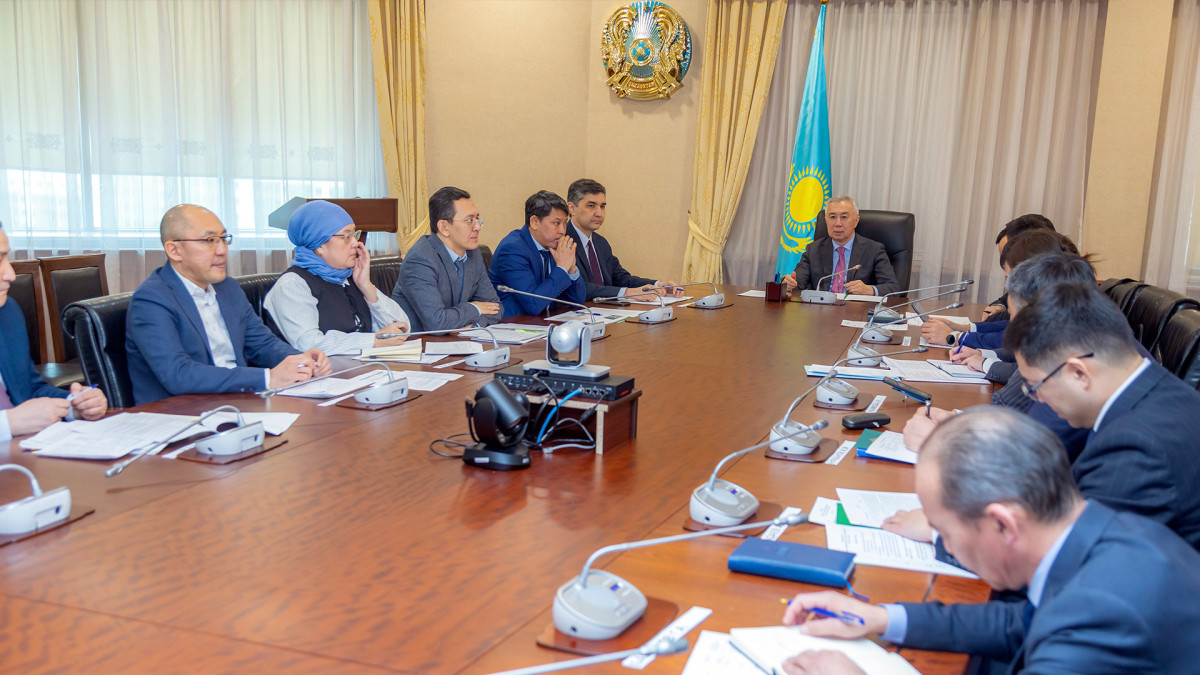
At the 9th meeting of the Project Office for the implementation of the Tax Code, chaired by Deputy Prime Minister – Minister of National Economy Serik Zhumangarin, another set of issues related to the application of new tax provisions and upcoming legislative changes within the Eurasian Economic Union was considered, El.kz cites primeminister.kz.
One of the key issues concerns discussions at the EAEU platform on the draft new EAEU technical regulation on the safety of alcoholic products. Under this regulation, fruit wines produced not from grapes but, for example, from apples or pears, will no longer fall into the category of wines. If the regulation is adopted, fruit wines will move into a category of products subject to higher excise duties.
The provisions of the technical regulation have been discussed by industry experts from EAEU member states for several years. At the meeting of the Project Office, participants reviewed possible support measures for domestic producers in the event that the new technical regulation is adopted. A preliminary decision has been made to set the excise duty at the level applied to wines not only for products made from grapes but also for wines produced in the country from other fruits through natural fermentation without the addition of alcohol.
At the same time, in order to prevent potential grey schemes, control by supervisory authorities over the production of fruit wines will be strengthened. The implementation of this decision will require amendments to the Tax Code, but only after Kazakhstan adopts the technical regulation. Therefore, this issue has been included in the list of systemic issues and will be taken into account in a package of future amendments.
E-invoices when paying VAT for a non-resident
The Project Office meeting also considered the application of a new provision of the Tax Code regarding the deadlines for issuing electronic invoices (ESF) when paying VAT for a non-resident.
The current provision requires that an ESF for VAT paid on behalf of a non-resident be issued no later than five calendar days after the VAT payment. However, in practice businesses have encountered administrative difficulties, including cases where an overpayment of VAT for a non-resident already exists in the personal account.
Following discussions with business representatives and the National Chamber of Entrepreneurs Atameken, it was decided to simplify the mechanism. An ESF for VAT paid for a non-resident will be issued by the recipient of services (the VAT payer) no later than 15 calendar days from the date of the transaction involving the acquisition of services from a non-resident. At the same time, the offsetting of VAT amounts will be carried out based on the date of payment of VAT for the non-resident.
As noted by Deputy Chairman of the State Revenue Committee Zhanybek Nurzhanov, this logic can be implemented in tax information systems and is supported by business representatives.
In response to a question from a representative of the National Chamber of Entrepreneurs “Atameken” regarding the application of administrative penalties for the untimely issuance of ESFs for non-residents following the results of the first quarter of 2026, it was noted that no penalties will be applied by the tax authorities. In addition, the requirement to issue ESFs for non-residents will not apply to transactions for acquisitions made in the fourth quarter of 2025.
The relevant amendments are planned to be introduced into the Tax Code retrospectively, with the date of application set as 1 January 2026. The State Revenue Committee will provide detailed explanations regarding the application of this provision of the Tax Code.
Tax Code and public procurement
The meeting of the Project Office also clarified upcoming changes related to public procurement and procurement in the quasi-public sector. The provisions of the Tax Code will remain unchanged. Amendments will be introduced to procurement rules by authorized bodies, bringing them in line with the Tax Code in terms of limiting deductions for taxpayers operating under the general tax regime when purchasing goods, works and services from taxpayers applying a special tax regime based on a simplified declaration.
Deadlines for issuing invoices in the electricity market
The Project Office also considered an appeal from the Kazakh operator of the electricity and capacity market – KOREM JSC – and the single buyer Financial Settlement Center for Renewable Energy Sources LLP regarding a revision of the deadlines for issuing invoices.
Taking into account the specifics of the activities of electricity market participants and existing technical regulations, it was decided to further elaborate this issue with all market participants and submit it for reconsideration at a future meeting of the Project Office.
Procedure for tax revenues to the budget
The procedure for the inflow and calculation of taxes to the republican budget was also explained separately. The main sources of revenue for the republican budget are corporate income tax (CIT), value added tax (VAT) and the mineral extraction tax (MET).
CIT is paid monthly by taxpayers making advance payments on CIT no later than the 25th day of the reporting month. In addition, in March–April 2026 CIT revenues are expected based on the results of activities for 2025. Taxpayers who do not make advance payments will pay CIT for 2026 no later than 10 April 2027. Payments of CIT for non-residents may also be received on a monthly basis.
VAT on goods produced, works performed and services rendered in the territory of Kazakhstan must be paid no later than the 25th day of the second month following the reporting period. Thus, on 25 February VAT is paid for the fourth quarter of the previous year, and on 25 May, 25 August and 25 November for the first, second and third quarters of the current year respectively. On 25 February 2026 the deadline falls for payment of VAT for the fourth quarter of 2025.
VAT on imports and VAT for non-residents is paid as obligations arise, that is, either during customs clearance or when acquiring services from a non-resident. MET is paid within timeframes similar to those established for VAT.

El recommends 
