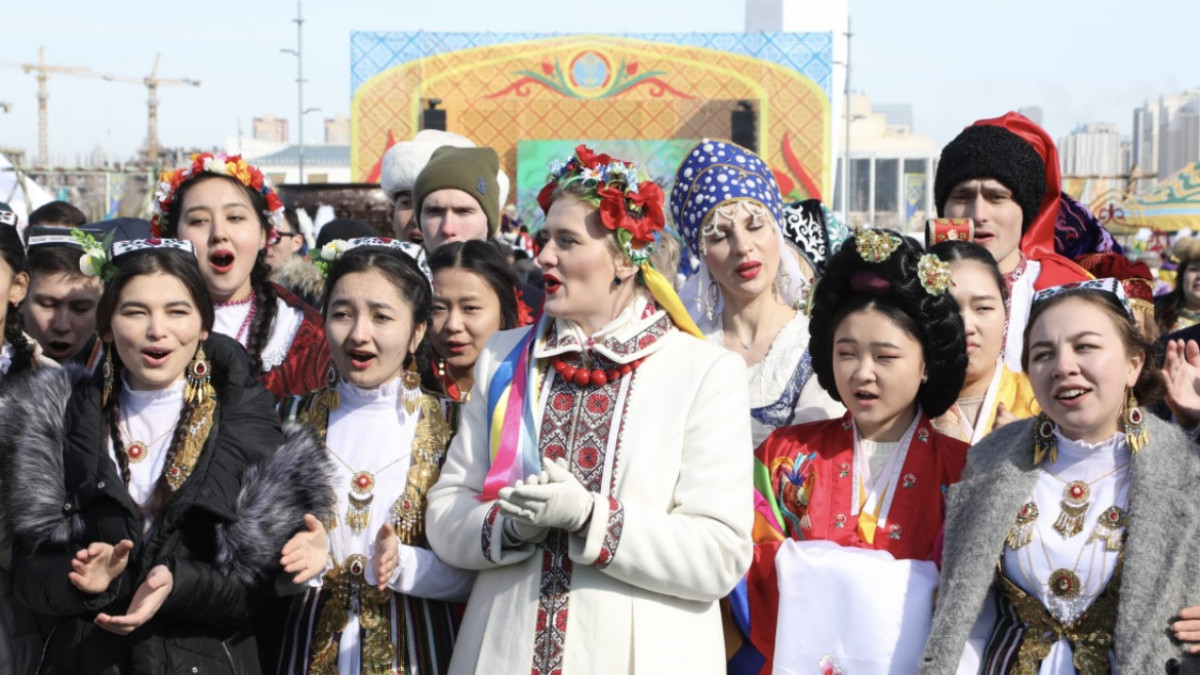
What shapes views of Kazakhstan’s youth on country’s ethnocultural diversity

EL.KZ Информационно-познавательный портал
In Kazakhstan, where dozens of ethnic cultures and traditions intertwine, young people are becoming a key bridge between the past and the future. But how do they perceive ethnocultural diversity? El.kz explored what ethnopolitics means for the younger generation and what role the Assembly of the People of Kazakhstan plays in this process.
Youth in ethnopolitics
At the 34th session of the Assembly of the People of Kazakhstan this year, the Head of State outlined key approaches to preserving unity and harmony amid growing geopolitical tensions. Among the key points were the importance of regional work, consistent promotion of mutual respect and interethnic understanding, and special attention to youth — who play a decisive role in strengthening social cohesion in the future.
“According to focus group studies conducted with young people from different ethnic groups in Southern Kazakhstan in 2024, youth perceive ethnocultural diversity positively, associating it with friendship, respect, and shared land. Many believe that Kazakhstan has already become a unified society where people of various nationalities celebrate and support each other. They often emphasize that ‘there are no bad nations, only bad people,’ and that personal qualities matter more than group identity. At the same time, there is growing concern about provocations on social media and everyday conflicts that can quickly be interpreted as interethnic,” explains Aiman Zhussupova, PhD in Political Science and sociologist at Narxoz University.
In turn, political scientist and co-founder of Astana Open Dialogue Aibek Kumysbekov believes that to engage youth in interethnic policy, more cultural, volunteer, and educational initiatives should be created.
“By order of the Head of State, the national public association Assembly of Youth was established, with regional offices across the country. This is a positive trend. But beyond the organization itself, tools are needed: grant programs, local project support, and educational, volunteer, and cultural initiatives. These approaches gradually reduce the perception of ethnopolitics as a mere formality,” he says.
According to Vladislav Weber, Deputy Chairman of the Board of Trustees of the “Vozrozhdenie” Public Foundation, the lack of youth interest in ethnopolitics often stems from motivation.
“We hold German language courses and organize joint cultural events with other ethnic groups. Over the past year alone, more than 400 events were held for young people, including national camps, training sessions, and club gatherings to discuss new projects. This helps foster respect for one’s ethnic roots as well as a shared identity as citizens of Kazakhstan,” says Weber.
However, he notes, a major challenge remains.
“The main issue is not the lack of opportunities, but the lack of motivation. Today’s generation shows less interest in their history and ethnocultural identity. Concepts like ‘ethnopolitics,’ ‘ethnopsychology,’ and ‘ethno-identity’ are still new and not fully understood by many,” Weber adds.
Digitalization of content
According to Zhussupova, youth are most attracted to large-scale events — sports competitions, festivals, and educational projects that create a sense of unity. Social media is also seen as an effective platform when filled with positive content and stories of mutual support.
“Joint initiatives that demonstrate tangible benefits and personal involvement remain an important resource. The emphasis should be on informal engagement and genuine interest, rather than slogans. Young people see patriotism as action: volunteering, contributing to society, and showing respect for others. Issues of justice and equal opportunity matter deeply — whether it’s nepotism, education quality, or infrastructure gaps, these are often viewed as barriers. The role of informal leaders is especially important, as they shape opinions and can quickly influence youth sentiment,” the sociologist explains.
"Having a presence on social media is crucial — if we don’t have our own messages there, others’ narratives will take over. The key is in the approach, format, and algorithmic reach so that content becomes truly viral. Again, this work shouldn’t turn into a numbers game where the quantity of posts matters more than their quality. We need our own educational platforms that speak to youth about respect and tolerance in clear, relatable ways. There are already leaders within the APK who actively use social media, showcase their civic work, and have credibility among audiences,” he says.
From formality to indifference
Experts emphasize that today’s youth are actively engaged in various socially beneficial projects. However, what often discourages them is the sense of formality — that initiatives exist only “for show.”
“Young people don’t see value in projects that lack real impact or are overly focused on political display. Everyday hardships and distrust of local authorities further reduce interest in such initiatives,” Zhussupova noted.
According to Kumysbekov, youth engagement can be enhanced through communication and peer connections across regions.
“We need to build horizontal connections between young people. Kazakhstan is a vast country, and youth should travel to different regions, meet peers, and see how much they have in common. In our Ulab project, for instance, we took young participants from rural areas to major regional centers like Karaganda, Pavlodar, Ust-Kamenogorsk, and Petropavlovsk. The idea was for participants from Shymkent to visit Pavlodar, meet local youth, and realize that they share the same cultural and mental code. Such initiatives can play a major role in strengthening our national identity,” comments the political scientist.
Weber agrees.
“For example, we celebrate Nauryz and other Kazakh holidays together, which strengthens unity and fosters a sense of belonging to our homeland — Kazakhstan. Modern youth programs include field projects and camps where, in addition to cultural activities, training sessions are held on developing soft and hard skills, as well as cybersecurity, media literacy, financial literacy, and management. We bring in experts who use modern teaching methods — and these formats are always a great success,” he concludes.

El recommends 
