

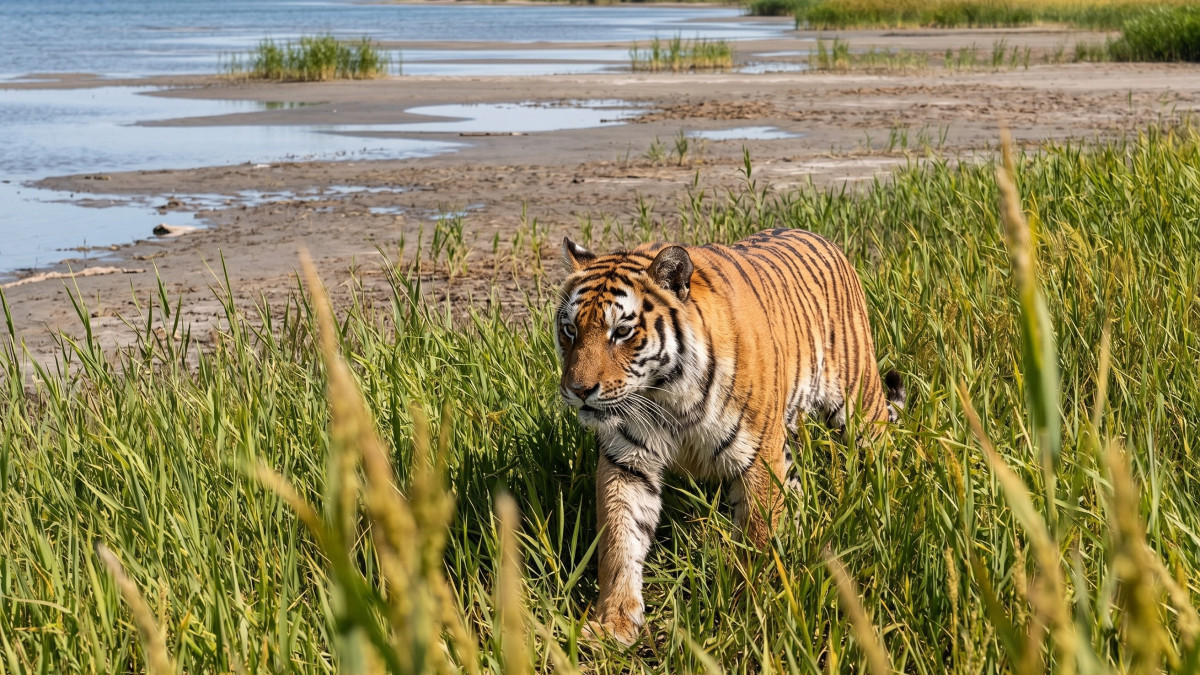
The tigress Ümit continues to adapt to her natural environment following her release into the wild. Her behaviour and adaptation are being monitored by specialists using several observation methods.
GPS monitoring remains the primary monitoring tool. The tracking collar enables specialists to remotely monitor Ümit’s movements and collect data on her activity without direct contact with the animal.
Field monitoring is also being conducted. Specialists visit the area to examine tracks and other signs of the tigress’s presence in order to assess how she interacts with the territory and other inhabitants of the reserve.
Camera traps provide an additional source of information. The cameras capture events that cannot always be recorded through other methods, providing a more comprehensive picture of the animal’s behaviour in its natural environment.
What the monitoring data show
According to the data collected, Ümit is exploring tugai areas and sites located near water. Specialists have paid particular attention to a reed-covered beach on Lake Balkhash, which the tigress visits regularly and where, judging by her behaviour, she appears to feel comfortable.
Reed-covered areas of this kind are considered a natural habitat for tigers in this region. Specialists regard the gradual expansion of Ümit’s range as an indication of normal adaptation to the wild.
All data on the tigress’s movements and activity are analysed in an integrated manner and help assess the success of her reintroduction into the wild. Monitoring of Ümit is ongoing.
