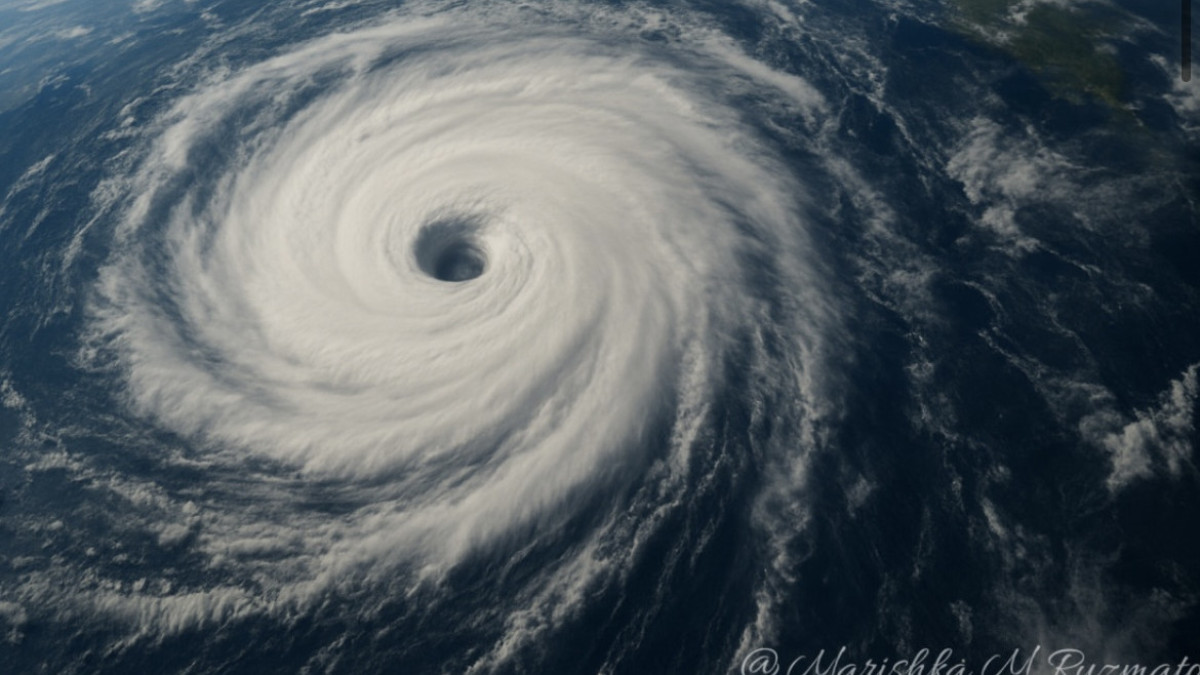
Typhoon Kajiki to hit central Vietnam

EL.KZ Информационно-познавательный портал
Typhoon Kajiki, the fifth to affect Vietnam this year, is forecast to make landfall in the central provinces of Thanh Hoa and Nghe An on Monday afternoon with winds reaching 166 kph, El.kz citese.vnexpress.net.
According to the National Center for Hydro-Meteorological Forecasting, at 7 a.m., the eye of the storm was located 145 km east of Ha Tinh Province, with the strongest winds measured at 150–166 kph, the same intensity as Typhoon Yagi, the most powerful storm to hit Vietnam in 30 years, which devastated the northern region last September.
Kajiki is moving west-northwest at an average speed of 20 kph.
Over the past five hours, the storm has shifted slightly north. Although it remained about 200 km offshore from Ha Tinh and 180 km from northern Quang Tri early Monday, its powerful wind field, spanning a 200 km radius, has already affected north central provinces.
In Ha Tinh, heavy rains fell intermittently from 2 a.m., becoming torrential by 5:30 a.m., darkening the sky until around 7 a.m. Streets were largely empty as strong winds picked up. At Thien Cam Beach, roughly 15 km from central Ha Tinh, downpours and severe gusts were reported by 6:30 a.m. Small hotels suspended guest reception, and residents in low-rise homes were evacuated to nearby resorts.
Across coastal areas, trees have snapped, some falling on power lines, and residents have reinforced homes in preparation. In Vinh Phu and Cua Lo, part of the former Vinh City in Nghe An, moderate rains and strong winds left major streets deserted. Monitoring stations on nearby islands and along the coast have recorded significant wind activity. Hanoi, though far from the storm center, is also experiencing rain.
Vietnam's national weather center said Kajiki has maintained its intensity for nearly 20 hours and is expected to remain strong as it hits coastal areas between Thanh Hoa and Quang Tri this afternoon, before moving inland between Thanh Hoa and Nghe An. Compared to earlier forecasts, the storm has shifted slightly north, with a later landfall due to a longer offshore path.
By 4 a.m. Tuesday, Kajiki is expected to reach central Laos, weakening to winds of 63–74 kph, then downgrade to a tropical depression and eventually a low-pressure zone. Japan's meteorological agency notes the storm's wind speeds are increasing near the coast.
Hong Kong forecasters report wind speeds of about 155 kph, expected to persist upon landfall.
Kajiki has been fueled by warm waters off Vietnam's north-central coast, where sea surface temperatures have reached 30 degrees Celsius. Favorable winds and the storm's rapid movement have also contributed to its intensity.
Today, the sea areas from Thanh Hoa to Quang Tri, including Hon Ngu Island and Con Co District, are experiencing winds up to 166 kph near the storm's eye. In the Gulf of Tonkin, strong winds affect both northern and southern offshore areas, including Bach Long Vi and Van Don.
Authorities have issued strong warnings, stressing that all maritime and coastal activities are extremely dangerous, with a high risk of vessels capsizing and damage to coastal structures. On land, strong winds are expected to intensify across Thanh Hoa to northern Quang Tri, reaching up to 166 kph in some areas. Southern Thanh Hoa and Ha Tinh may experience the most severe conditions, while moderate winds are forecast from Quang Ninh to Ninh Binh.
Heavy rain is expected across the Red River Delta, including Hanoi, and provinces from Lao Cai to Hue, with rainfall totals of 100–150 mm over the next two days. Some areas, particularly from Thanh Hoa to northern Quang Tri, may see totals exceeding 700 mm, posing a high risk of flash flooding. Hanoi, Ho Chi Minh City, and Da Nang are also forecast to experience thunderstorms.
By 4 p.m. Sunday, nearly 60,000 vessels with almost 250,000 workers had been contacted and guided to avoid the storm. Eight provinces and cities, Ninh Binh, Thanh Hoa, Nghe An, Ha Tinh, Quang Tri, Hue, Da Nang, and Quang Ngai, have banned all marine operations.
Evacuation plans are underway, with more than 90,000 households, over 325,000 people, expected to be relocated, particularly in Thanh Hoa, Quang Tri, and Hue.

El recommends 
