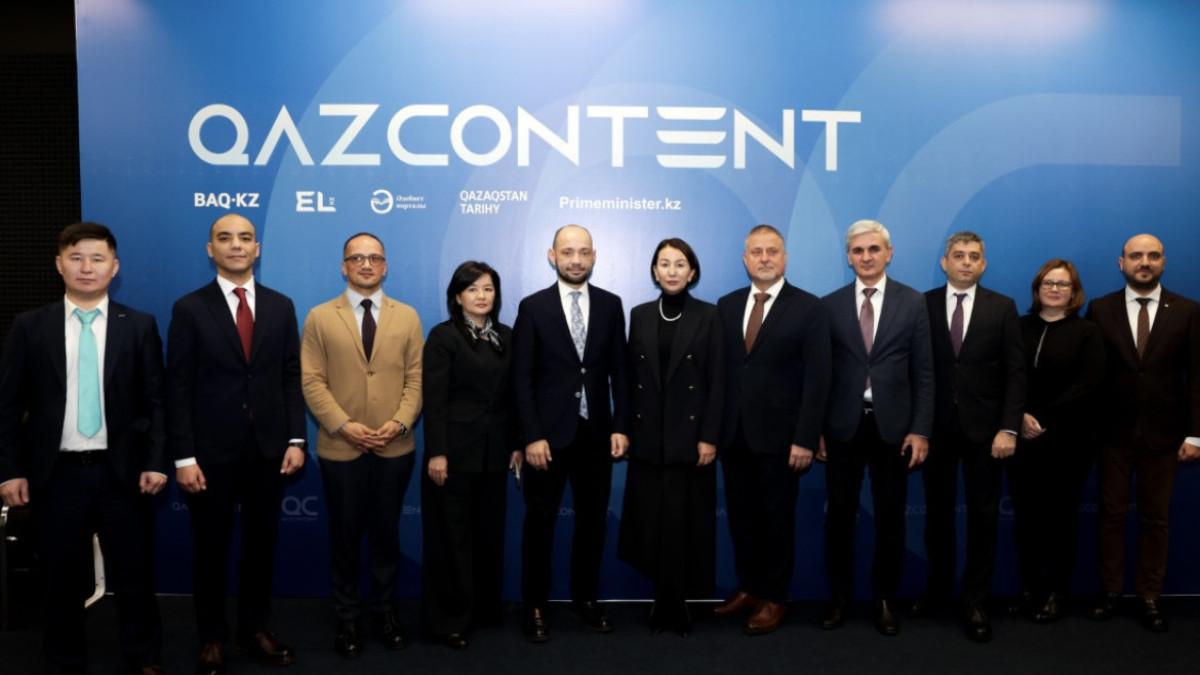
Top managers of Turkic media gather in Astana

EL.KZ Информационно-познавательный портал
Astana hosted a meeting of the Alliance of Turkic News Agencies (ATNA),El.kz reports.
Participants discussed joint projects, the development of journalism, and the integration of artificial intelligence.
The Chairperson of the Board of JSC "Qazcontent" Aina Zadabek emphasized the importance of ATNA in strengthening ties among Turkic nations.
“The community of Turkic countries is one of the most important associations for Kazakhstan and other participating states. Over the two years since ATNA’s establishment, significant work has been done,” she noted.
Under the chairmanship of Qazcontent, the Alliance plans to focus on collaborative initiatives in journalism development, as well as to attract new member countries as observers and partners.
The meeting took place alongside Astana Media Week, where the main topic was the use of AI in the media industry. Participants shared their experiences in adopting new technologies, discussing both the advantages and challenges.
Nurzhan Kasmalieva, director of the international department of Kyrgyzstan's Kabar state news agency spoke about the previous day’s thematic panel organized by Qazcontent JSC as part of Astana Media Week:
“We discussed artificial intelligence in the media sphere. There was a lot of interesting information — we learned how other countries are implementing and using it. Of course, there are both advantages and disadvantages .”
Eszter Rigó‑Kántor, representing Hungary’s MTI agency, shared a European perspective on media transformation. According to her, young people in Hungary are turning away from traditional channels:
“Young people get their news from social networks. Fake news complicates things, because they don’t know which sources are safe to trust,” she explained.
Hungarian media have already begun using AI for translation and speech-to-text transcription but still face audience skepticism.
“News consumers don’t trust AI-generated content. We always emphasize that there’s a human behind it — a journalist who oversees the process — and AI is just a tool,” Rigo-Kantor added.
She highly praised the AI-focused panel at Astana Media Week:
“It’s an important event addressing key issues. AI as a tool for news generation can be controversial because people don’t understand how it works. Discussing this and finding ways to communicate with the audience is crucial.”
ATNA participants also spoke about building audience trust. Kasmalieva highlighted the importance of fact-checking at KABAR as a state agency:
“We provide only verified information. Everything is checked — fact-checking is our top priority.”
Similarly, MTI relies on multiple sources, including materials from news agencies, and runs public awareness campaigns to demonstrate objectivity. Participants also expressed interest in expanding cooperation. Eszter Rigó‑Kántor stressed the value of ATNA for international relations:
“We’re happy to be here and to connect with all member organizations. We already have some agreements and look forward to active cooperation with other media outlets.”
Aina Zadabek added that the Alliance remains open to new media partners, which will strengthen joint projects.
The ATNA meeting underscores the growing role of Turkic media in the global landscape, where artificial intelligence is becoming a catalyst for innovation. Participants agreed that while technology can enhance analytics and content creation, it must be guided by ethics, human oversight, and a focus on trust to address the challenges of the digital age.

El recommends 
