

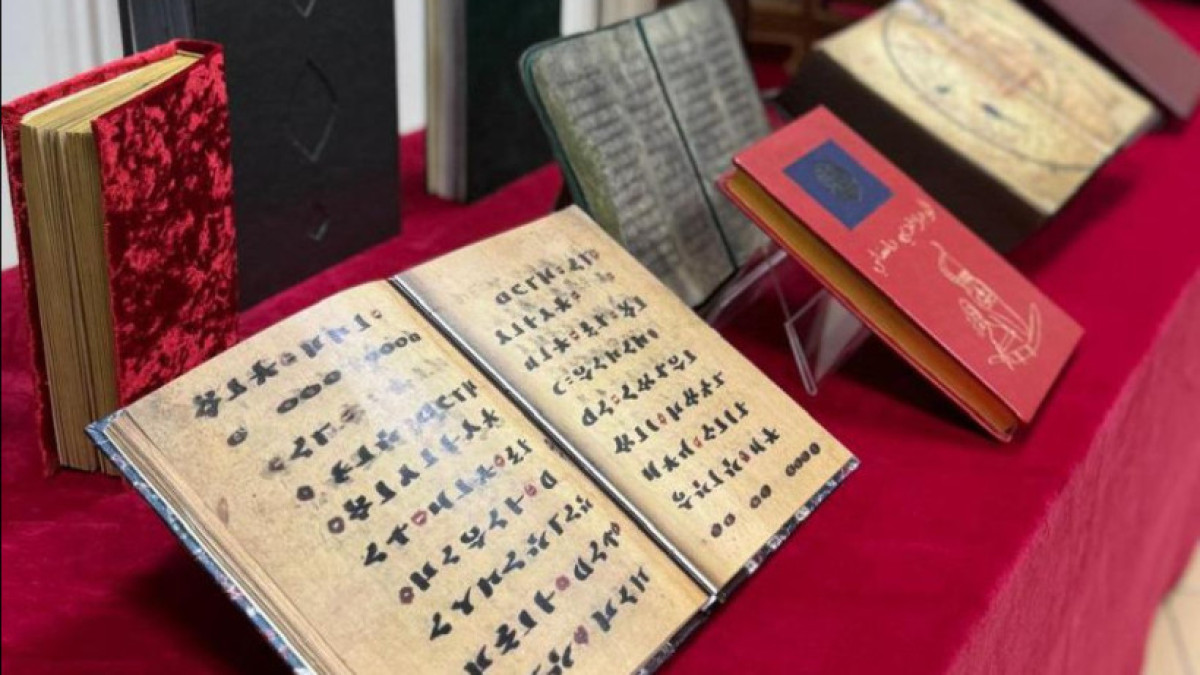
On April 23, World Book and Copyright Day, attention is traditionally drawn to rare editions and manuscripts. In Kazakhstan, a 12th-century Quran in Kufic script is considered an ancient literary monument; it is held in the collection of the National Library of the Republic of Kazakhstan, El.kz reports.
This handwritten tome consists of 770 pages and weighs approximately 5.4 kg. It is ranked among the nation’s rarest treasures and reflects the early tradition of Islamic writing within the region.
Ancient Manuscripts and Monuments
In addition to the 12th-century Quran, even earlier written sources are preserved in Kazakhstan. The collections of the National Center of Manuscripts and Rare Books feature documents from the 8th–9th centuries in the Old Turkic language, dating back to the period of the Turkic Khaganates.
Among these unique monuments is a 10th–12th century Quran translated into the Turkic language.
From Manuscript to Printed Book
The history of the book has traveled a long path from handwritten volumes to mass publishing. The turning point was Johannes Gutenberg's invention of the printing press in the 15th century, after which books became more accessible.
"Seiful-Malik," published in Kazan in 1807, is considered the first printed book in the Kazakh language. It was printed in the old literary "Turki" language using Arabic script.
This publication served as the starting point for the development of national book publishing. By 1917, more than 1,300 books in the Kazakh language had been released in Kazan.
Preserving the Tradition
The 19th century marked an active transition of Kazakh folklore from oral to written form. Works such as "Kozy Korpesh - Bayan Sulu," "Er Targyn," and the aitys (poetic duel) "Birzhan and Sara" were published.
Printed versions allowed the language and content of these works to be preserved and made them accessible to a wide audience. This became the foundation for the further development of literature.
The Role of Enlighteners and Scholars
Shoqan Walikhanov made a significant contribution to the development of book culture through his work in collecting manuscripts and studying folklore.
The educator Ybyrai Altynsarin authored textbooks and opened schools, forming the basis of national education. Abai Kunanbayev holds a special place in this history. During his lifetime, his works were not published in print but were instead circulated via handwritten copies and through song. The first collection of his poems was published in St. Petersburg in 1909, with a print run of approximately one thousand copies.
The evolution of the book in Kazakhstan reflects not only the cultural but also the social progression of society. From ancient manuscripts to printed editions, the book has become a vital tool for transferring knowledge, shaping identity, and spreading education.
