Strategy to increase high-margin crop planting to continue in Kazakhstan in 2026

EL.KZ Информационно-познавательный портал
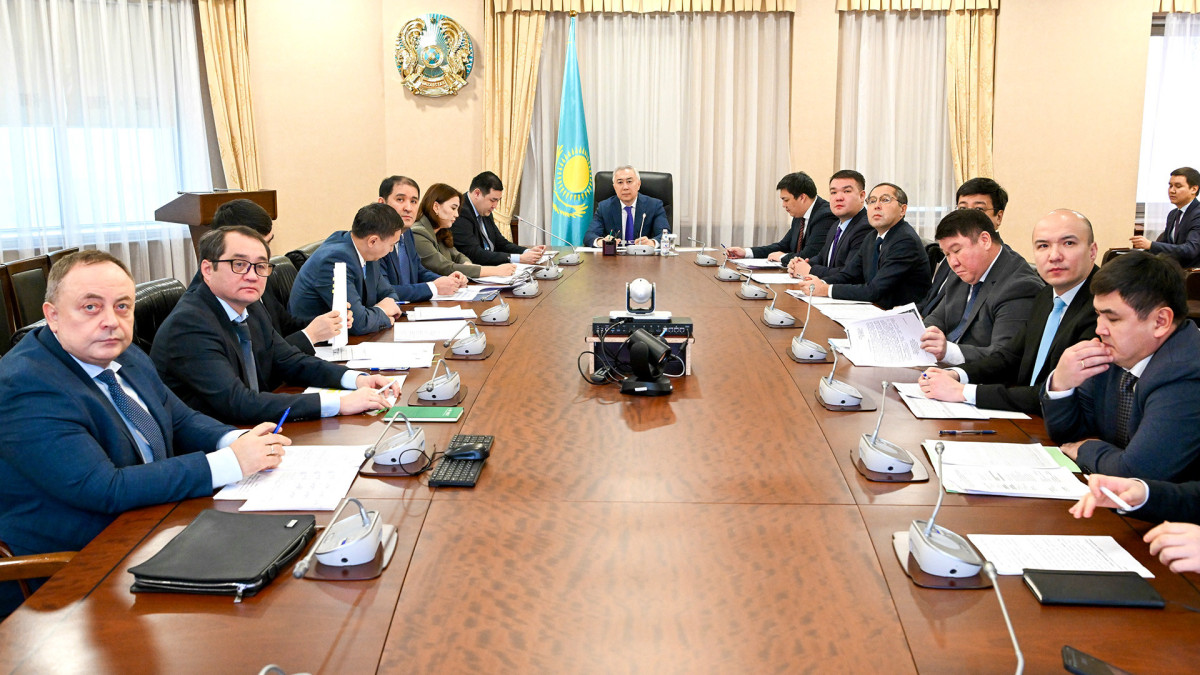
A meeting on preparations for the upcoming spring fieldwork season was held at the Government, chaired by Deputy Prime Minister – Minister of National Economy Serik Zhumangarin, El.kz cites primeminister.kz.
Deputy Minister of Agriculture Azat Sultanov reported that the total sown area this year will amount to 23.8 million hectares, which is 180 thousand hectares more than in 2025. As part of the crop diversification strategy, the reduction of grain crop areas continues to 15.9 million hectares, which is 112.4 thousand hectares less than last year, primarily due to a decrease in wheat acreage to 12.1 million hectares compared to 12.2 million hectares last year.
At the same time, areas under high-margin crops and crops in demand for processing are increasing. Oilseed crops have been expanded by 55.2 thousand hectares and will total 4.045 million hectares; barley by 93.8 thousand hectares (2.4 million hectares); corn by 42.9 thousand hectares (217.5 thousand hectares); and fodder crops by 37.4 thousand hectares (3.1 million hectares).
“A significant increase in corn planting is required to supply raw materials for the new vertically integrated industrial park for deep corn processing by Fufeng Group in the Zhambyl Region. Already this year, at the stage of launching the first phase, the plant will require 500–700 thousand tons of corn for processing, and subsequently up to 1 million tons. Fodder crop areas are increasing in connection with the launch this year of a comprehensive program for the development of livestock farming,” Azat Sultanov noted.
As part of preparations for the new growing season and the projected increase in planting areas in the southern regions of Kazakhstan, meetings were held with farmers from the Kyzylorda, Turkestan and Zhambyl Regions. Options were discussed for reducing water-intensive crops in favor of other, less water-demanding crops that are in demand for new deep-processing industries. In particular, a reduction in rice planting areas is being discussed: by 8.5 thousand hectares in the Kyzylorda Region and by 7.4 thousand hectares in the Turkestan Region. With projected cotton planting of 148.5 thousand hectares, areas under drip irrigation will increase by 15 thousand hectares, while planting areas using traditional irrigation methods will be reduced by 11 thousand hectares. A working group has been established to address all these issues.
Following the discussions, Serik Zhumangarin tasked the Ministries of Agriculture and Water Resources and Irrigation with developing a detailed plan for the use of agricultural land, taking into account rational land use and the application of modern irrigation and watering methods.
Key components of a successful sowing campaign include fertilizers, high-quality seeds and subsidized diesel fuel. To ensure timely procurement of these inputs, the Agrarian Credit Corporation began accepting applications from farmers for concessional lending in October last year. To date, 1,694 applications from agricultural producers totaling 241 billion tenge have been submitted. Of these, 1,520 agricultural producers have already received financing amounting to 180 billion tenge. The largest number of applications came from producers in the Turkestan Region (28%), Akmola Region (13%), North Kazakhstan Region (13%), Kostanay Region (11%) and Karaganda Region (6%).
Through the Gosagro system, around 18 thousand applications have already been received for subsidized diesel fuel for the sowing campaign, with a total volume of 454.3 thousand tons, which is 8.8 thousand tons more than last year. The consolidated demand has been submitted to the Ministry of Energy. The Deputy Prime Minister instructed the Ministry of Energy to determine the preferential diesel fuel price for farmers as soon as possible and to approve the schedule for assigning regions to oil refineries. Diesel fuel deliveries will begin as early as February.
Of the 2.3 million tons of seeds required for the 2026 spring sowing campaign, 1.5 million tons of spring crop seeds have been submitted for examination. Preliminary inspection has been completed for 1.3 million tons of seeds, of which 98.1% were recognized as certified and compliant with the first and second classes of sowing standards.
The plan for the application of mineral fertilizers this year amounts to 2.3 million tons. Relevant instructions have been given to ensure their timely procurement and application. At the next meeting, it was instructed to present a full package of calculations and plans for the 2026 sowing campaign, taking into account the use of agrotechnologies, irrigation methods and calculations of irrigation water requirements.

El recommends 
