

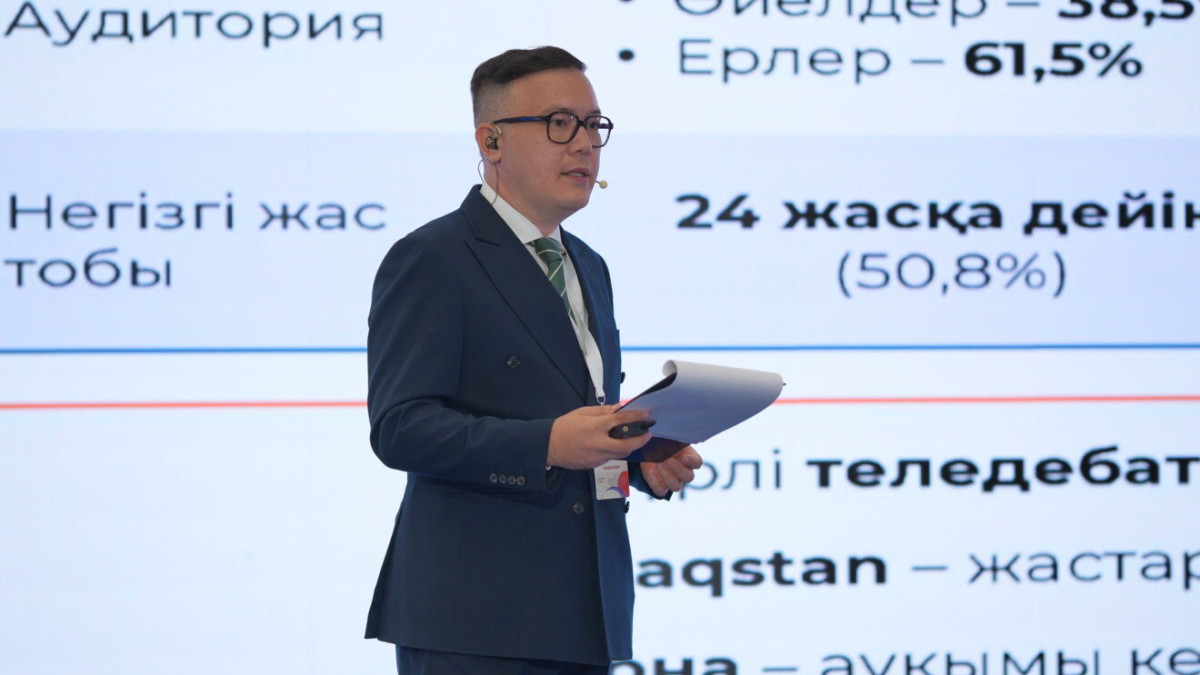
Over 70% of Kazakhstan’s citizens say they are ready to participate in the upcoming elections to the Kurultai. It was stated by political analyst and publisher Bakytzhan Bukhurbay at the expert platform Saylau-2026: The Nature of the Political Campaign in Almaty, El.kz reports with reference to the Kazakhstan Institute for Strategic Studies (KazISS).
The expert platform Saylau-2026: The Nature of the Political Campaign was held in Almaty and organized by the Kazakhstan Institute for Strategic Studies under the President of the Republic of Kazakhstan.
The expert presented a comparative analysis of six opinion polls conducted by various research organizations between 13 June and 27 July 2026. Despite differences in research methodologies, all of the surveys recorded a consistently high level of electoral readiness: the share of citizens who said they intended to vote ranged from 70.3% to 75.6%.
“We are seeing a fairly consistent picture: 7 out of 10 voters say they are ready to participate in the vote. At the same time, 89.4% of respondents are aware, to varying degrees, of the elections scheduled for 23 August. Awareness increases with age and is somewhat higher among rural residents,” Bakytzhan Bukhurbay noted.
According to the political analyst, the survey data also make it possible to identify the profile of the most active voter. Among older citizens, willingness to vote reaches 80.7%, while among young people the figure stands at 69.4%. The highest level of electoral activity is observed among those aged 46–60. Women report their intention to participate in the elections approximately five percentage points more often than men. Electoral readiness is also higher among citizens with higher and incomplete higher education.
The expert also focused on the factors influencing voters’ choice of a political party. The most significant factor is a positive assessment of the party’s initiatives, cited by 44.4% of respondents. For 29.2%, a strong party identification—meaning a sense of affiliation with a particular political force is important. Another 25.3% choose a party based on the belief that it represents the future of Kazakhstan. For 14.7%, the way a party engages with voters is an important consideration.
“These data show that electoral choice is shaped by several components. It is not enough for voters simply to know the name of a party. They are interested in specific initiatives, a sense of affinity with a political force, their perception of its prospects, and the quality of its ongoing engagement with citizens. Therefore, it is particularly important for parties today not only to maintain visibility during the campaign period, but also to build sustainable relationships with their electorate,” the political analyst emphasized.
Bakytzhan Bukhurbay also drew attention to the public demand for renewal of the political system. In his view, the current electoral campaign is taking place amid ideological diversity among political parties, each of which is seeking to engage with its respective electoral constituency. The early announcement of the elections enabled political forces to assess their positions, renew their party ranks, and bring new figures onto the political stage.
According to the expert, changes in leadership and the renewal of the membership of several parties may provide additional momentum to political competition. The emergence of new politicians creates opportunities for new ideas and approaches, the mobilization of new supporters, and the adaptation of party agendas to evolving public demands.
