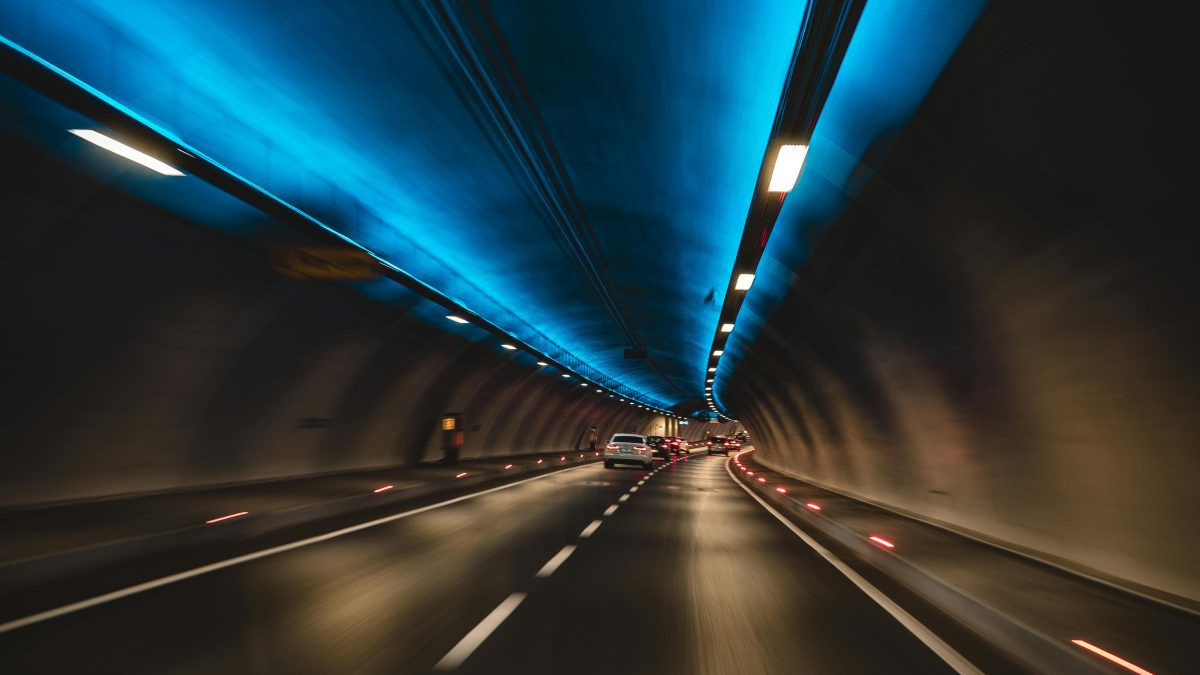
Norway builds world’s longest, deepest undersea road tunnel

EL.KZ Информационно-познавательный портал
The world’s longest and deepest undersea road tunnel is being built in Norway, intended to cut travel time between major cities and become part of a ferry-free highway along its western coast, El.kz reports citingCNN.
The 27-kilometer (17-mile) long tunnel is called Rogfast — short for “Rogaland fastforbindelse,” after the name of the region it’s in and the Norwegian word for “fixed link.” At its deepest it will be 392 meters (1,286 feet) below sea level.
Construction started in January 2018 but was halted in late 2019 due to predicted cost overruns that led to the cancellation of existing contracts and a restructuring of the project. Work resumed in late 2021 and the tunnel is now slated for completion in 2033, at a cost of approximately 25 billion Norwegian kroner (about $2.4 billion).
“The tunnel will significantly improve connectivity along the Norwegian west coast, by creating a faster and more reliable link between the Stavanger and Haugesund regions,” said Anne Brit Moen, a project manager at Skanska, the multinational construction company that’s building the northern part of the tunnel, which is the deepest section and is 9 kilometers (5.5 miles) long.
By replacing the current ferry connections, Rogfast will reduce travel time between Bergen and Stavanger — respectively the second and fourth largest Norwegian cities by population — by around 40 minutes and make daily commuting much easier, Moen added.
The tunnel will consist of two separate tubes, each with two traffic lanes, designed exclusively for road traffic.
Building a tunnel of that length under the sea poses several technological challenges. Like most modern tunnels, to save time, Rogfast is being built from both ends concurrently, with the goal of having the two construction teams meet in the middle within a margin of error of just 5 centimeters (1.97 inches).
Achieving this level of precision requires careful measurements using lasers and other sophisticated equipment. A spinning, mirrored laser scanner measures a newly excavated tunnel portion, collecting 2 million data points per second to create a “digital twin” of the tunnel. That can then to be checked against the design plans for any inaccuracies.
The tunnel also requires measures to protect motorists from air pollution. It will employ a longitudinal ventilation system — which typically use jet fans to create airflow — complemented by shaft ventilation extending up to Kvitsøy. “This combination is designed to ensure effective air circulation and safety throughout the tunnel’s considerable length,” said Moen.
A real-time incident alert will also be implemented to identify events such as breakdowns or congestion, and cameras and radar will monitor vehicles.

El recommends 
