

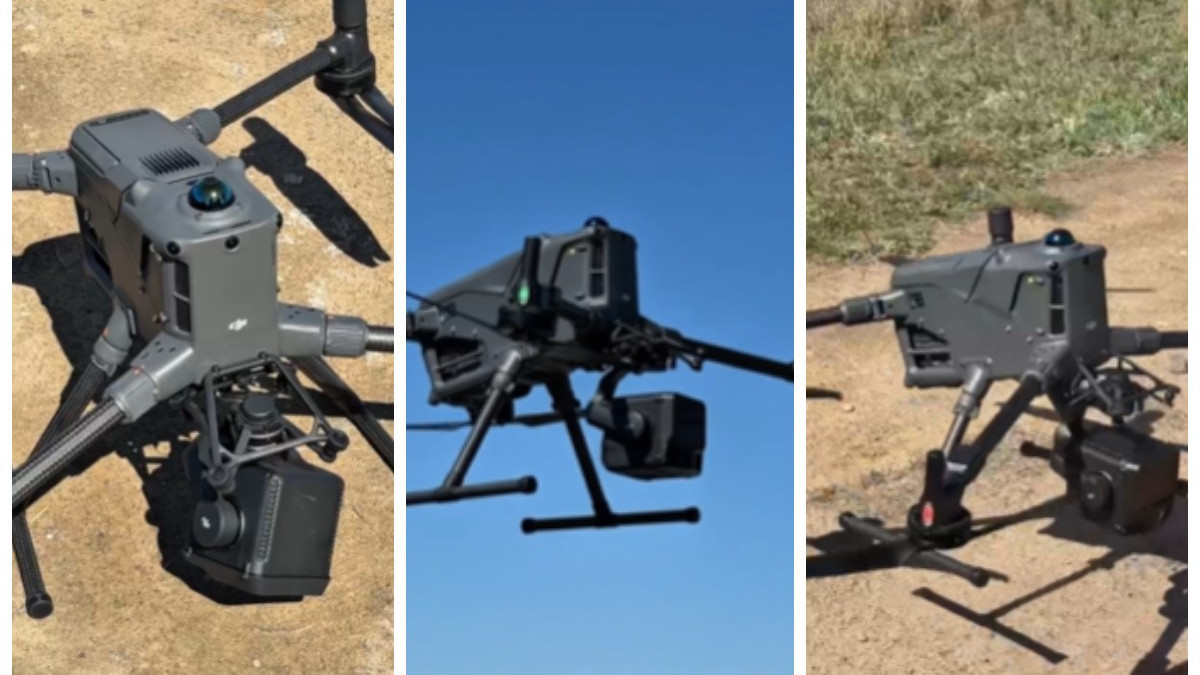
Kazakhstan has begun testing a next-generation drone designed for monitoring the condition of highways. The technology has already been trialed on a section of a highway in the Akmola region, El.kz reports citing the press service of the Ministry of Transport of the Republic of Kazakhstan.
This solution could transform the approach to road surface diagnostics, making inspections faster, more accurate, and almost entirely automated.
How the System Works
The device scans the road surface and records defects in real-time. This allows for the identification of cracks, unevenness, and other damage without the need for manual inspection.
The technology combines several tools at once. LiDAR creates a precise three-dimensional model of the pavement, while mmWave radar helps analyze the road structure even in limited visibility conditions.
Automation and Artificial Intelligence
Data collection has been simplified as much as possible. An operator defines the flight zone, after which the drone independently plans its route and begins the survey.
Information is transmitted via the O4 Enterprise Enhanced system, ensuring stable communication and data processing. Artificial intelligence elements are already integrated into the software.
Available functions include intelligent defect detection, thermal and standard imaging, and AR visualization. This allows the system not only to record a problem but also to immediately analyze its scale.
One of the key advantages of the technology remains its resistance to weather conditions. The drone is capable of operating in strong winds and poor visibility, which is particularly relevant for the country’s steppe regions.
Early diagnosis of damage can significantly reduce repair costs. Defects can be addressed at an early stage, preventing the need for major road reconstruction.
Authorities are currently considering the possibility of implementing such solutions for comprehensive diagnostics of the road network. This involves not only identifying problems but also automatically assessing their volume, which could revolutionize the road repair planning system in the country.
