Nasa plans first crewed Moon mission in 50 years

EL.KZ Информационно-познавательный портал
NASA's ambitious mission to return astronauts to the moon for the first time this century is on track to launch no later than April 2026, but it just might fly sooner if all goes well, El.kz reports citingSpace.
The 10-day-long Artemis 2 mission, which will fly four astronauts around the moon on NASA's Orion spacecraft, could lift off as early as Feb. 5, mission managers said today (Sept. 23) during an event here at the agency's Johnson Space Center (JSC).
"We together have a front-row seat to history: We're returning to the moonafter over 50 years," Lakiesha Hawkins, NASA acting deputy associate administrator for exploration systems development, told reporters in a press conference today.
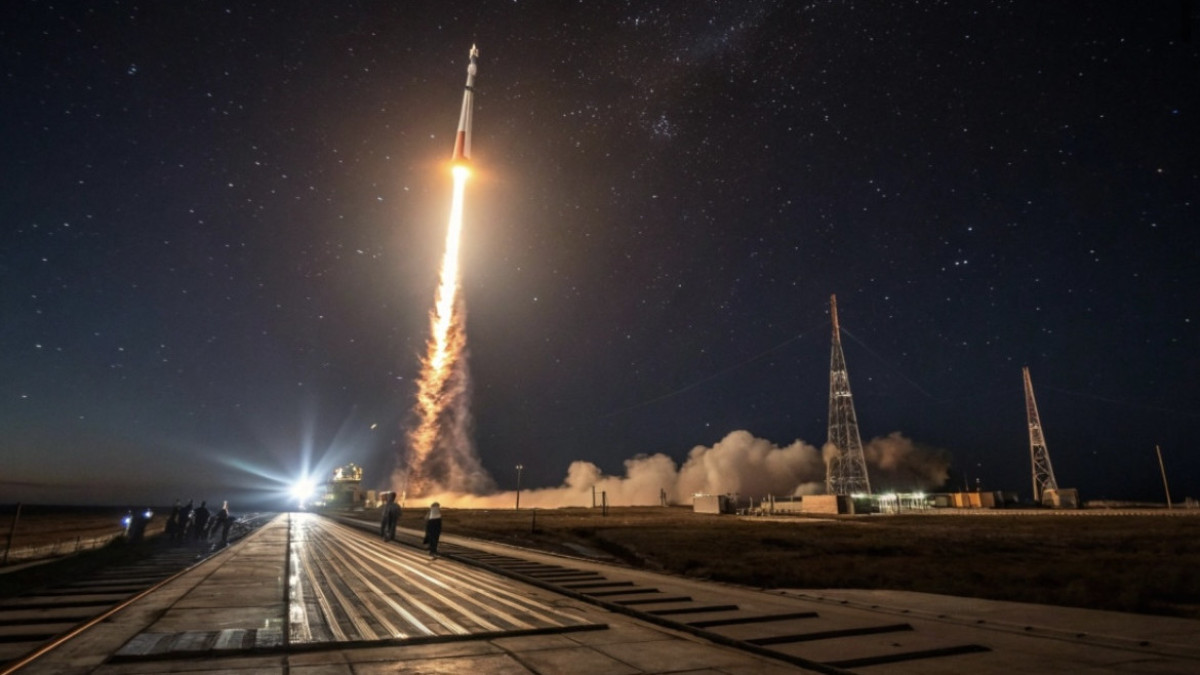
If Artemis 2 does lift off on Feb. 5, it will be at night, NASA officials said. The space agency has about five days apiece in February, March and April to launch the flight. The latest possible date is April 26, according to NASA.
NASA will aim to hit the earlier part of that launch window, Hawkins said, but she stressed that crew safety will drive the timeline.
"We want to emphasize that safety is our top priority," she said. "And so, as we work through these operational preparations, as we finish stacking the rocket, we're continuing to assess to make sure that we do things in a safe way."
Artemis 2, the first crewed mission of NASA's Artemis program, will launch to the moon atop the agency's towering Space Launch System megarocket (known as SLS), as the vanguard flight for a crewed U.S. return to the moon. The mission will be commanded by NASA astronaut Reid Wiseman, with fellow agency spaceflyer Victor Glover as pilot. NASA's Christina Koch and Canadian Space Agency astronaut Jeremy Hansen round out the crew as mission specialists.
The mission will fly on a "free-return" trajectory, sending the Artemis 2 astronauts around the moon on a path that ensures their return to Earth without entering lunar orbit, let alone touching down on the surface.
"They're going at least 5,000 nautical miles [9,260 kilometers] past the moon, which is much higher than previous missions have gone," said Jeff Radigan of JSC, the lead Artemis 2 flight director. "So, the moon's going to look a little bit smaller."

El recommends 
