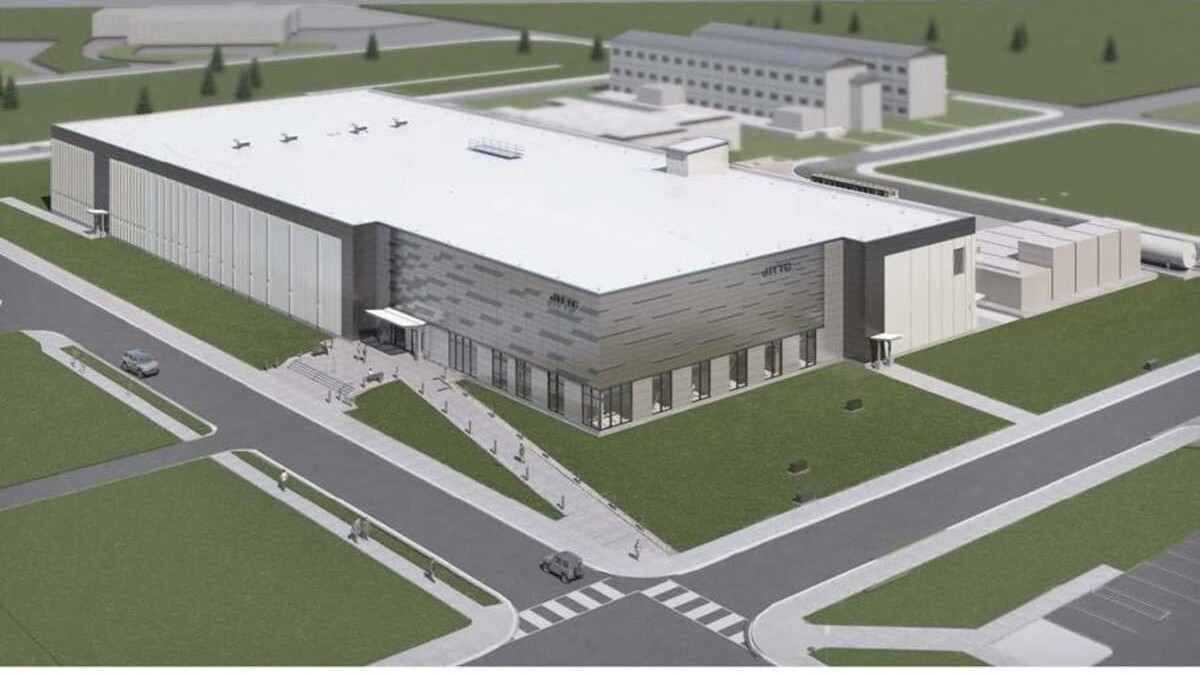
Major new Air Force training center in Alaska to help boost defense of North America

EL.KZ Информационно-познавательный портал
Work will start this summer on a Pentagon “mega-project” in Alaska intended to boost the Air Force’s training capability to defend North America, El.kz cites stripes.com.
The 150,000-square-foot Joint Integrated Test and Training Center will contain 426 computer servers kept running by a 15 million megavolt-ampere electric substation.
The project is slated to be completed in 2029 at a cost of up to $500 million. John Budnik, spokesman for the U.S. Army Corps of Engineers, said the center will allow trainers to sync personnel on the ground with pilots in the air.
“It’s the only place in the Indo-Pacific Command that can host multi-domain simulators for joint and coalition fighters, including F-35s, F-22s, F-15s, F-18s, next-generation fighters, bombers, command and control platforms, intelligence surveillance, reconnaissance aircraft, and long-range weapons fire,” he said.
Thareth Casey, the program manager for the Army Corps of Engineers, said the training center is being designed so simulations can be adapted to include weapons and aircraft from other U.S. military branches, as well as NATO allies Canada, Finland, Sweden and others.
Air Force Col. Lisa Mabbutt, commander of the 673d Air Base Wing at Joint Base Elmendorf-Richardson, said the training center’s location underlines the importance of Alaska and the Arctic to the U.S.
"It demonstrates a commitment to Alaska as both a key power-projection platform and one of our nation’s leading edges of homeland defense,” Mabbutt said. While the long, warmer days of summer have allowed military and commercial ships to take advantage of new sea lanes, the training center has to be built to withstand the seasonal flipside: winter, with its minus-20 temperatures and days where sunset comes a little over five hours after sunrise. Casey, the project manager, said construction less than 2,000 miles from the North Pole has its challenges.
Air Force Col. Lisa Mabbutt, commander of the 673d Air Base Wing at Joint Base Elmendorf-Richardson, said the training center’s location underlines the importance of Alaska and the Arctic to the U.S. “It demonstrates a commitment to Alaska as both a key power-projection platform and one of our nation’s leading edges of homeland defense,” Mabbutt said. While the long, warmer days of summer have allowed military and commercial ships to take advantage of new sea lanes, the training center has to be built to withstand the seasonal flipside: winter, with its minus-20 temperatures and days where sunset comes a little over five hours after sunrise. Casey, the project manager, said construction less than 2,000 miles from the North Pole has its challenges.
To keep the elements outside from impacting the work inside, the center will be built with a reinforced concrete foundation, steel-frame-insulated wall panels covered in masonry, and a steel-reinforced metal roof. Construction will accelerate during the long, warmer summer days when the sun can be out for 20 hours. It will slow down during the cold, dark winters. “It’s a one-of-a-kind project,” Casey said. “We’re constrained by the seasons but with planning, we expect to complete work by the fall of 2029.”

El recommends 
