

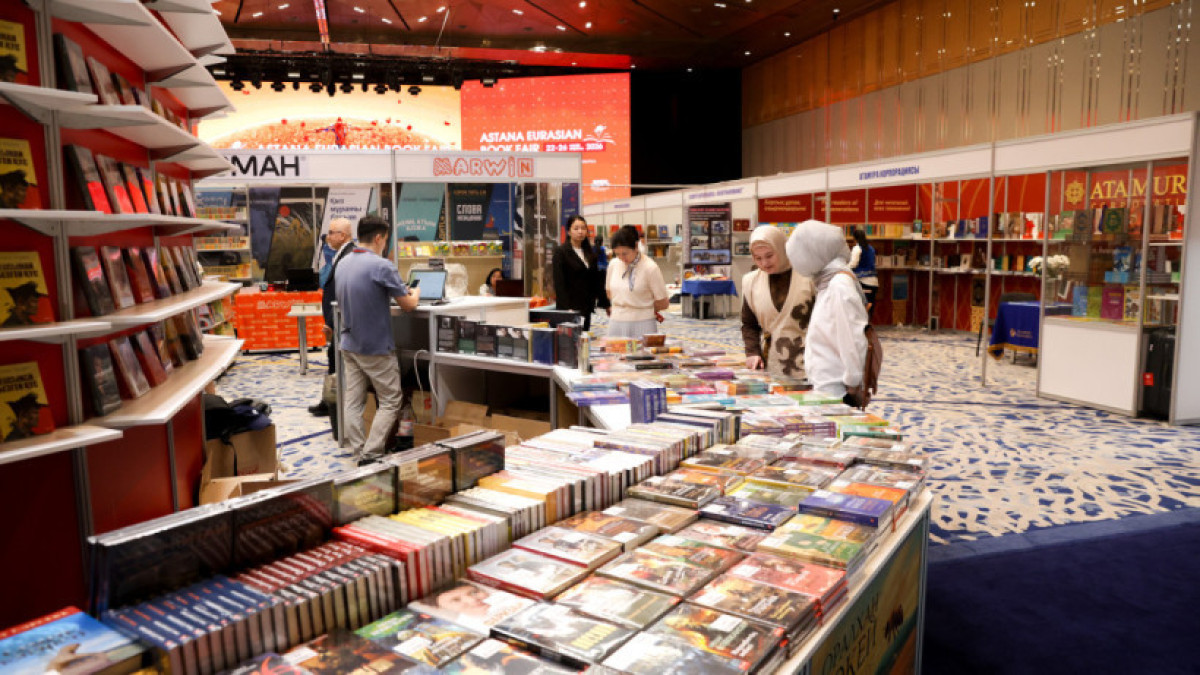
The literary heritage of various cultures was presented in Astana at the Astana Eurasian Book Fair international book fair. Here, books become more than just reading material; they are a way to discover the cultures of other countries, hear foreign languages, and see how different traditions meet through literature. International publishing houses and diplomatic missions brought editions in various languages to Kazakhstan and spoke to El.kz about their authors, national poetry, and interest in Kazakh culture.
Literature without borders
This year, the Astana Eurasian Book Fair became more than just a venue for selling and presenting books; it was a place for cultural exchange. The stands featured editions in Portuguese, Spanish, English, Russian, and Kazakh. Some participants brought fiction, while others focused on history, culture, and language learning.
Interest in Kazakh culture through fantasy
The "Polyn" publishing house presented literature where reality often coexists with mysticism and historical plots gain magical depth. According to Alexander Lazarev, the publishing house's director, their books are united by a special atmosphere.
"Everything we offer is fantasy, mysticism, magical realism, or historical novels. We have novels about the fall of Babylon, the Borgia family. They are completely different stories, but written with a magical undertone to make it easier for the reader to immerse themselves in the genre."
The publisher pays special attention to the book Seven Woes and the Snake Covenant by Darya Akulova, which is linked to Kazakhstan and Kazakh culture. For "Polyn," this is a first-of-its-kind experience, but not a random one. Lazarev noted that the team has long been interested in Eastern, Asian, and Turkic themes. Previously, the publishing house released stories in Mongolian-Chinese and Japanese settings, and now the focus has shifted to Kazakh culture.
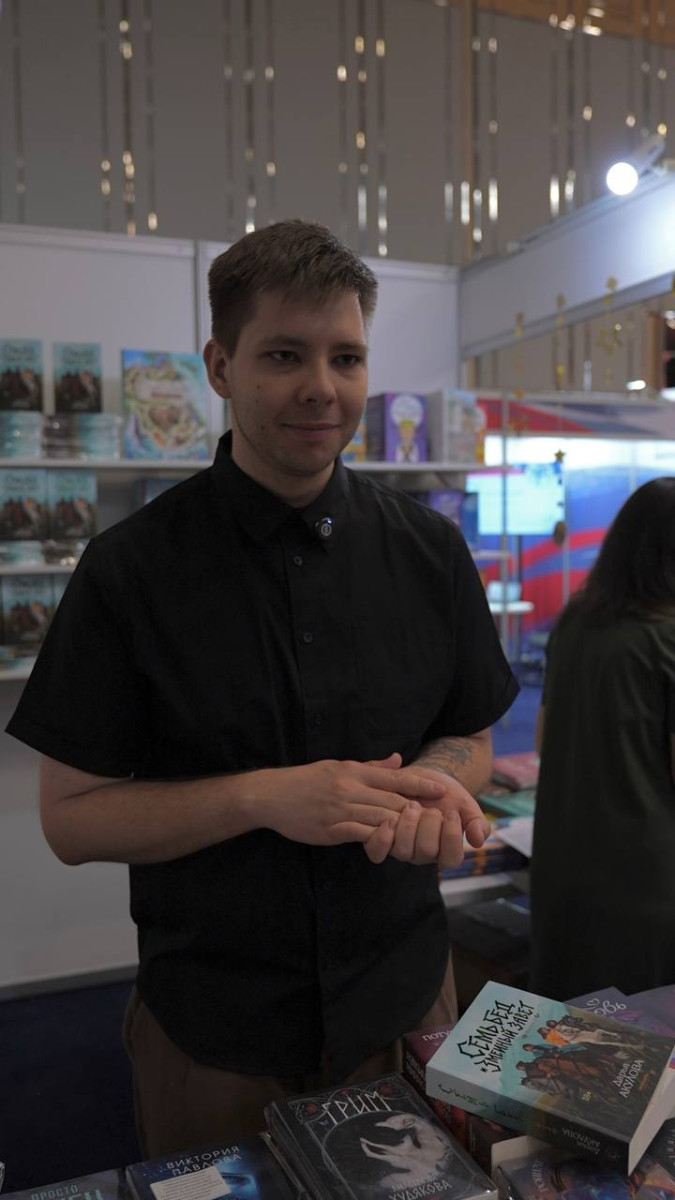
Photo: Zyalimkhan Tulebekov
"This is the first book of its kind about Kazakhstan and Kazakh culture. It is the first novel of a trilogy. Through this trilogy, we will essentially immerse ourselves in Turkic culture."
Interest in the author also arose through visual and stage expressiveness: Lazarev recalls that the writer was noticed due to her vivid images, national motifs, and memorable presentation.
"She had very bright, interesting, and memorable images. She was jumping with swords in national costumes, it was very cool. That’s why we noticed her."
According to him, a continuation of the Kazakh theme is possible. The publishing house is currently reviewing manuscripts for a competition, and among them are texts related to Kazakhstan.
"Will there be something else? Everything is possible. We are currently holding a competition where we review manuscripts. There are many texts about Kazakhstan there as well, so perhaps there is more to come."
Portugal: Camões, history, and books in three languages
The Portuguese stand at the fair presented not only literature but also a cultural program. A special place in the program was occupied by an exhibition dedicated to Luís de Camões, the national poet of Portugal. Camões is considered one of the key figures in Portuguese literature. He was born around 1524–1525 and died in 1580. His masterpiece is the epic poem The Lusiads, published in 1572. In it, Camões celebrated the maritime voyages of the Portuguese and Vasco da Gama's discovery of the sea route to India. This is why, in Portugal, his name is associated not only with literature but also with the image of the country as a maritime power, the Age of Discovery, and national memory.
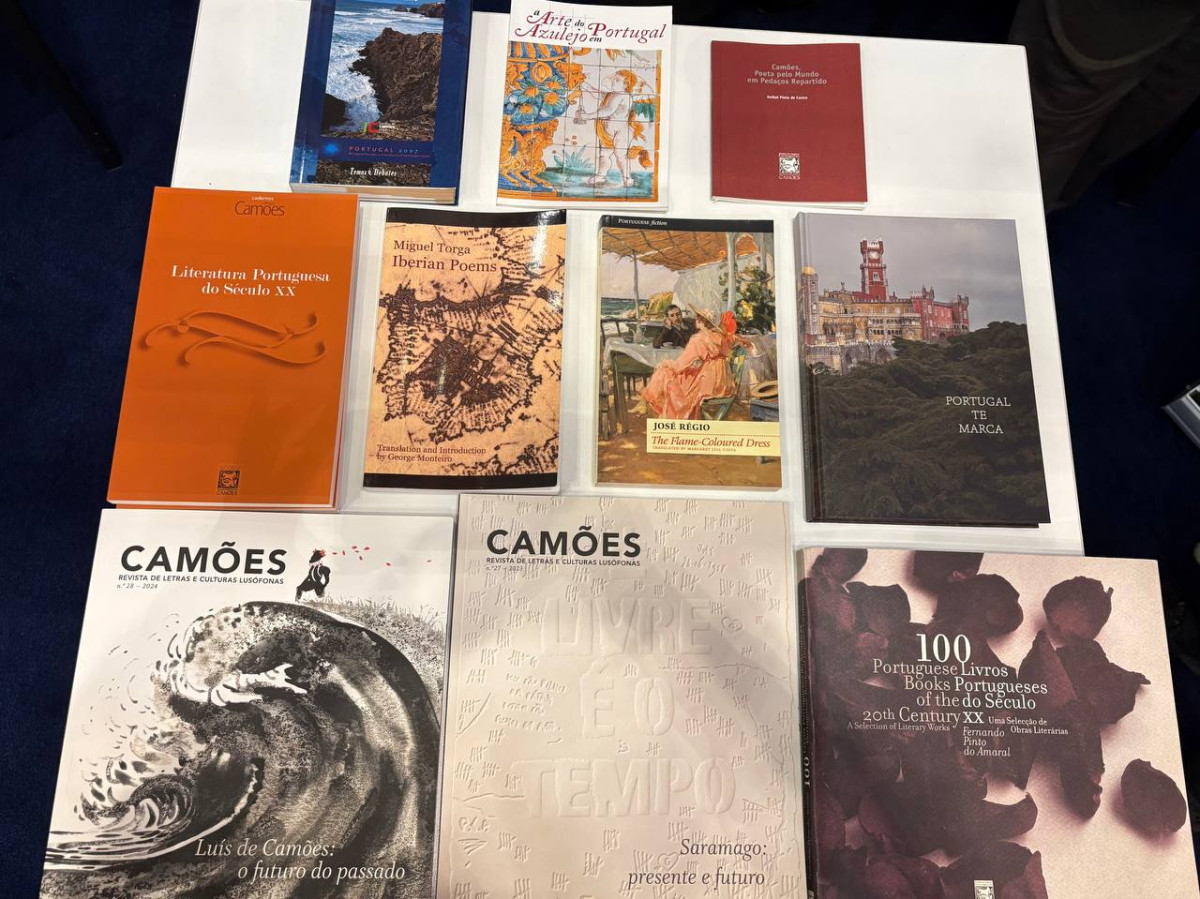
Photo: Aigerim Babish
Camões is called the national poet of Portugal because of the scale of his influence on Portuguese and Brazilian literature. He wrote not only epic works but also lyrics, and his poetry has become part of the cultural code of the Portuguese-speaking world. For Portugal, Camões is a figure comparable to those authors through whom a country tells the world about itself: about language, history, travel, memory, and national character.
"We have books by Portuguese authors in different languages. We also hold events related to the Portuguese language and culture. Additionally, outside, visitors can see an exhibition dedicated to our national poet Luís Camões.", Deputy Head of Mission at the Embassy of Portugal in Astana David Matz said.
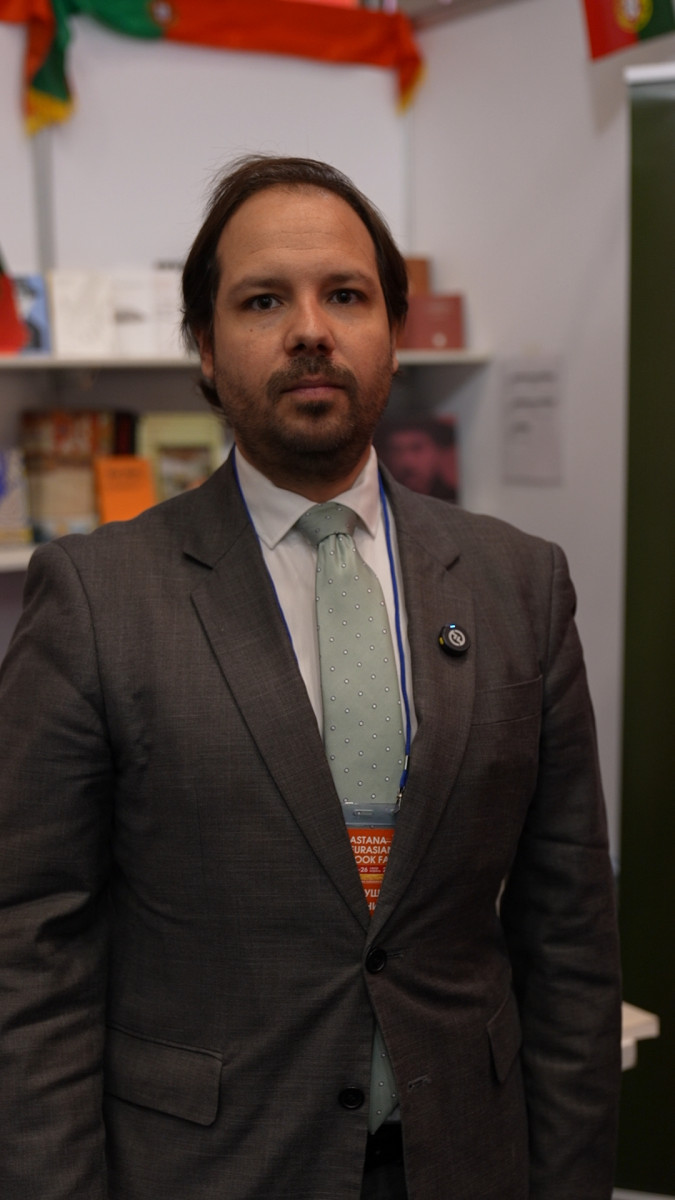
Photo: Zyalimkhan Tulebekov
The Portuguese selection included authors from different eras, from classics to contemporary writers. In addition to fiction, visitors were offered books on the history and culture of Portugal.
"We really have a great variety of authors: ancient, modern, as well as books about the history and culture of Portugal. It is a wide selection for people to get acquainted with."
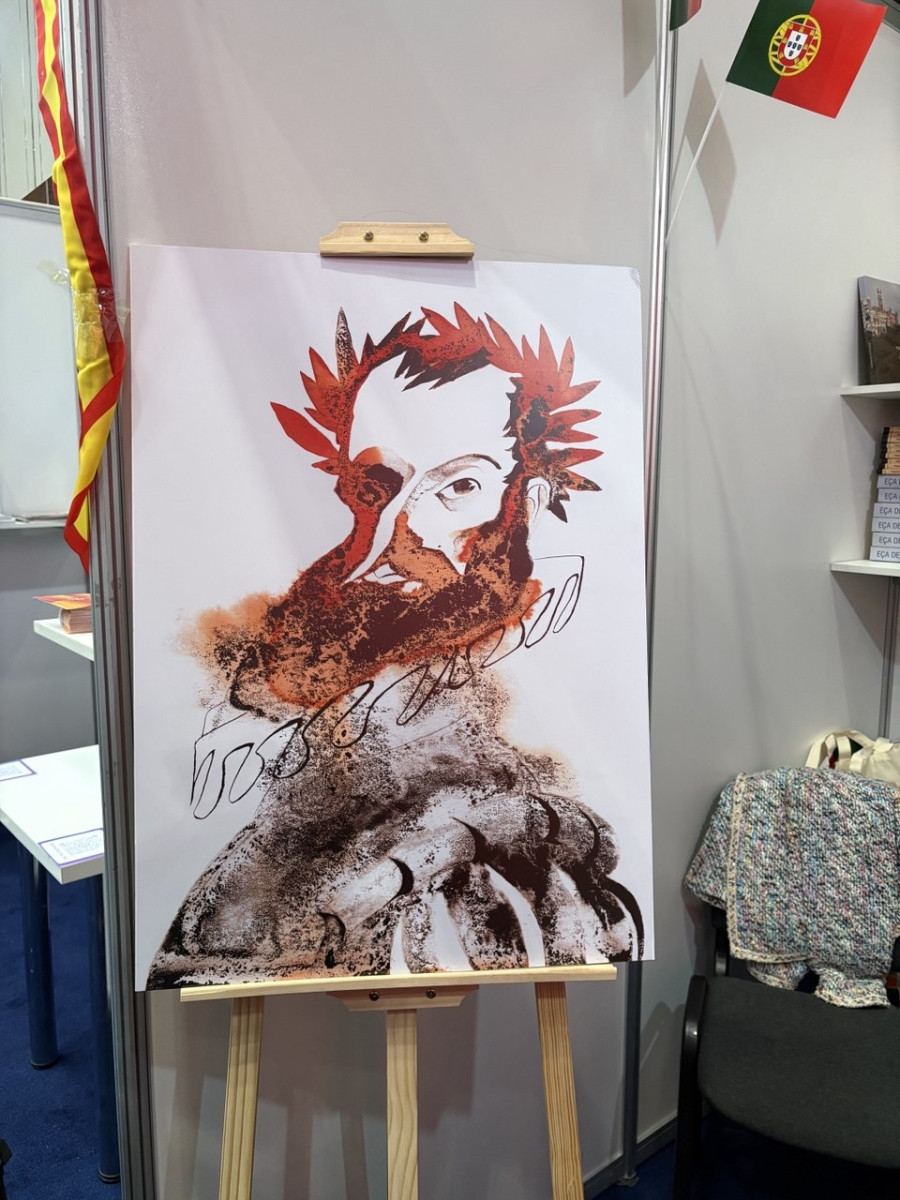
Photo : Aigerim Babish
The books were presented in Portuguese, English, and Russian. For those just starting to learn Portuguese, short illustrated editions about the country's history and culture were particularly useful.
"Of course, we have books in Portuguese, but we also have books in English and Russian. If a person is just starting to learn Portuguese, books in that language might be difficult at first. But we have short books about the history and culture of Portugal with illustrations. They are very useful for beginners: you can read a little in Portuguese and learn more about the country at the same time."
Spain: Books as Gifts and Cultural Introduction
The stand of the Embassy of Spain in Kazakhstan is not a newcomer to the fair. As Embassy representative Mina Aubakirova explained, participation has become an annual practice, and the main goal of the stand is cultural rather than commercial.
"This is not our first year participating. At our stand, we have books brought from Spain. Most of the books are in Spanish. There are also books translated into English."
The stand also featured editions where one part of the text is in Spanish and the other in English. Additionally, visitors were shown translations of poems into the Kazakh language.
"There are translations of poems into Kazakh. We mainly give all the books away to those who speak Spanish or use them as prizes in various competitions."
The Spanish stand's program was packed: lessons, contests, meetings with teachers from Almaty and Astana, and the participation of native speakers. Books were given as gifts to guests and participants of the activities.
"We have a busy program throughout the day. There are representatives from language schools, various Spanish teachers from Almaty and Astana, and native speakers."
According to her, the stand promotes not only the culture of Spain but also the culture of Spanish-speaking countries in general. Among the books presented are works by Spanish and Latin American authors.
"Our goal is the promotion of the culture of Spain and Spanish-speaking countries. There are not only Spanish authors here, but Latin American ones as well. And the stand has no commercial goals. We don’t sell anything here."
The books presented are intended mainly for those who already speak Spanish. They are not textbooks, but fiction, plays, short stories, and introductory editions with biographies of the authors.
"It’s more like an introduction to the literature of Latin America: reading a short excerpt and understanding it. In principle, these are not children's books or books for learning Spanish. They are for those who already master the language. Fiction."
According to Aubakirova, some of the translations arrived ready-made from Spain, while the Kazakh translation was likely performed in cooperation with a Kazakhstani publishing house.
Kazakhstan as a Meeting Point of Cultures
Book fairs are becoming a space where literature crosses linguistic and cultural boundaries. For the reader, it is an opportunity to see that a book can be more than just text on a shelf. It becomes a map, a conversation, an introduction to another country, and sometimes the first step toward having one's own culture heard beyond its borders.
