

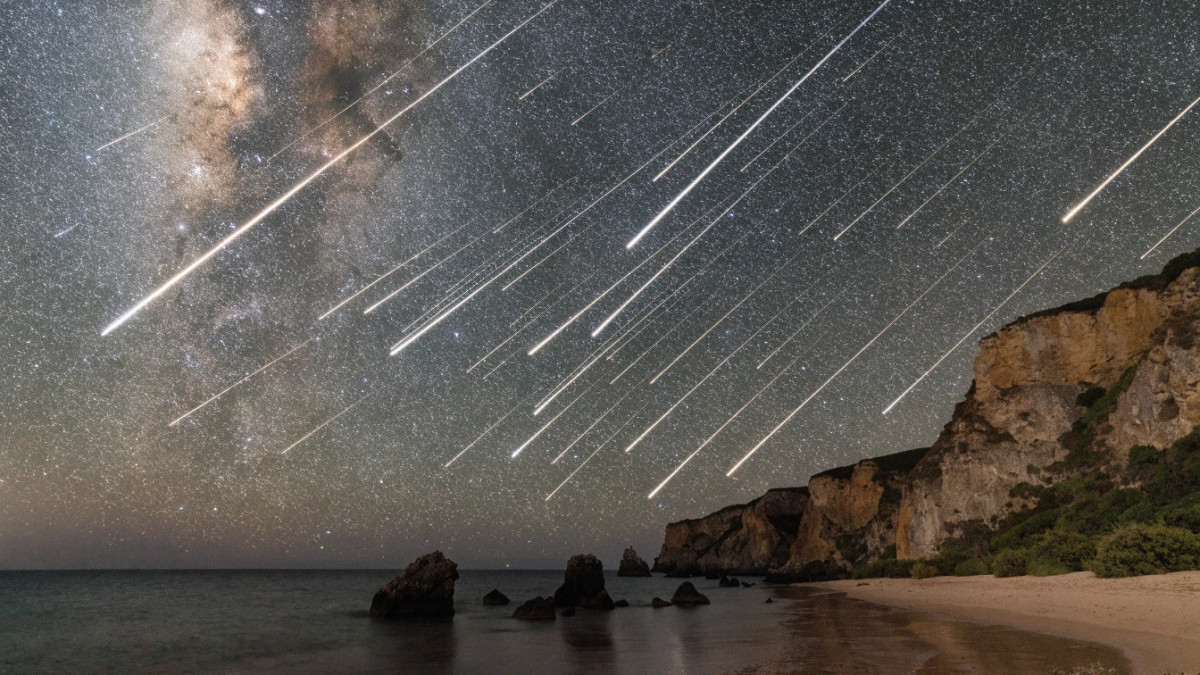
Residents of Kazakhstan will have an opportunity to observe two meteor showers during the night of 30–31 July. The Southern Delta Aquariids and the Alpha Capricornids are expected to reach their peak activity at the same time, El.kz reports.
Two meteor showers to be visible simultaneously
Astronomers refer to this phenomenon as a double meteor shower. Each year, the Earth passes through the orbital paths of the parent comets of both meteor streams during the same period, allowing observers to witness two distinct types of “shooting stars” in late July.
According to AMS Meteors, the Southern Delta Aquariids are the more active of the two showers. At peak activity, observers may see up to 25 meteors per hour. These meteors travel at high velocity and leave long, luminous trails across the night sky.
The Alpha Capricornids produce fewer meteors; however, they are renowned for generating some of the most spectacular fireballs. Their relatively slow-moving meteors frequently develop into bright bolides that remain highly visible even under significant moonlight.
Moonlight will reduce visibility of fainter meteors
On the night of observation, the Moon will be approximately 96 % illuminated. As a result, the brightness of the moonlight is expected to reduce the visibility of many of the fainter meteors associated with the Southern Delta Aquariids.
Larger fireballs produced by the Alpha Capricornids, however, are expected to remain clearly visible and may become the highlight of the night’s celestial display.
Best time and location for observation
Observation is recommended from 10:00 p.m. onward, once the sky becomes sufficiently dark. The most favourable viewing conditions will persist until the Moon rises higher above the horizon.
Although the radiants of the meteor showers are located in the constellations Aquarius and Capricornus, observers are advised not to focus on a single point in the sky, as meteors will appear across different areas of the celestial sphere.
For optimal viewing, it is advisable to select a location away from urban light pollution. For residents of Almaty, suitable observation sites include the Assy Plateau, the vicinity of the Kamenskoye Plateau, and the shoreline of the Kapshagay Reservoir. No telescope or binoculars are required, as meteor showers are best observed with the naked eye.
Why this event is considered unique
The distinguishing feature of this astronomical event is the opportunity to observe both fast-moving meteors with luminous trails and rare, slow-moving fireballs during the same night. This combination makes late July one of the most favourable periods of the year for astronomical observation.
Subject to clear weather conditions, residents of Kazakhstan may witness one of the most spectacular celestial events of 2026.
