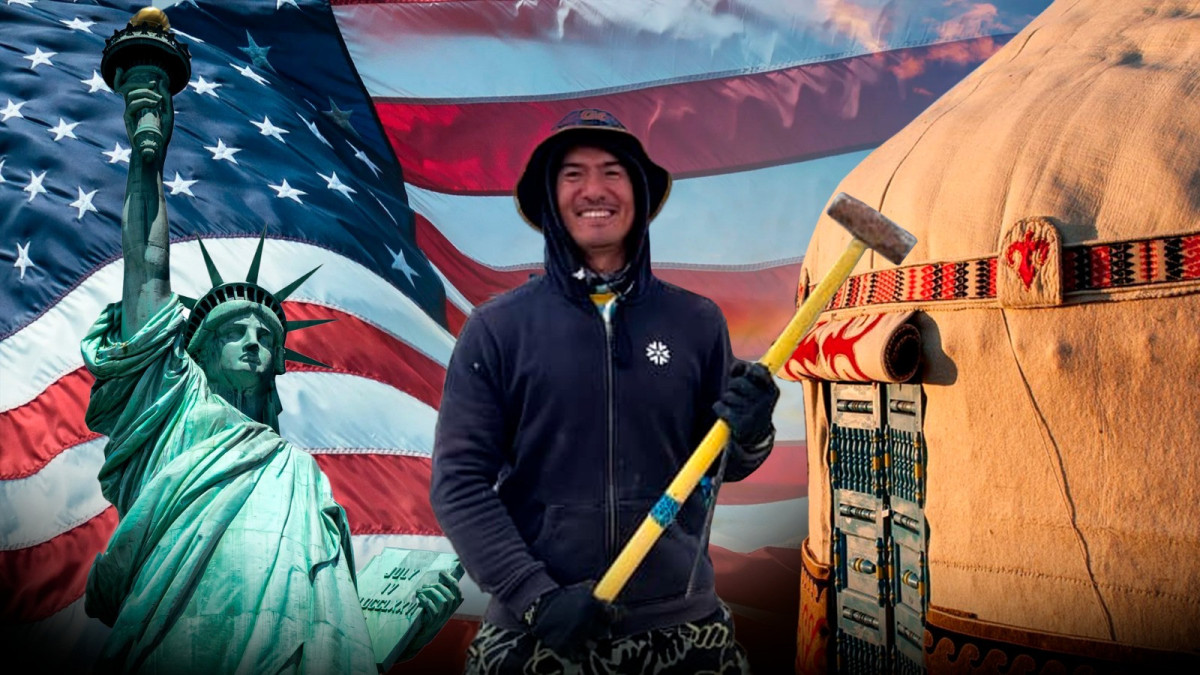
Kazakhstan to present yurt for 80,000 guests at Burning Man festival

EL.KZ Информационно-познавательный портал
Burning Man is a global cultural movement that promotes creativity, freedom, unity, and prosperity. This year, for the first time, an official delegation from Kazakhstan will participate in the festival. A 16-winged yurt, ethno-techno music, national dishes, and a journey into the Turkic world with the help of VR glasses will be an important step in presenting Kazakh culture to a global audience. A correspondent from El.kz talked to the head of the delegation Askhat Muratov, about the goals of the trip and the similarities between Burning Man and the nomadic spirit.
Askhat, tell us about yourself. How did the idea of participating in Burning Man and leading the delegation from Kazakhstan come about?
I have been working in the field of digitalization for five years, previously working at the Ministry of Digital Development under the leadership of Bagdat Mussin. After completing my mission at the ministry, I decided to realize a long-held dream – to travel to America, where I hadn’t been for 20 years. I have always been attracted to Silicon Valley as a center of IT, innovation, and progressive society. After leaving the ministry, I immediately bought a ticket, obtained a visa, and went to the USA. The plan was to study at Berkeley, participate in Tim Draper's accelerator, attend the UN General Assembly, and lectures by Professor Ilya Strebulaev at Stanford. But an unexpected event changed my plans. My friends Ilya and Lera were preparing for Burning Man. I knew about the festival, but considered it something unserious because of stereotypes. When I found out that Lera, a Berkeley graduate, and Ilya, who is creating a flying car powered by hydrogen, were going there, I was surprised. Later, I learned that many people prepare for the festival for a whole year. To participate there , you need a camp - a team and community. Getting into such a camp is not easy: there is an interview where you tell about your values and goals. Here, money and social media followers don't matter. It's a different culture, a different world.
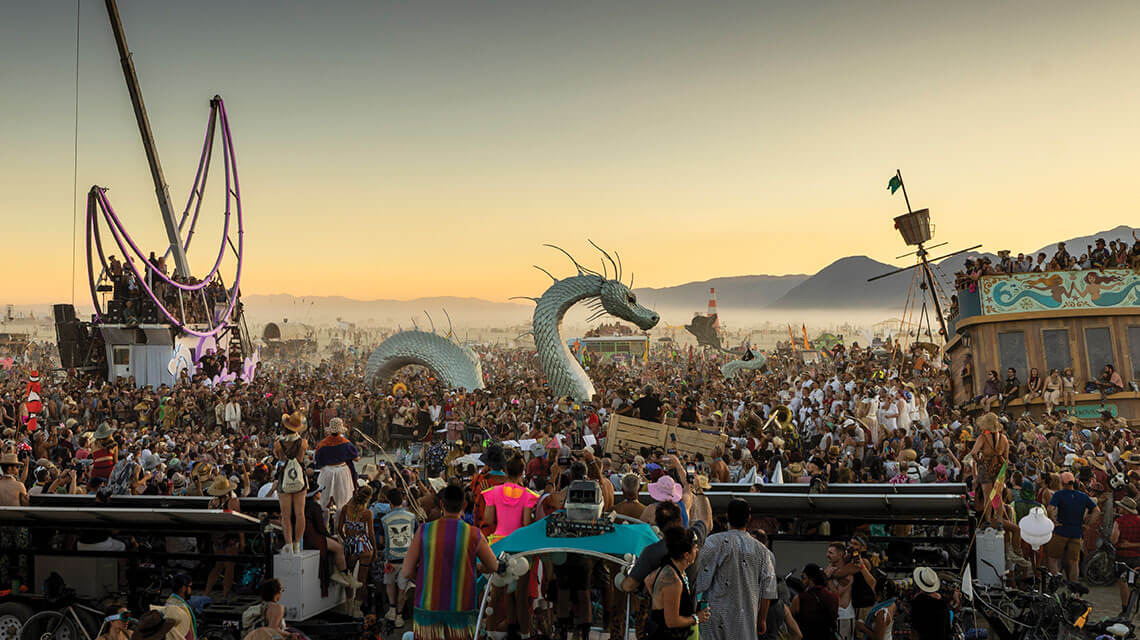
Photo: Ryan Salm
For the first time in the history of Kazakhstan, an official delegation is participating in Burning Man — an important event for the country's culture. Why did you decide take part at the festival this year?
- Because next year Burning Man will celebrate its 40th anniversary, and we plan to participate in a larger format. The current trip is a preparation. Moreover, I am not used to procrastinating. Last year, I attended the festival myself and gained experience. After that, I decided to help friends and talented people to get there, becoming a kind of guide. But everything developed rapidly. Initially, this was not intended as a full program, but was a preparatory project. However, we quickly transformed into a large, full-fledged camp.
What is the main mission of your team? What ideas, values, and national characteristics do you want to convey to the international community?
- The name of our camp, "Tengri," reflects its concept. We do not limit ourselves to Kazakhstan or neighboring countries, striving for openness and inclusiveness. Our camp is international: mainly migrants from Central Asia who speak Russian, but we unite different cultures and countries. The main goal is to present our culture. At the last Burning Man, I saw incredible art objects, but there was a lack of Turkic, Kazakh, and Central Asian culture. We want to fill this gap by gathering talented people and showcasing the richness of our culture. We are bringing a unique art object - a handmade Kazakh yurt created by craftsmen over several months. Inside there will be national instruments, clothing, chapan, household items of ancient Turks, dishes, and carpets. Designer Aydana Omarova, living in the USA on a 'talent visa', is creating a collection of clothing in the national style for us. We will present it at three fashion shows. The musical program includes DJs from Kyrgyzstan, Denis from Almaty (who lives in Canada), and Daniyar from New York. We are preparing an ethno-techno lineup for the Burning Man stage.

Photo: instagram.com/ tengri_camp
What is the main concept and mission of the Kazakh delegation? What ideas, values, or cultural features do you want to convey to the global audience?
- Our approach is unique in that Kazakh culture itself is a value. We want to showcase it at Burning. We are planning not only a cultural program but also a culinary one. We are bringing two large cauldrons (100 and 50 liters) for daily preparation of plov, sorpa, dishes with beef and chicken. This is a way to demonstrate our hospitality and national flavor. Our team includes professional musicians who will perform Kazakh melodies. Photographer Ospan Ali will present an exhibition dedicated to the protection of the Caspian Sea. Friends from the Institute of Tengrism Studies in Kyrgyzstan have developed a VR game that allows users to immerse themselves in the history of Tengrism, Turkic fairy tales, and culture. We have acquired VR equipment for this purpose. This approach is a modern and creative way to showcase our culture, inviting people to deeply feel our traditions and values.
- What difficulties did you meet when implementing such a large-scale project, and how did you overcome them?
- Burning Man seems to be designed to make it difficult to get there. The first obstacle is the ticket purchasing system. It's not as simple as 'sales opened - bought.' You need to register your email, submit an application, wait for approval, and participate in a lottery that occurs every three years. Only the lucky ones get the right to purchase a ticket.The second is geographical isolation. The festival takes place in the desert, far from civilization, with only one entry and exit. A traffic jam for a day, dust storms, heat — that’s the local 'welcome'. The third is nature and the lack of infrastructure. It's hot during the day, cold at night, there is no water, no communication, no internet, no showers, no toilets. Burning Man is not a vacation, but a platform for the strong in spirit, a place of transformation.After such trials, the other problems seem easier. I understood one thing: if you believe in the idea and see its benefits, you find strength not only in yourself but also in the people around you.My team consists of incredible people: top managers, professionals with vast experience. But at Burning Man, everyone does everything themselves, as delegation is not allowed. This is a real school of life even for leaders.
What similarities and differences do you see between the philosophy of the Kazakh nomadic culture and the principles of Burning Man?
— The philosophy of Burning Man and the nomadic culture of Kazakhs and Turkic peoples share a lot in common. The main thing is shared values: openness and mutual assistance. It is a culture built on sincerity and support, without material gain. Openness, kindness, honesty, and spiritual generosity are valued here. Just as nomads are renowned for their hospitality, at Burning Man people treat each other with care. Another similarity is self-sufficiency, independence, and freedom. Nomads lived in harsh conditions, relying on their own labor. Burning Man participants, in the desert, learn to survive by relying on their own resources. There are many talented, strong-spirited people here, distinguished not only by their creativity but also by their approach to life, loyalty to ideals, and respect for others. These similarities can be listed endlessly, but their essence is the harmony of the individual and society, mutual support, and the creation of a shared spiritual space. Hospitality is at the heart of the Kazakh spirit.
How do you plan to show this quality in an environment guided by the principles of mutual assistance?
- We are bringing a unique art object — a 16-wing handmade yurt (60 sq.m, 9 m in diameter, 6 m in height). This will be the first time such a yurt will appear across the ocean. The yurt will be open to all 80,000 festival guests. We will treat them to national dishes, showcase traditional clothing, and offer a VR journey into our culture. Inside the yurt, there will be an exhibition of photo panels dedicated to the issues of the Aral and Caspian Seas drying up — our contribution to environmental protection. We will present our culture through clothing, cuisine, daily life, and hospitality. We have prepared around a thousand souvenirs. For us, this is not just a presentation, but an opportunity to share the warmth, kindness, and generosity of Kazakh culture.
What contribution, in your opinion, will participating in Burning Man make to Kazakhstan’s cultural image? Is this a one-time experience or a long-term tradition?
— Participating in Burning Man is a unique opportunity to promote Kazakhstan’s cultural image. This is a venue where the most talented and progressive people gather — just 0.00001% of the world’s population, but they are the ones shaping trends in science, art, and technology. Burning Man is the perfect platform to share ideas and values with a target audience.
Advertising here is prohibited, so you can only showcase your camp, culture, and kindness. This is a chance to strengthen Kazakhstan’s image, boost interest in the country, and promote tourism. We plan to participate every year. Our camp is designed for 200 people, and next year, for Burning Man’s 40th anniversary, we want to bring 40 yurts. It’s an ambitious goal, but I believe it’s achievable. After this trip, I hope to attract sponsors and partners.
The project is non-commercial — we cover all expenses ourselves, following the philosophy of Burning Man.
How effective is Burning Man as a platform for cultural diplomacy and international dialogue?
— Burning Man’s potential for cultural diplomacy is enormous because the main focus here is people.
Politicians and business leaders also come here in search of inspiration and new ideas. The shared goal is to make the world a better place and contribute to progress. This is the essence of the Burning Man spirit. I’m glad to be surrounded by people who share this vision.
How is the team’s mood? How is the preparation going?
— 90–95% of the participants are first-timers at Burning Man, which has brought certain challenges. I’m not one to rely on expectations, but the team’s enthusiasm has been incredible.
The most difficult task was convincing people to spend their vacation in a desert across the ocean, working and spending their own money. But the team spirit has been amazing — everyone has become friends.
I’ve been lucky to bring together extraordinary people: a Kazakh professor from Harvard, designer Aidana Omarova, DJ Denis from Toronto, financier Aliya, photographer Ospan Ali, representatives of the Tengrianism Institute from Bishkek, and well-known Kazakh entrepreneurs. Some couldn’t join us due to health or urgent matters, but they still contributed by supporting the project.
This shows the strength of our team: every member is a responsible, professional, and dedicated individual. Working with them is a great honor.
What impressions and gifts does your delegation plan to share with each other and with international participants?
— Our team includes more than 30 unique personalities: entrepreneurs, politicians, civil servants, artists, photographers, musicians, pilots, and travelers.
We have prepared around a thousand souvenirs, but the main gift is not the items themselves — it’s our genuine hospitality. In the yurt, guests will be able to relax, try national dishes, and feel the warmth of our culture. We want to offer not just things, but heartfelt connection, the depth of traditions, and unforgettable experiences.
What story, image, or impression of Kazakhstan do you want to leave in the minds of foreigners after the festival?
— I want our delegation to be remembered for our hospitality, mindfulness, and deep perception of the world. Let people see the unique, kind, and progressive individuals who live in Kazakhstan. If everyone who experiences our culture is inspired to visit our country and region more often, our mission will be accomplished.
This trip is not just a presentation. We want to lay the foundation for new projects, startups, cultural programs, and musical collaborations — all for the sake of humanity’s development and the common good.
Burning Man does not divide people by age, wealth, culture, or religion. What matters here is who you are as a person — whether people want to connect and work with you, how open you are, and what benefit you can bring to the world.
The main question is: “Why did I come into this world? What is my mission?” Whoever finds the answer can truly change the world for the better.

El recommends 
