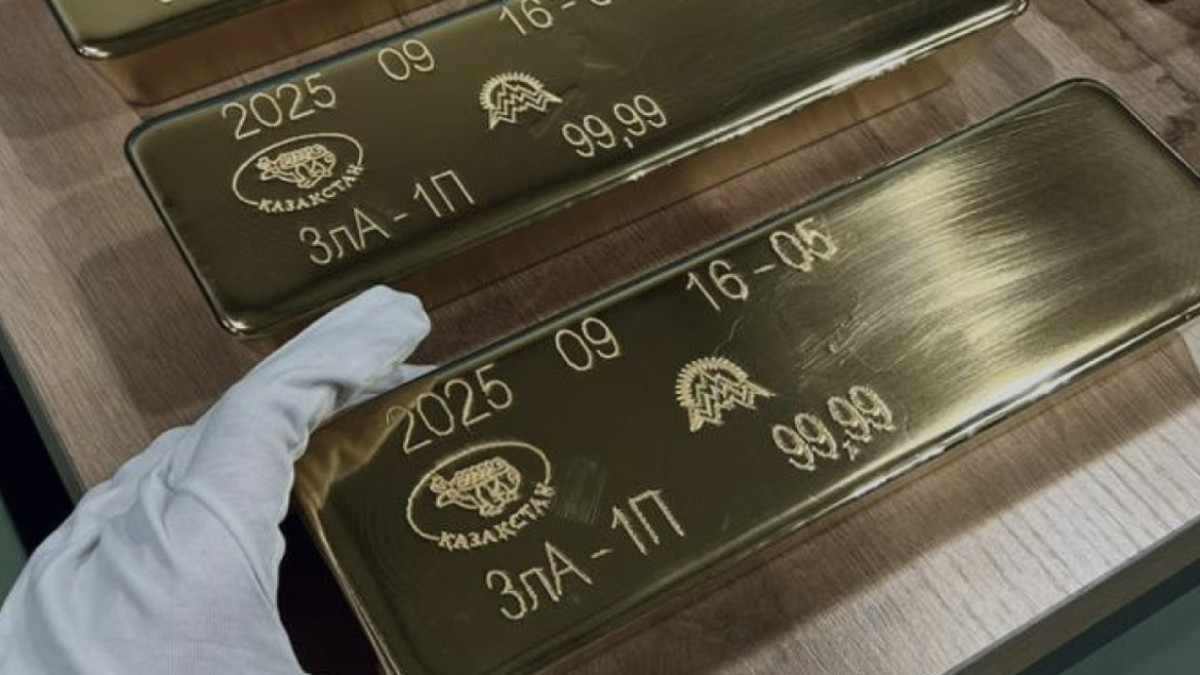
Kazakhstan – one of world leaders in gold reserves

EL.KZ Информационно-познавательный портал
According to the World Gold Council, the total volume of official gold reserves exceeds 36,000 tons, and in 2025, central banks have already purchased over 1,000 tons,El.kz reports.
The US confidently leads the global ranking, surpassing its nearest competitors several times over. The reserves, stored mainly in Fort Knox, serve as the foundation of the U.S. dollar’s global dominance.
The U.S. holds a total of 8,300 tons of gold, Germany (3,300 tons) and Italy (2,400 tons). Russia (2,300 tons) and China (2,200 tons).
In this ranking, Kazakhstan holds the 18th place in the world, with 306 tons of gold as of the second quarter of 2025. Earlier this year, the country’s reserves stood at 290 tons.
Moreover, Kazakhstan ranks among the top 10 countries with unmined gold reserves. At current gold prices, these reserves are valued at $323 billion, making Kazakhstan a significant player on the global market—especially considering its geological potential.
These unmined reserves highlight the country’s long-term prospects as a gold-producing power. Russia and Australia lead with 12,000 tons each, but Kazakhstan surpasses many European giants, such as Turkey (around 500 tons).
Kazakhstan is not just a country rich in natural resources but also an active participant in the global gold market. In 2025, the National Bank of Kazakhstan became one of the leaders in gold purchases: during the third quarter, it added 18 tons, bringing the official reserves to 324 tons.
The country’s total international reserves exceeded $45 billion, with gold accounting for 57%—serving as a buffer against tenge volatility and geopolitical risks.
Kazakhstan has doubled its refined gold production over the past decade, becoming the 13th largest gold producer in the world, with an annual output of around 130 tons.
Key projects ensure an annual production of 5.5 tons and reserves sufficient for 16 years. Experts note that for Kazakhstan, gold is not only an export commodity (accounting for about 10% of exports) but also a tool of financial independence.
“Gold protects against devaluation and external sanctions,” the World Gold Council emphasizes.
With 2,300 tons of unmined reserves, the country could double its gold holdings in the coming years—provided that investment flows into geological exploration.

El recommends 
