

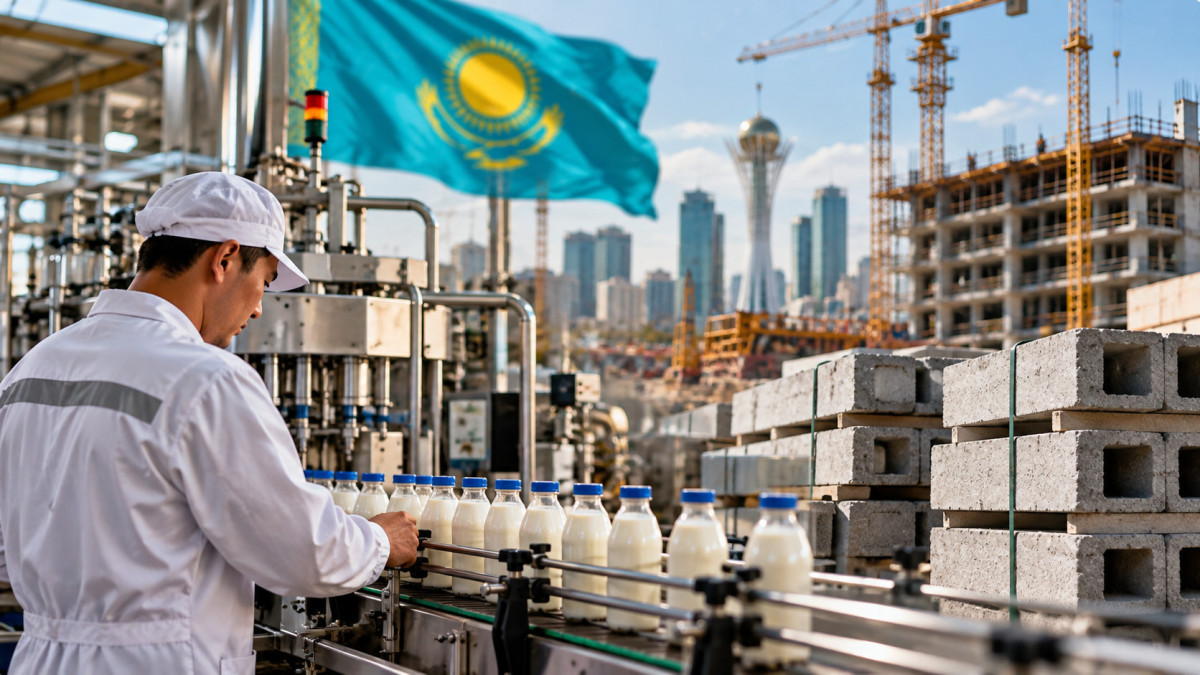
Between 2019 and 2026, Kazakhstan implemented 1,226 investment projects worth 8.7 trln tenge, creating 106,800 permanent jobs, El.kz reports.
Among the sectors listed, the food industry accounted for the largest number of projects, with 265 implemented. A further 242 projects were in the construction materials manufacturing sector.
During the first eight months of 2026, investment in fixed capital increased by 17% in nominal terms. Adjusted for price changes, real growth stood at 8.1%.
Financial analyst Andrey Chebotaryov commented on the statistics on his Telegram channel. In his view, the level of investment activity provides grounds for optimism, although it is still too early to speak of successful economic diversification.
“To be honest, I always approach such impressive reports with caution, because I have seen the budget figures and know how much of the country’s revenue still comes from oil and oil-related income. I also know for certain that diversification is never a quick or straightforward process,” Chebotaryov wrote.
The analyst cited South Korea, Malaysia and the United Arab Emirates as examples of countries that required decades to transform the structure of their economies. In his view, Kazakhstan will have to follow its own path, taking into account its territory, population and natural resource base.
“Those 1,226 projects are the first steps. It makes no sense to judge them by asking, ‘A plant has just been built, so where is the immediate economic boom?’ Diversification is not measured in quarters, but by what remains ten or twenty years down the line,” the expert emphasised.
According to Chebotaryov, increased investment in manufacturing industries indicates that demand for their products exists. At the same time, he considers private capital participation essential, as investors have a direct interest in ensuring that new enterprises generate returns on investment.
“Investment is not the cause of development, but a consequence of it. Capital flows to where demand already exists,” the analyst noted.
In his view, the ultimate measure of successful diversification will be the long-term performance of the production facilities that have been established.
“The real results will not be assessed today, but by our children, when they look at how many of these production facilities have survived and grown,” Chebotaryov concluded.
