

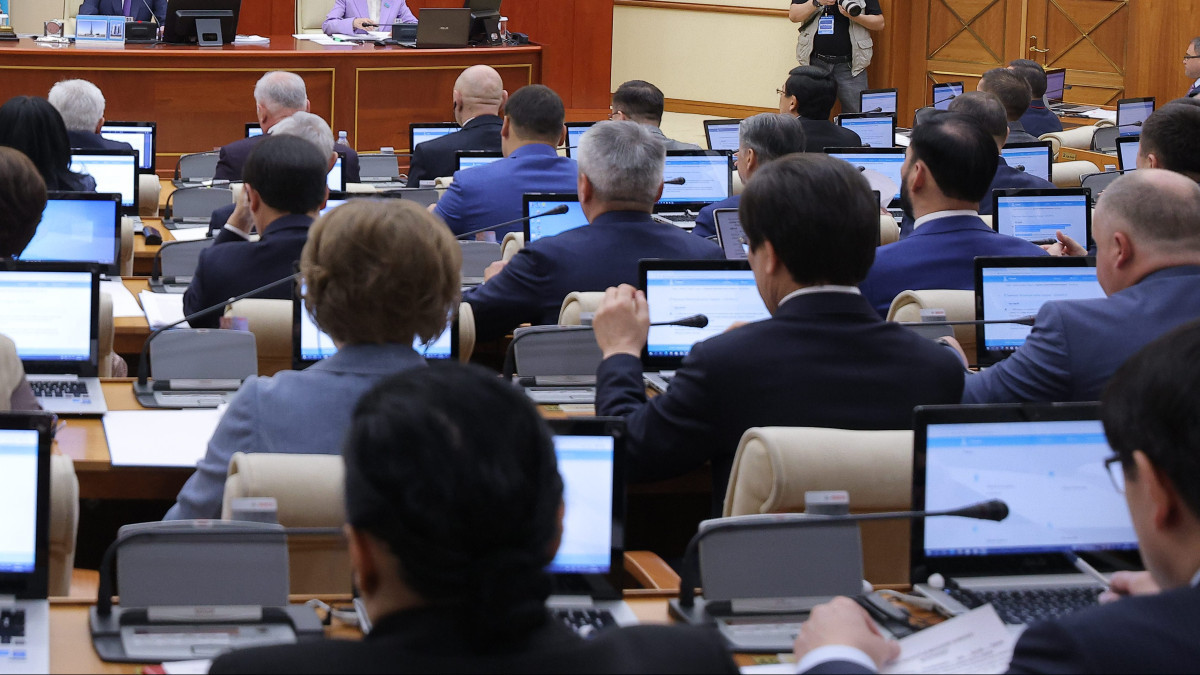
The President has signed a decree convening the first session of the Kurultai. The new body will begin its work on August 28. This date marks the beginning of a new political cycle in Kazakhstan behind the constitutional reform, a revised electoral system, and the establishment of a legislative body with a new institutional architecture.
Why is this a historic moment?
The bicameral Parliament began its work in 1995 and operated for 30 years. During this period, a system was established in which the Mazhilis represented the interests of the majority, while the Senate represented the regions.
Such a model was appropriate for a young state at the outset of its development. The two-stage review of legislation made it more difficult for questionable initiatives to pass and reduced the risk of lobbying.
However, the bicameral system also had inherent limitations. A unicameral parliament can accelerate the legislative process and eliminate delays arising from disagreements between the chambers.
The Kurultai is a new parliament. Where did it come from?
The idea of transitioning to a unicameral parliament was first put forward by the President in his Address to the People on 8 September 2025. He cited the increased political maturity of citizens and the completion of the Senate’s mission.
The name of the new body was proposed later. At a meeting of the National Kurultai on 20 January 2026, the President proposed naming the new parliament the Kurultai, given the historical significance of the term for the people of Kazakhstan.
The new Constitution has been in force since 1 July 2026. Under the Constitution, the Kurultai is recognized as the legal successor to the previous Parliament. As a result, bills previously introduced in the Mazhilis have retained their legal status and continue to be considered.
The Kurultai will consist of 145 deputies. They will be elected on a proportional representation basis for a five-year term. Parliamentary parties will be divided into the majority and the opposition, while the opposition may also support individual initiatives of the governing party.
What will the Kurultai do?
The primary responsibility of the deputies will be to adopt constitutional laws and legislation governing key areas of public life, including citizens’ rights, taxation, the state budget, education, healthcare, environmental protection, and security.
The Kurultai will hear reports from the Government and the Supreme Audit Chamber, conduct parliamentary hearings and Government Question Hours. It will participate in the appointment of judges and public officials, give consent to the appointment of the Prime Minister, and approve the Vice-President.
The country’s system of government rests on three pillars. The President remains the Head of State, the Kurultai assumes legislative and oversight functions, while the Government is responsible for implementing state policy.
How is the Kurultai organized internally?
The Kurultai is headed by a Chairperson elected by the deputies through a secret ballot. The President nominates the candidate for Chairperson, who will have three deputies.
The main workload will be carried by standing committees, which prepare draft laws for consideration. Commissions are established to address specific tasks and are dissolved once those tasks have been completed.
This structure is coordinated by the Bureau of the Kurultai, which consists of the Deputy Chairpersons and heads of parliamentary factions. Administrative and organizational support is provided by the Office of the Kurultai, which continues to operate even after the dissolution of a parliamentary convocation.
Is a Kurultai deputy’s role limited to voting?
A deputy’s powers extend beyond participation in plenary sessions. Deputies may introduce bills and amendments, ask questions, submit parliamentary inquiries, and exercise the right to meet with public officials.
Another important responsibility is to bring citizens’ appeals and concerns to the attention of the Kurultai. Through such appeals, deputies remain connected with the public beyond the parliamentary chamber.
At the same time, the law establishes certain restrictions. A deputy may not combine the parliamentary mandate with entrepreneurial activity or other paid employment, except for teaching, academic, and creative work. Unexcused absences may result in disciplinary measures.
What rules of ethics apply to deputies?
The rules of parliamentary ethics require respect for colleagues and prohibit insults, offensive gestures, and calls for unlawful actions. Deputies are required to protect state secrets and to sign documents personally.
Compliance is overseen by the Council on Parliamentary Ethics under the Chairperson. The Council considers complaints, monitors deputies’ public statements in the media, and may recommend disciplinary measures.
The sanctions are clearly defined. If a deputy is absent from parliamentary sessions for more than one month, they may lose their salary and part of their privileges. Ethical violations may result in a public apology or removal from the chamber for up to three sessions.
