


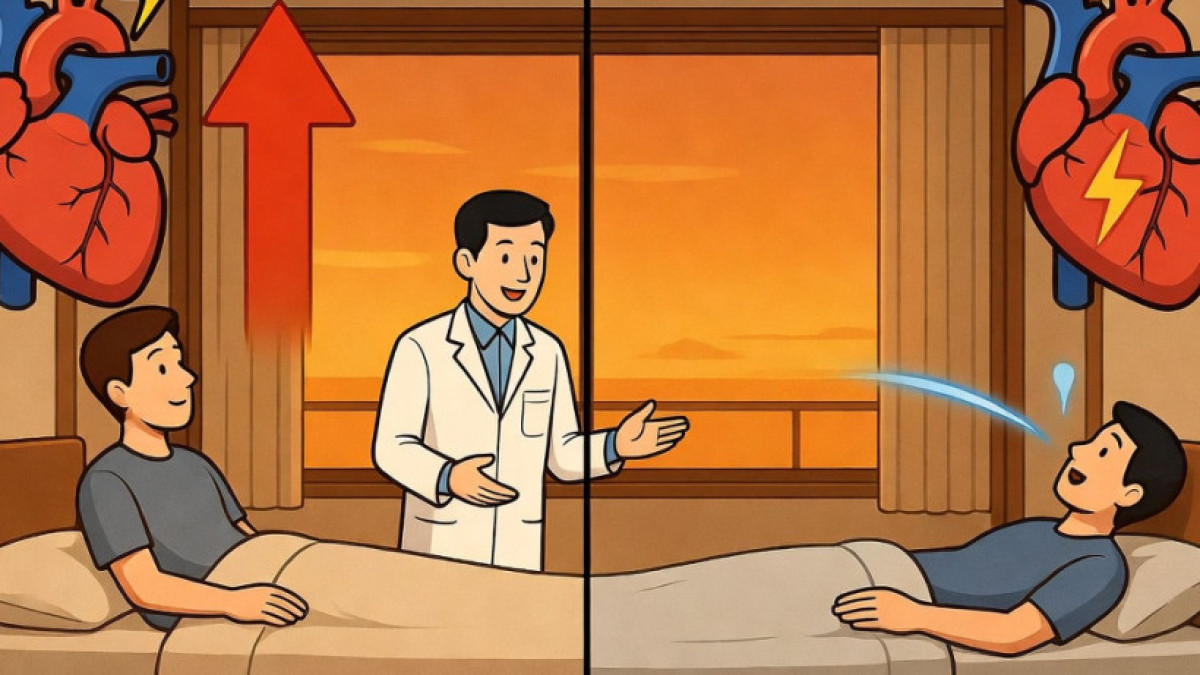
Kazuomi Kario, a professor of cardiology at Jichi Medical University in Japan, has spent over 20 years investigating why cardiovascular events occur most often in the first hours after waking up.
In one of his major studies, more than 500 elderly patients with hypertension were observed. Those who experienced the largest morning surge in blood pressure were nearly three times more likely to suffer a stroke than others. This is not an abstract risk, but a measurable and reproducible pattern.
The mechanism is well known to physiologists. When a person gets out of bed, the sympathetic nervous system is rapidly activated, stress hormones are released into the bloodstream, and blood pressure rises sharply. If the blood vessels are already damaged this daily morning strain can become dangerous over time.
Kario also showed that the morning surge in blood pressure and abnormalities in blood clotting act together, reinforcing each other. In other words, waking up triggers several processes at once, which is especially critical for people with already weakened blood vessels.
It is important to understand that these findings primarily apply to people with hypertension and underlying vascular changes. A heart attack is almost always the result of a long-term process.
Nevertheless, the practical takeaway from decades of research is simple. People over 40, especially those with high blood pressure, should avoid jumping out of bed, give the body at least half a minute.
How to wake up without harming your heart
The first thing to remember: morning is not the start of a race. Your body has been operating in a slowed-down mode all night and needs time.
After waking up, stay in bed still for at least 30–60 seconds. Don’t immediately reach for your phone or run through your to-do list, just allow your body to recognize that the day has begun. A few slow, deep breaths at this moment work better than you might expect.
Get up gradually, moving through a seated position. A sudden rise causes a sharp spike in blood pressure, a surge of stress hormones, and unnecessary strain on the heart from the very first minute of the day. This is especially important for people over 40.
A glass of water right after waking up is a simple but important habit. During the night, the body loses fluids, the blood vessels have to work harder.
Morning rush and anxiety are a separate issue. If your first thoughts upon waking are anxious or you are in panic, it creates chronic stress that builds over time. Try to allow yourself at least 15 extra minutes in the morning beyond what you strictly need.
A calm morning is neither a luxury nor laziness. It is one of the few simple ways to reduce strain on the heart without requiring money or special equipment.
