

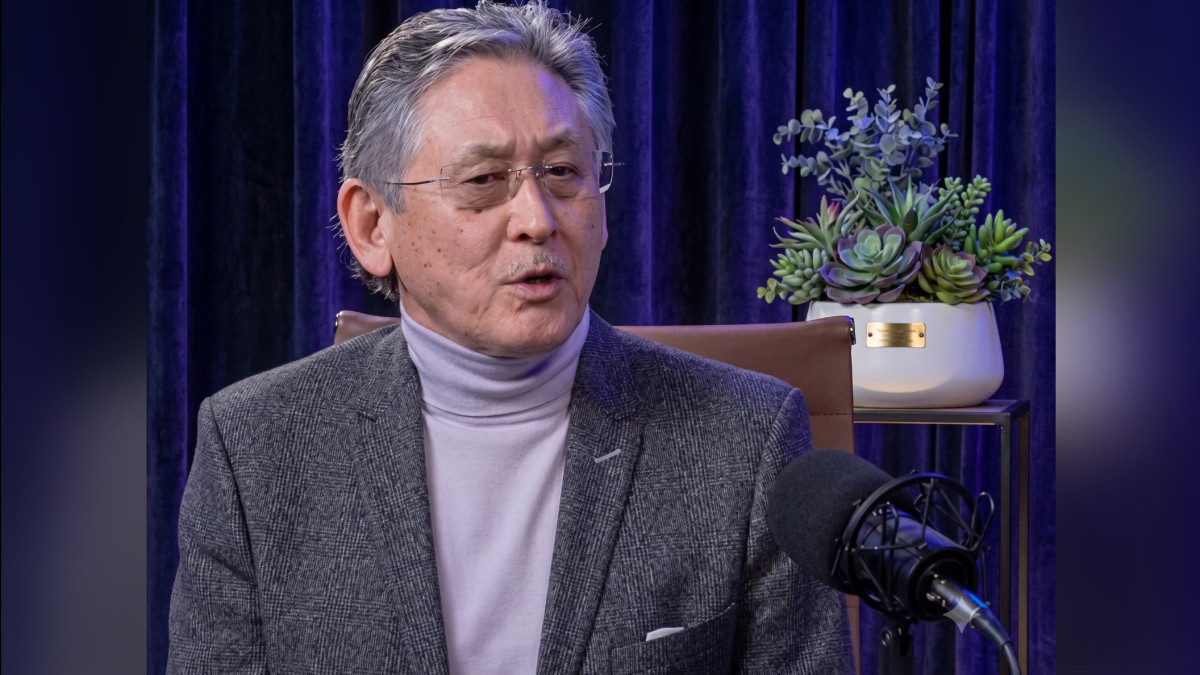
Modern technologies have transformed the journalism profession beyond recognition. Information now circulates within seconds, bloggers compete with traditional media for public attention, and AI has become a new professional tool. In an interview with Qazaq Ádebieti, journalist and writer Bigeldy Gabdullin discussed the challenges confronting journalism today and the factors that will enable the profession to retain public trust.
The Internet has accelerated the news cycle, but not the reliability of information
According to Bigeldy Gabdullin, journalism is undergoing one of the most challenging periods in its history. While digital technologies have dramatically accelerated the dissemination of information, they have also significantly increased the risk of spreading misinformation.
“Journalism is experiencing the most difficult period in its history. Never before has information spread so rapidly, and never before has it been so short-lived.”
He acknowledges that modern technologies have created unprecedented opportunities for the profession. News can reach millions of people within seconds; however, this has also given rise to a new challenge.
“We have become far too willing to trust the Internet, forgetting that the Internet is not a source of truth but merely a space where facts, truth, and falsehoods coexist.”
Gabdullin maintains that the fundamental principles of journalism remain unchanged: fact-checking, reliance on primary sources, and a critical assessment of all information.
Journalism begins with critical thinking
Reflecting on the profession, Bigeldy Gabdullin emphasizes that technology can never replace the personal qualities that define a journalist. In his view, the profession has always been grounded in education, culture, and the ability to critically analyze events.
“Authentic journalism has always begun not with a computer, but with the journalist as an individual.”
He expresses particular concern about the declining interest among young journalists in reading books. In his opinion, the growing tendency to seek ready-made answers is gradually displacing independent thinking.
“What concerns me most is something else. Young journalists are reading books less and less. They are used to looking for ready-made answers, whereas journalism begins precisely where such answers do not exist.”
For this reason, he believes that the system of professional training should be reassessed, with renewed emphasis on the classical traditions of Kazakhstan’s national school of journalism, intellectually public affairs writing, and the legacy of the Alash press, while integrating the opportunities offered by modern technologies.
Bloggers and journalists serve different purposes
A significant part of the discussion focused on the distinction between journalism and blogging. Gabdullin noted that he respects talented content creators working on social media platforms but considers it a mistake to equate the two professions.
“A blogger primarily expresses a personal opinion. A journalist is obliged to serve the public interest. A journalist is accountable for the accuracy of every fact, for the consequences of every published word, and for maintaining the trust of readers.”
According to Gabdullin, many young people are now entering the profession in pursuit of popularity and public visibility. However, public recognition is not synonymous with professional competence.
“A true journalist should not aspire to become a celebrity. A journalist should aspire to be of service to society.”
Why journalism will remain essential
Despite the rapid pace of technological change, Bigeldy Gabdullin is confident that journalism will continue to play an indispensable role. In his view, public trust cannot be earned without professional integrity, editorial independence, and accountability.
He argues that the written and spoken word remains the journalist’s principal instrument. When journalists uphold professional principles, think critically, and perform their duties conscientiously, both society and public authorities will value their perspectives.
“If a journalist is honest, professional, and independent in judgment, they are capable of making even the highest-ranking public officials listen. That is why journalism remains one of the most important professions in public life—but only on one condition: that it preserves its dignity, intellectual rigor, and sense of responsibility.”
A country’s future depends on its people
Concluding the interview, Bigeldy Gabdullin remarked that he now reflects less on his own past than on Kazakhstan’s future. He noted that his generation witnessed the dissolution of the Soviet Union, the establishment of an independent state, periods of economic crisis, great aspirations, and significant national challenges.
Today, he says, a different question occupies his thoughts.
“Will we be able to leave our children a country whose greatest asset is not oil, uranium, or rare earth metals, but free, educated, and responsible citizens?”
In Gabdullin’s view, the answer to this question will determine Kazakhstan’s future. He believes that sustainable development cannot be achieved through economic reforms alone.
“A state does not begin with its budget. It begins with culture, education, respect for the rule of law, and respect for human dignity.”
He also expresses concern about the state of public morality, describing as troubling the growing tendency among young people to look to fleeting social media personalities, rather than scholars, writers, and intellectuals, as their role models.
At the same time, Gabdullin remains optimistic. In his opinion, history does not progress in a straight line, and periods of stagnation are inevitably followed by periods of renewal.
“The most important thing is not to lose our moral compass.”
Speaking once again about Kazakhstan’s future, he returns to the principle he considers fundamental.
“A nation’s greatest asset is neither its territory nor its natural resources. Its greatest asset is its people.”
He is convinced that respect for the individual, human dignity, freedom, and the right to speak the truth will form the foundation of a strong and resilient state.
“If we learn to respect every individual, their dignity, their freedom, and their right to speak the truth, Kazakhstan will have a strong future. That is what I believe. And that is why I continue to write.”
