

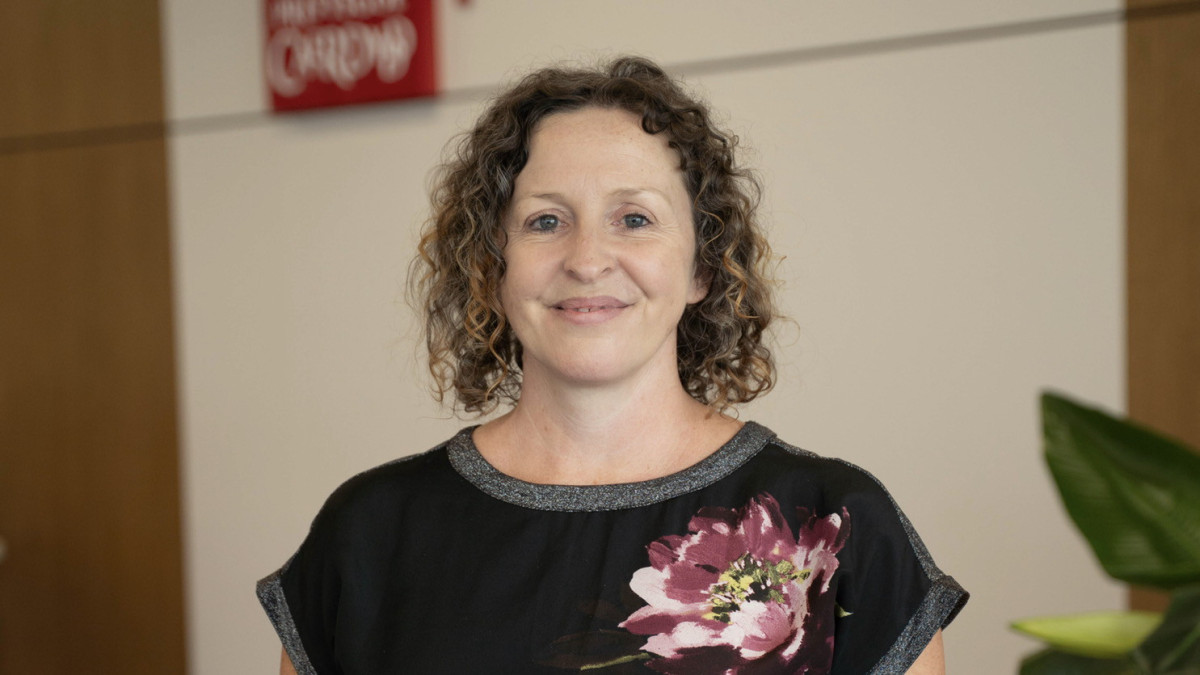
In an interview to El.kz, British Professor of Marketing and Strategy Eleri Rosier shared impressions of teaching to Kazakh students and her first work experience in Kazakhstan, as well as discussed the impact of AI on the marketing profession.
Eleri Rosier is in Kazakhstan to teach one of the first modules of the first year of the Business Management programme. The four-week module focuses on the principles of marketing.
What are your impressions of teaching to Kazakh students?
The students have been amazing. So much more engaged and keen and enthusiastic.
People have told me that but actually they’re even more than I was expecting. I’ve got to know them quite well over the past two weeks and I’m so impressed with how they engage with every task that I’m giving them and they are feeding back really knowledgeably about the subject. In fact, I’ve had to increase the difficulty level.
This is a basic marketing module assuming that no one has ever studied marketing before but they are so switched on and they are wanting more, adding more content and the discussions have been incredibly rich in the classroom. They also like working together and learning with each other and from each other and I think that’s a really lovely thing that I’m hoping that will continue to happen as they move through the programme.
And what about the level of English speaking of Kazakh students?
It’s absolutely excellent.
No issue whatsoever. We’re communicating really well together. They understand quite complicated concepts and ideas and matrices and models in marketing.
No problem whatsoever. The English, I haven’t even thought about it because it’s not been an issue at all. The level is excellent.
What do you like most about teaching Kazakh students?
How friendly everybody is and all the students have been really interested. It’s my first time here and they’re telling me places to go, places to be.
I love being with young people anyway but they’re so enthusiastic and wanting me to make sure I have the best time here. So I’ve been learning a lot from them and their experiences as consumers as we are learning about marketing. Just hearing about how they purchase and why they purchase and the influences may be slightly different from what I’m used to at home.
And what makes different Kazakh students from others?
Oh, that’s a good question. What I’ve found is that they are much more eager to share their own personal experiences in the classroom.
Quite often in some of the locations students are a little bit more reserved about sharing their personal experiences. But here everybody is open and keen to learn from each other’s experiences as well and not be so reserved maybe.
What surprised you most when you first came to Kazakhstan?
How friendly and welcoming everybody has been.
I felt so at home here from the very moment I arrived in the airport. I wasn’t expecting that. I don’t know quite what I was expecting, but everybody has been so interested in making sure that I’m okay and that I’m having a good time and that I’m seeing everything and making the most of my time here.
And that’s really touched me. I’ve really enjoyed people’s hospitality. And I think, I come from Wales, and Welsh people are always described as friendly and welcoming. And I’m feeling exactly the same here. I feel very at home. And that’s been really wonderful.
And have you tried Kazakh food?
I’ve tried some Kazakh food, yes. And I’ve really enjoyed it. That’s one thing about being able to travel in my role at , is to be able to try a lot of different foods.
I’ve always been one to enjoy trying new things. So the food here is delicious. And as well as Kazakh food, there’s a lot of other ranges of foods that you can try here too. So it’s been a really nice experience.
How is AI changing marketing today?
AI is radically changing the whole landscape of everything that we do and I’m not going to use the word scary but the pace is happening so quickly that even when we try and get to grips with how AI is affecting something by tomorrow it’s moved on again.
So I think we are embedding AI into everything that we’re teaching not just marketing but trying to make sure that a lecture I wrote yesterday is still relevant today. But that’s why a classroom dynamic is so important so we’re learning about AI together and sharing new concepts and ideas and trying to understand what’s happening together. So co-creating new knowledge I think is really important.
Changing the whole landscape and some of the roles in marketing that used to exist might cease to exist going forward as AI becomes more sophisticated and is able to create posters, able to create content. So I think we need to really understand how things are moving forward so that we are ensuring that everything is authentic and there’s a lot of room there for graduates coming through from marketing who have that technical AI expertise because at the moment I’m not sure that that is enough.
What marketing jobs do you think will be popular in the next 10 years?
I think organisations are looking for graduates who have more of a data analytic background in marketing. We collect a lot of data in marketing. There are a lot of different marketing metrics from hard metrics like profit sales to softer metrics like satisfaction and loyalty.
We have loads of excellent data from our social media channels. You know, how many clicks, how many likes. But putting all that together and measuring it in a way that is enriching for strategic decisions.
Yes, and I think a lot of students come to marketing assuming that it’s content creation, it’s creative but actually where the jobs are in the future is more in the technical side of measuring marketing effectiveness and being able to do that in a strategic way to enable better marketing strategies going forward.
I think students who are able to combine that marketing understanding of consumer behaviour with the metrics and enable better decision making moving forward are the ones that are going to be in demand.
What do you think humans can do better than AI?
I’m not sure that AI will ever fully be able to understand human behaviour and the cognitive, psychological part of decision making. We do a lot of that in marketing, trying to fully understand what goes on in the mind of the consumer when they make a purchase. Why did they choose that one, not this one? I’m not sure computers and AI will ever be able to fully understand what that process is.
Sometimes we don’t even know why we chose shampoo A rather than shampoo B. How can AI ever be able to do that? So I think that innate human understanding of behaviour is something that I think AI will take a while to be able to figure out.
What advice would you give to students who want to become successful marketers?
I think you’ve got to really enjoy the world of understanding behaviour. I think that enjoyment of really listening to customers, really listening to people, making sure that organisations are completely customer centric, not just in the marketing department, but that everybody is actually focused on the consumer. And I think you have to be quite a certain type of person for that, who enjoys collaborating, who enjoys listening, who enjoys being with people. And I think if you come to marketing as a person who really enjoys that, I think anything you do will be successful in that way.
