How robots and AI are transforming Kazakhstan's industry
Алима Муслиманова Журналист El.kz
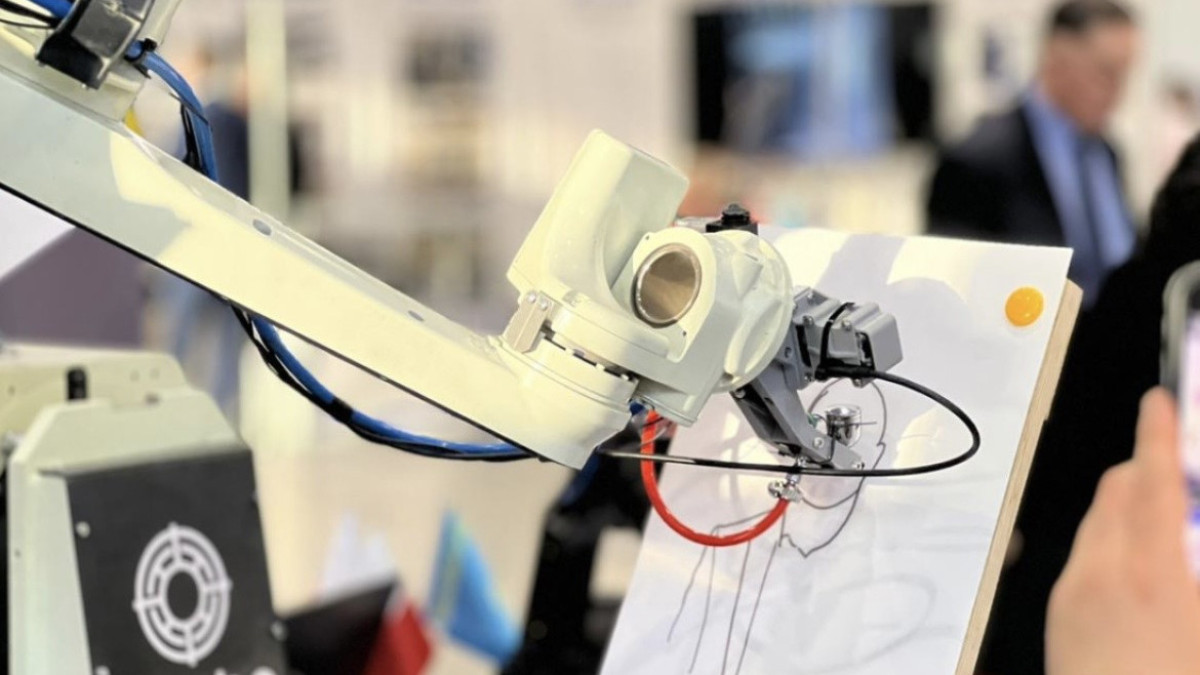
Today, robots are adapting, making decisions, and working collaboratively within a unified system, exchanging data and adjusting algorithms in real time. In this article El.kz explores how robots and artificial intelligence are reshaping the Kazakhstan's industrial landscape.
Astana is currently hosting the XIII Kazakhstan Mechanical Engineers Forum, bringing together over 1,000 participants and over 100 foreign delegates. The forum serves as a platform to discuss industrial policy, digitalization, robotization, and investment attraction, while also showcasing the latest industrial solutions at a specialized exhibition.
"Robots can now exchange information, and optimize production workflows. They are no longer isolated devices but entire systems capable of increasing the economic efficiency of enterprises." Timur Utebekov, a Business Development Director notes.
AI agents are becoming a key element of this transformation. They manage the interaction between robots, analyze the environment, and help adapt production to new conditions, allowing robots to "understand" their positioning, adjust their actions, and refine their algorithms.
"A robot is only 20% of the solution. Without site preparation, safety systems, and support from an integrator, it will not deliver the expected results. Often, equipment stands idle because of a lack of competent personnel or a lack of understanding of its real capabilities," Igor Mushnikov, Technical Director of a company specializing in the 3D printing of large-scale metal parts said.
Modern technologies are making it possible to restructure the entire production chain.
"With the help of cameras and neural networks, robots are capable of recognizing objects, orienting themselves in space, and correcting the actions of their colleagues. This is not just mechanization; it is intelligent cooperation where every unit becomes part of a single system." Akylbek Iliuf, CEO of a startup notes.
As of 2025, over 300 industrial robots have been installed at domestic enterprises. This was reported during a government meeting by the Minister of Industry and Construction, Ersaiyn Nagaspayev who emphasized that automation remains a key priority for the development of the machinery sector. Currently, the density of industrial robots in the country is about 7 units per 10,000 workers significantly lower than in developed nations.
Notable examples of implementation include Kazakhstani automotive plants. The creation of a project office under the "Digital Kazakhstan" strategy, in collaboration with the Ministry of Digital Development, will allow for the centralized coordination of robotization and digitalization across all enterprises.
On a global scale, the industry is moving toward the integration of machine vision, neural networks, and servo-programming, where a robot independently processes a part based on a 3D model. Companies are already offering humanoid robots for manufacturing, and startups are investing millions of dollars in AI-driven industrial solutions.
Experts emphasize that the future of industry belongs to integrated systems where robots, AI, and digital technologies function as a single organism capable of adapting, learning, and generating economic value.

El recommends 
