

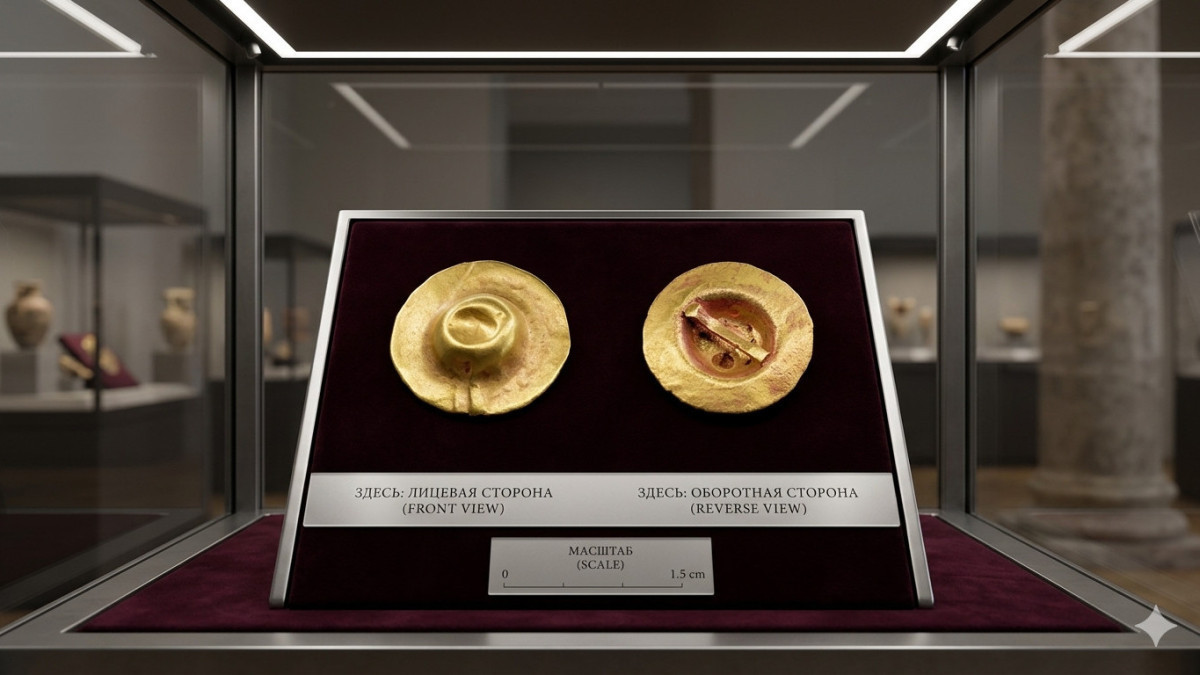
During archaeological investigations at the Örnek burial ground in Eastern Kazakhstan, various ancient artifacts were discovered, including gold ornaments. The excavations were carried out in 2015 on burial mounds that were examined as part of rescue archaeology operations. Among the finds, small gold buttons are of particular interest. Archaeologists uncovered them in one of the burial complexes dating to the Saka period, El.kz reports.
What the buttons looked like
The items were made from thin gold sheet and had a circular shape. Their diameter reached up to 1.5 cm, and their edges were folded inward, giving the structure additional rigidity. Each button featured a raised relief decoration in the center. On the reverse side, there was a small loop used to attach the ornament to clothing.
Manufacturing technique
According to researchers, the buttons were produced using molding and stamping techniques. This technology made it possible to create a three-dimensional design without requiring large amounts of metal.
The presence of a soldered loop indicates that the craftsman possessed advanced goldworking skills, as the production of such items required precision and specialized expertise.
Use in clothing
Similar ornaments have been found at Saka cultural sites and were used as decorative elements of ceremonial attire. They could be attached to belts, sleeves, headdresses, and other parts of clothing.
The artifacts date back to the 5th - 4th centuries BC. They provide valuable insight into the decorative traditions of the steppe populations of that era.
Archaeological context
The gold objects were discovered within a burial assemblage alongside other artifacts. Finds of this kind help researchers study the material culture of ancient societies as well as the characteristics of their craft production.
The buttons from the Örnek burial ground are among the archaeological artifacts associated with the history of the Saka tribes that inhabited the territory of present-day Kazakhstan.
