From the clatter of train to global patents: Astana school students transform railway industry

EL.KZ Информационно-познавательный портал
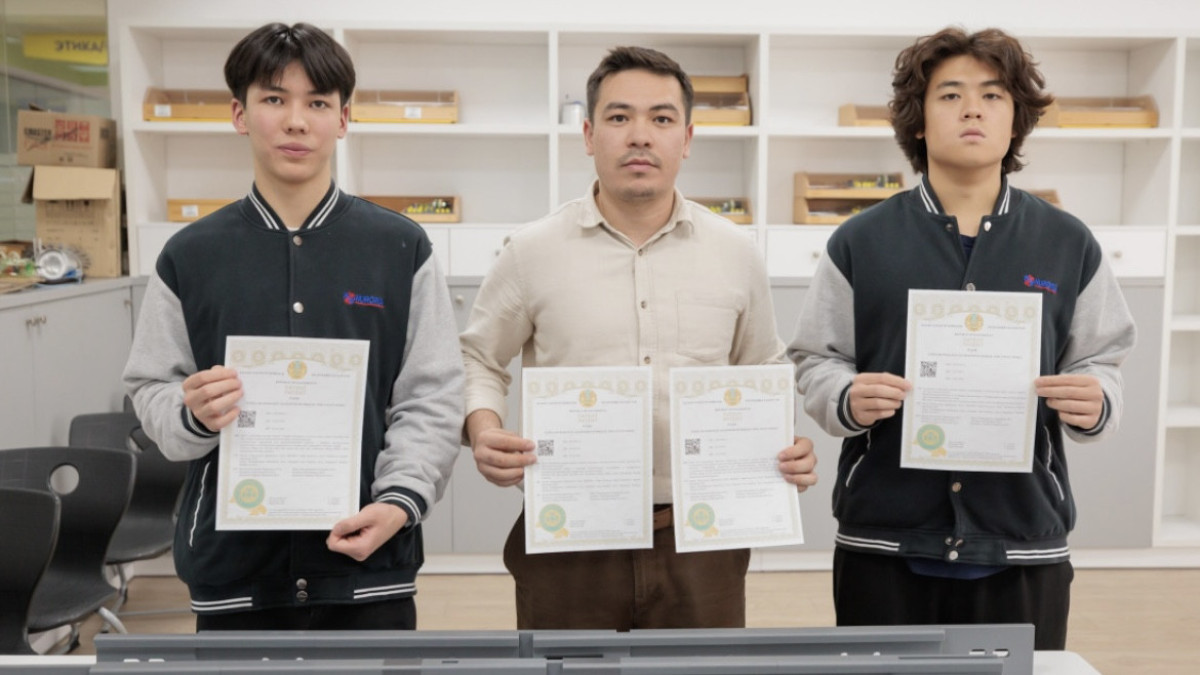
11th grade students of Astana-based lyceum Dinmukhamed Matay and Amir Zhanibek, have made a real breakthrough in railway technology. Their four innovative rail track solutions have been patented in Kazakhstan and submitted for international registration in Geneva. These inventions aim to reduce noise, wear, and accident risks on railways while saving millions in maintenance costs. Supported by their physics teacher Arnur Kazbekov and their school, the students have proven that teenagers can create innovations of global significance.
El.kz news agency shares their inspiring story on how curiosity and persistence can transform an entire industry.
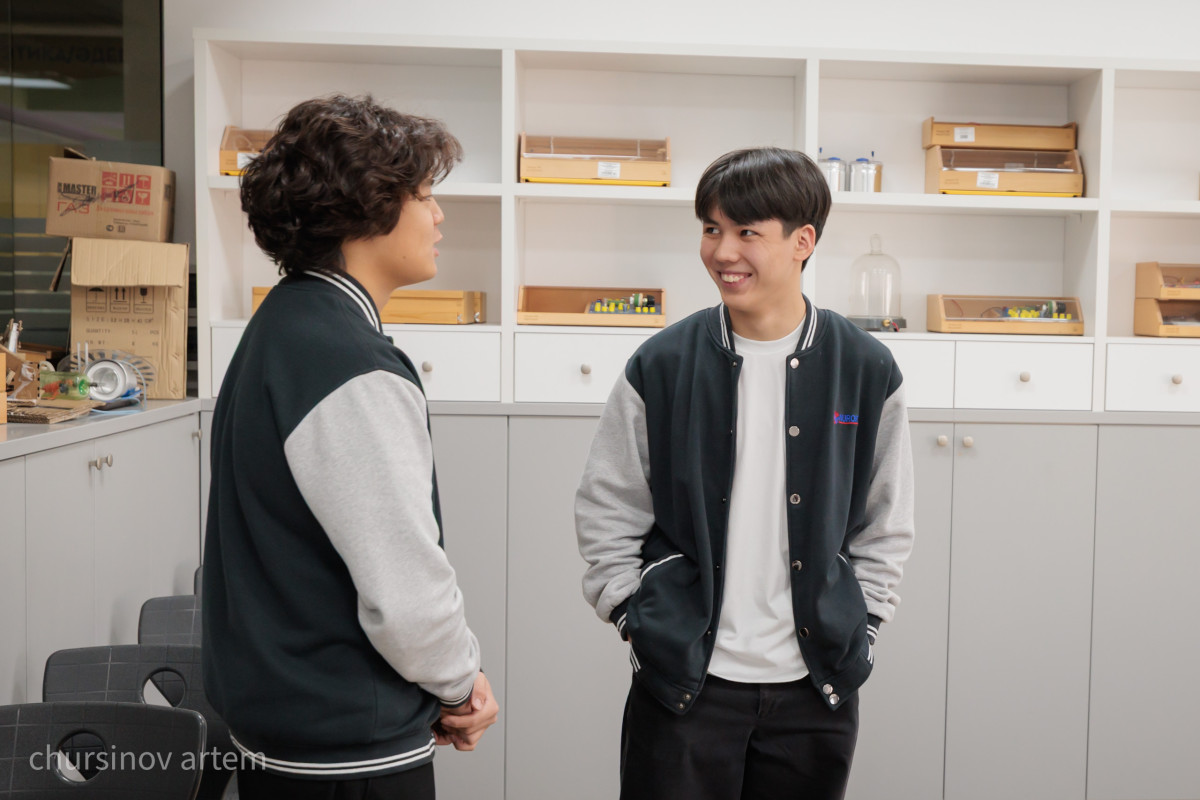
Photo: El.kz / Artem Churssinov
From clatter of wheels to engineering discovery
The idea was born during a train ride to a robotics competition in Almaty. The rhythmic clatter of wheels, caused by thermal expansion gaps between rails, didn’t let them sleep.
“We were on the train, heard that constant clatter, and couldn’t sleep all night. So, we started discussing and studying the problem,” Amir recalls.
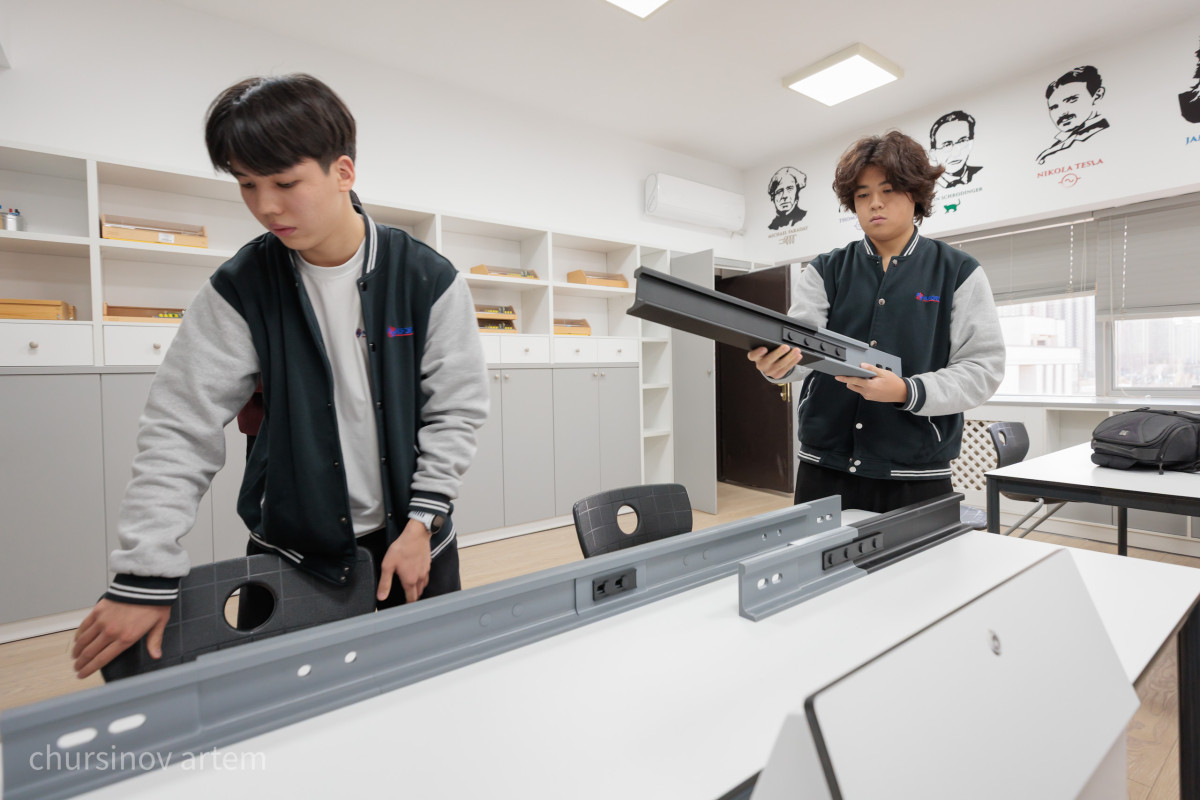
Photo: El.kz / Artem Churssinov
Thermal gaps are necessary to prevent rail deformation due to temperature fluctuations, but they also cause noise, vibration, and accelerated wear.
“We studied existing rail designs and found out that the problem lies in the thermal gap between them,” Dinmukhamed adds.
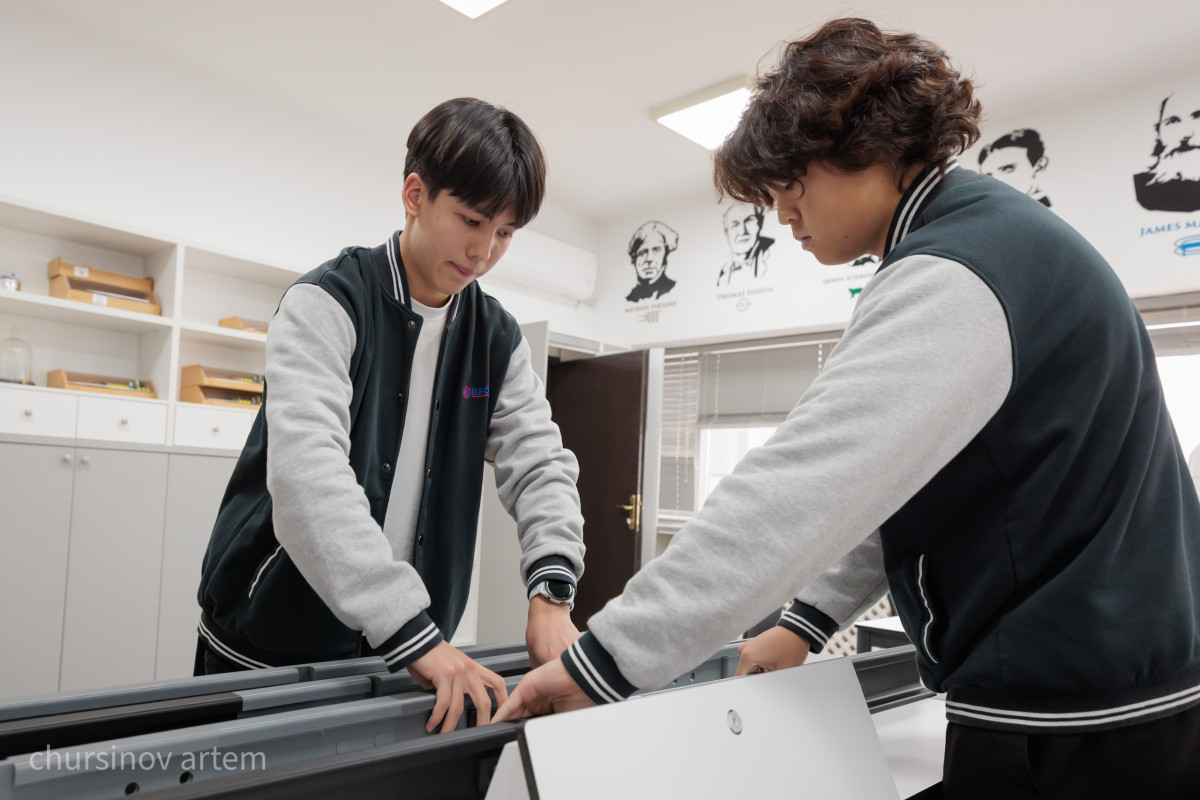
Photo: El.kz / Artem Churssinov
Motivated by this discovery, the students went on to develop four unique engineering solutions.
“We worked on this project for a year, half the time went into theoretical work, and the other half into implementation,” Dinmukhamed says.
Their inventions address rail joints problem - the most vulnerable elements of Kazakhstan’s extensive railway network, one of the largest in the world.
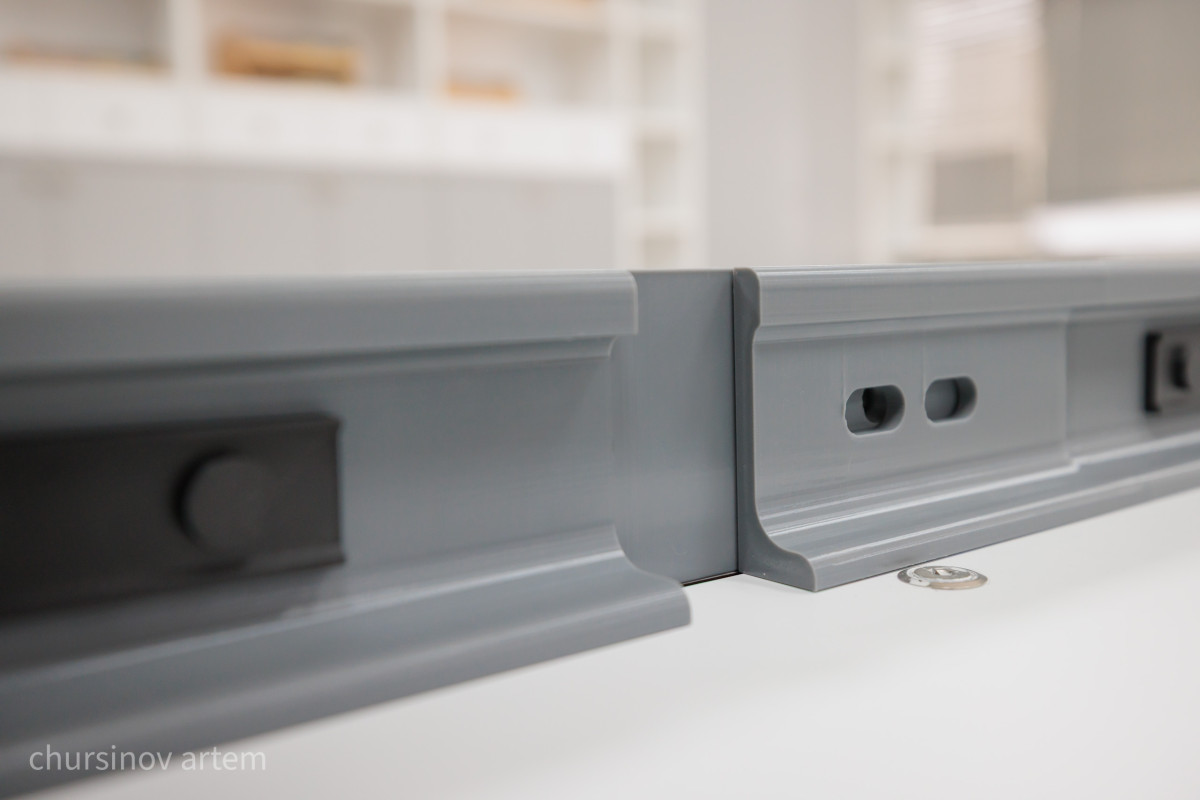
Photo: El.kz / Artem Churssinov
Four patents for railways of future
The students proposed four new rail structures and joints that eliminate the drawbacks of traditional connections while preserving their essential functions.
The first invention introduces a new rail design with a lateral lap joint.
“We divided the thermal gap into two sections instead of having one in the center. This prevents the wheel from dipping and significantly reduces noise and vibration,” Amir explains.
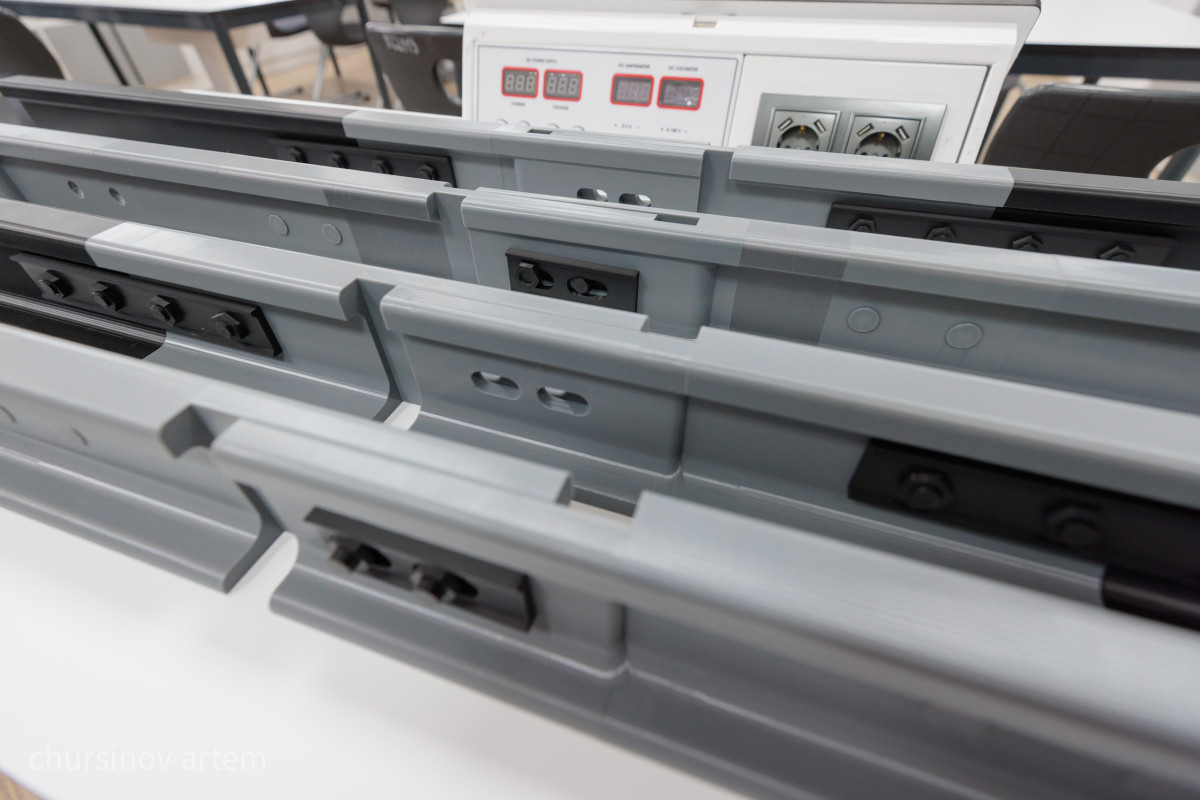
Photo: El.kz / Artem Churssinov
The second is a jointing bridge that allows the modernization of existing rails without a complete replacement.
“We created the jointing bridge so there’s no need to replace all the old rails. It can be installed on an existing railway track,” Dinmukhamed explains.
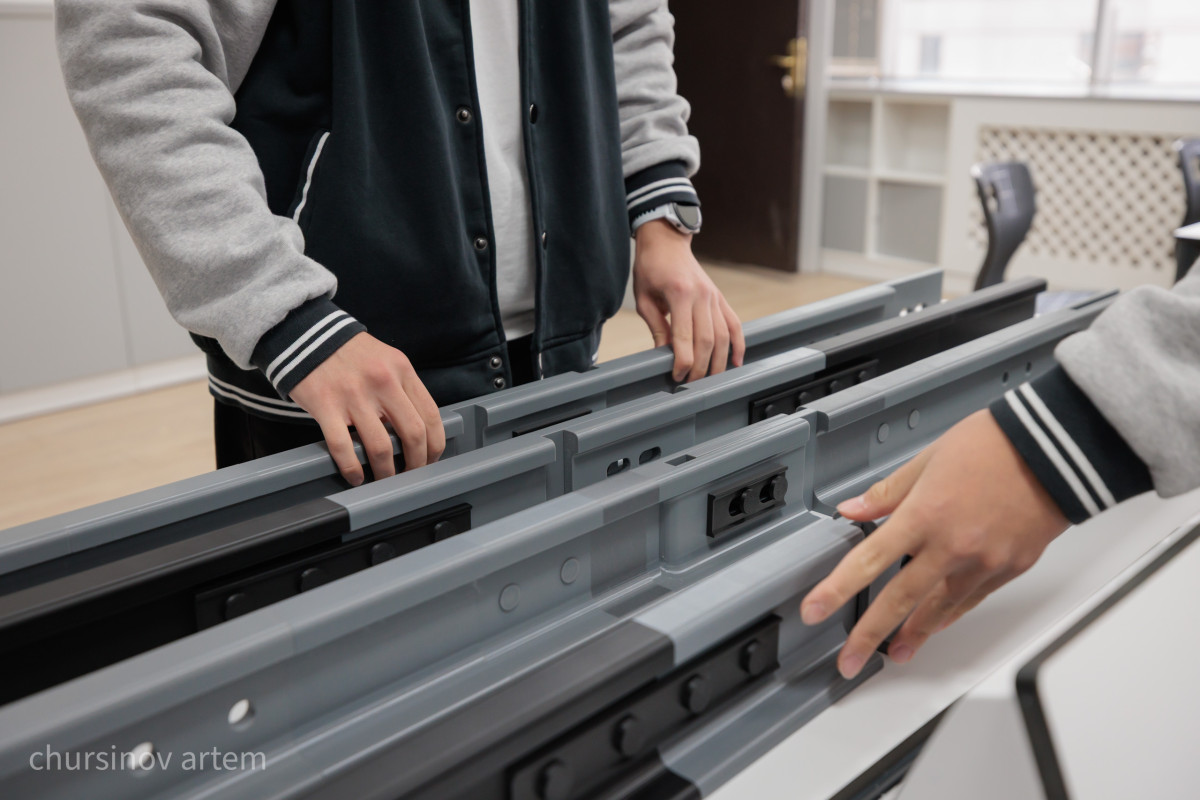
Photo: El.kz / Artem Churssinov
The third patent features a new rail design with an insert-type joint, reducing vibration on high-speed rail lines.
Photo: El.kz / Artem Churssinov
The fourth solution is a jointing bridge that operates on the same principle but is designed for installation on existing rails.
“While maintaining the thermal gap, we managed to remove the break between the rails, in other words, we created a continuous railway line,” physics teacher Arnur Kazbekov emphasized.
These solutions reduce noise and wear, improve safety, and save energy resources, which is especially important for Kazakhstan with its extreme climate fluctuations.
Patents and international recognition
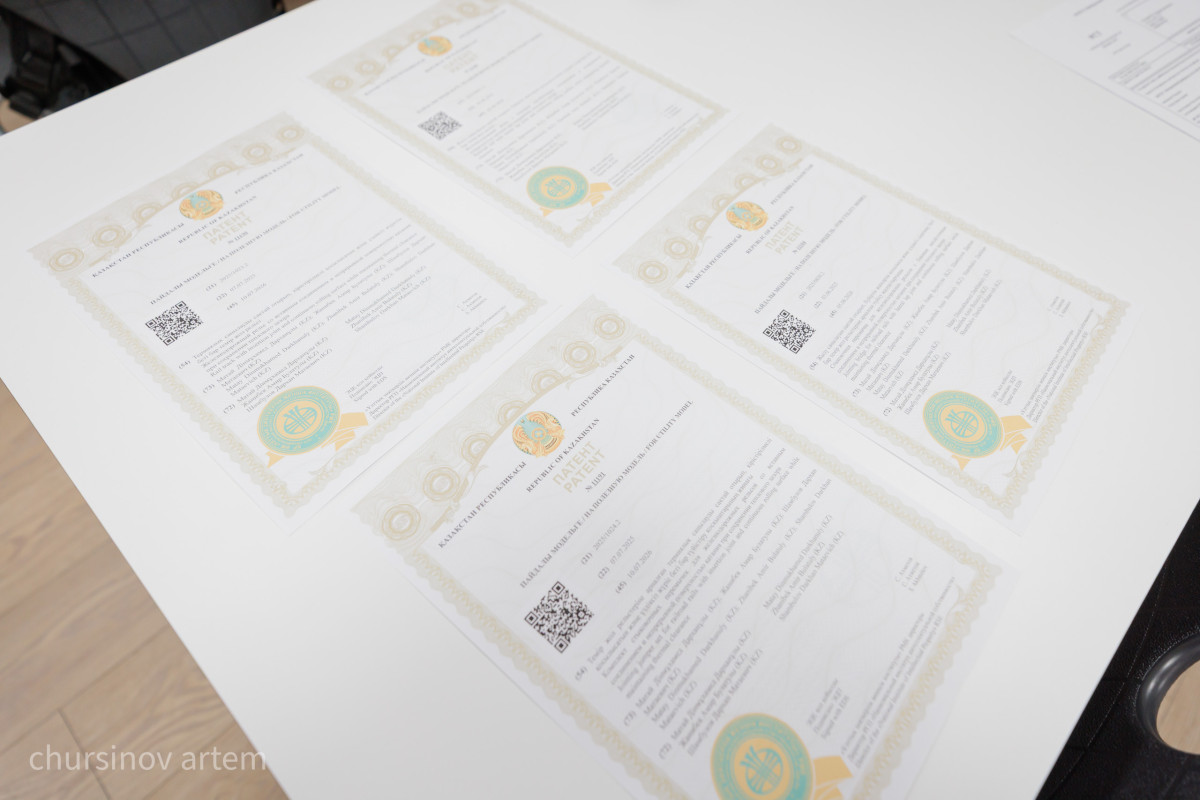
Photo: El.kz / Artem Churssinov
School project led to real-world engineering results. This summer, the students received four national patents, confirming the novelty and industrial applicability of their designs.
“We applied for patents about a month and a half ago, and the results came out just recently,” Amir says.
They also filed two international patent applicationsunder the PCT system, which can protect their inventions in over 150 countries.
“We submitted our applications to Geneva and received confirmation that they were accepted for review. Now we’re waiting for the official certificates,” Dinmukhamed shares.
Arnur Kazbekov, who has taught physics for 15 years, guided the students through the patent process.
“I helped them on the theoretical side, making sure their calculations were accurate,” he explains.
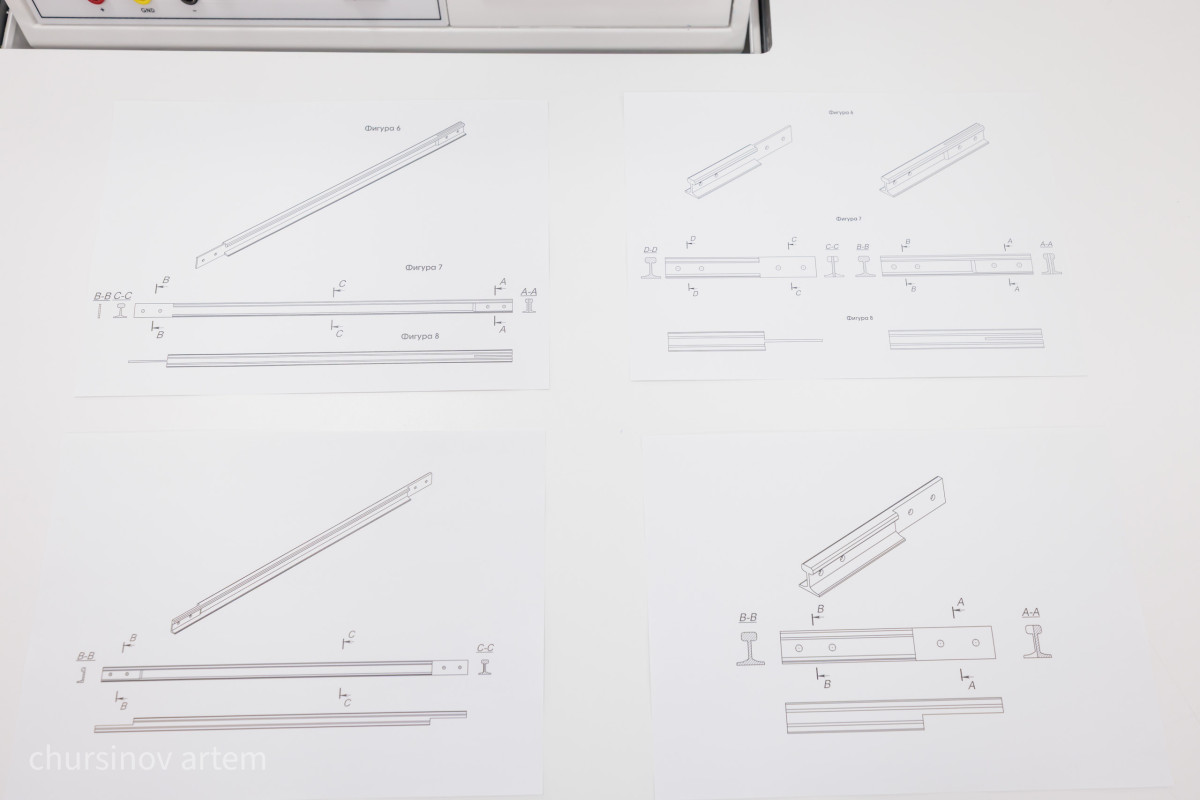
Photo: El.kz / Artem Churssinov
His approach is not just to teach formulas, but to inspire their practical application.
“In our physics classes, we don’t just study theory, we create things. For example, last year we built a rocket model,” Dinmukhamed recalls.
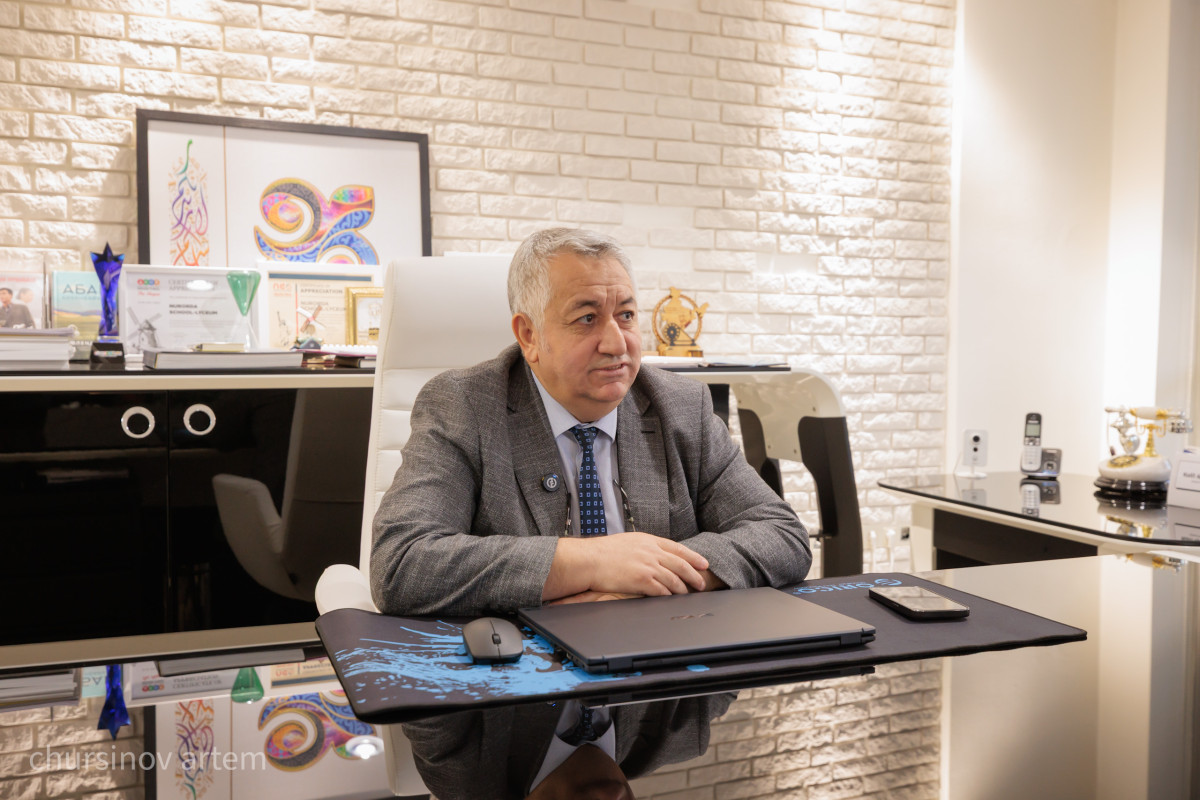
Photo: El.kz / Artem Churssinov
The school’s director emphasizes:
“We strive to provide every opportunity for our students. They take initiative, develop projects, and present them internationally, often winning awards. Our students have been to Spain, New York, and the UK, representing their work. Their knowledge of English helps them confidently explain their projects.”
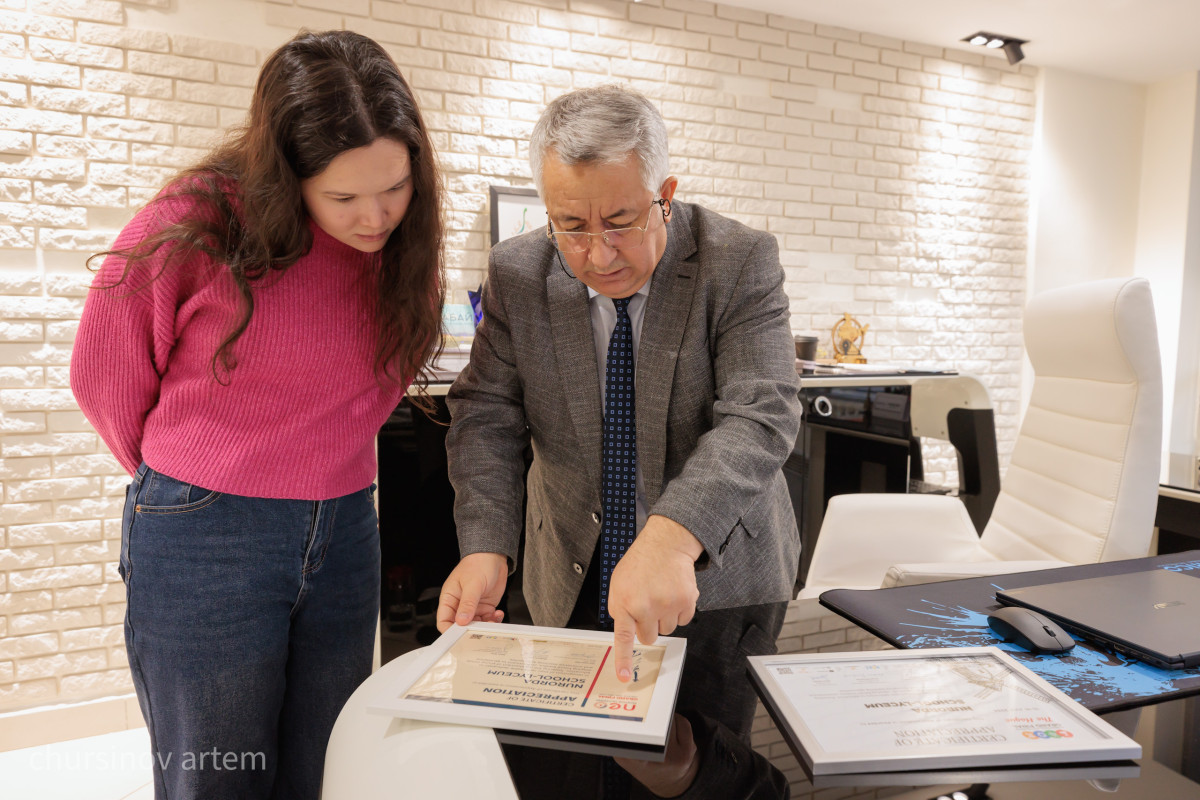
Photo: El.kz / Artem Churssinov
Rising stars in robotics
Dinmukhamed and Amir are also seasoned participants in robotics competitions.
“We’ve won over ten regional awards and took part in the International Robotics Olympiad in the U.S., where we won bronze (3rd place) among 74 countries,” Dinmukhamed says.
Their robot impressed the judges at an international competition in the U.S.
“The robot’s task is to collect various items, such as bottles or trash, and throw them into the bin,” Amir explains.
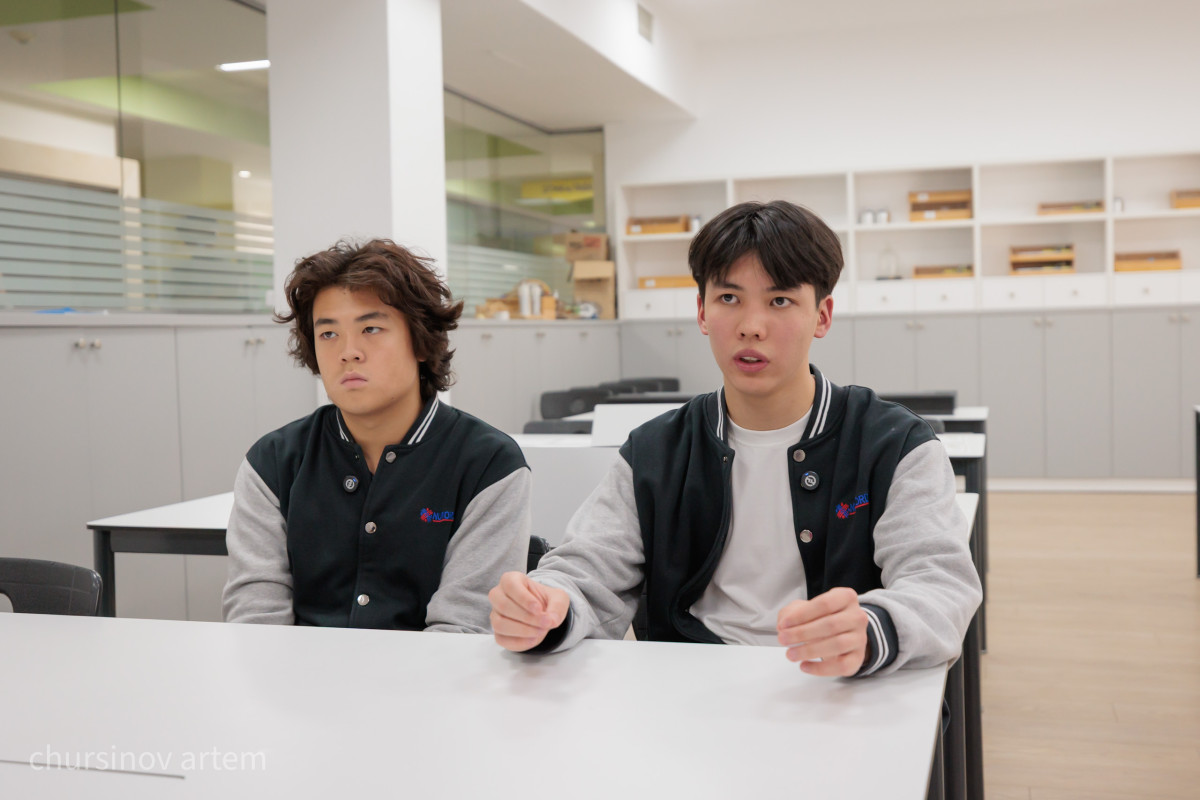
Photo: El.kz / Artem Churssinov
They have also won other national and international competitions.
Amir spent a year studying at an American high school through the FLEX (Future Leaders Exchange) program, strengthening his skills in robotics and English.
Their experience in robotics became the foundation for their railway innovations.
Physics as key to innovation
“I love physics because it allows me to discover something new every day, new formulas and new knowledge,” Dinmukhamed says.
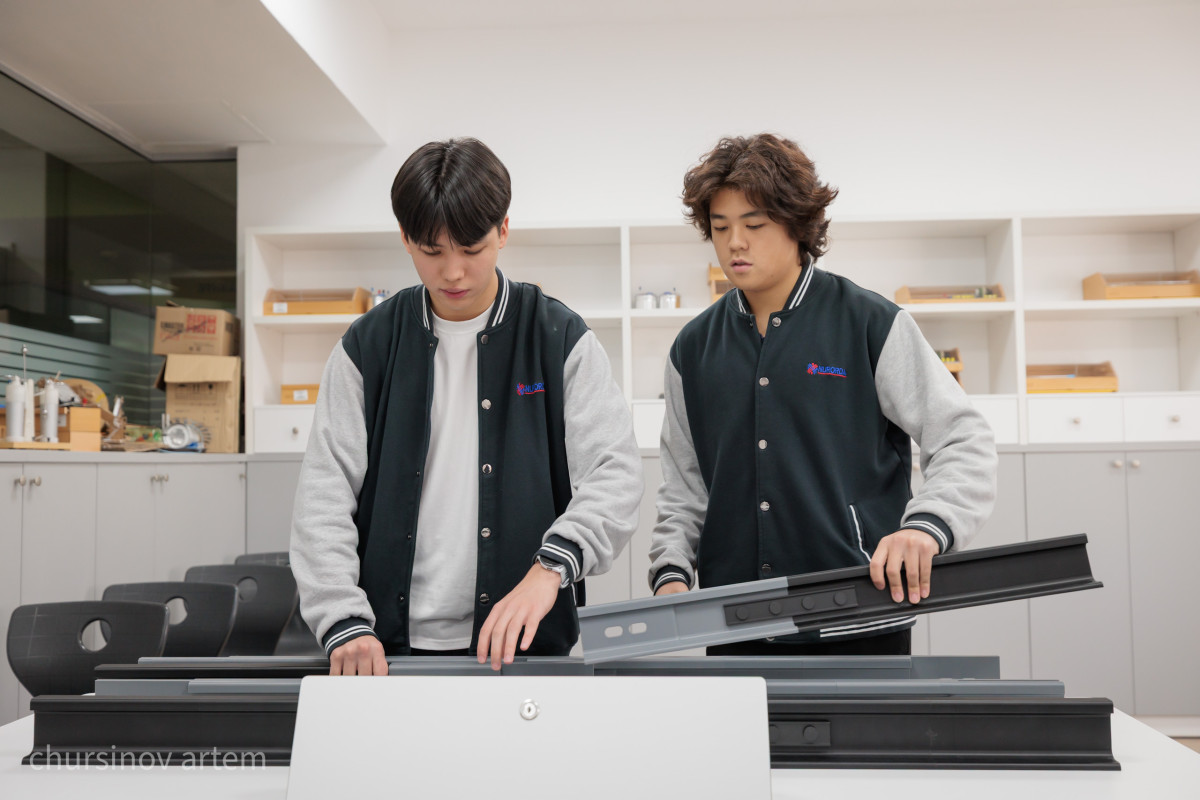
Photo: El.kz / Artem Churssinov
“I enjoy physics because I love engineering, and the two are deeply connected ", Amir adds.
Looking ahead
The team sees significant potential ahead.
“We want to start by competing at the regional, national, and then international levels,” Arnur Kazbekov says.
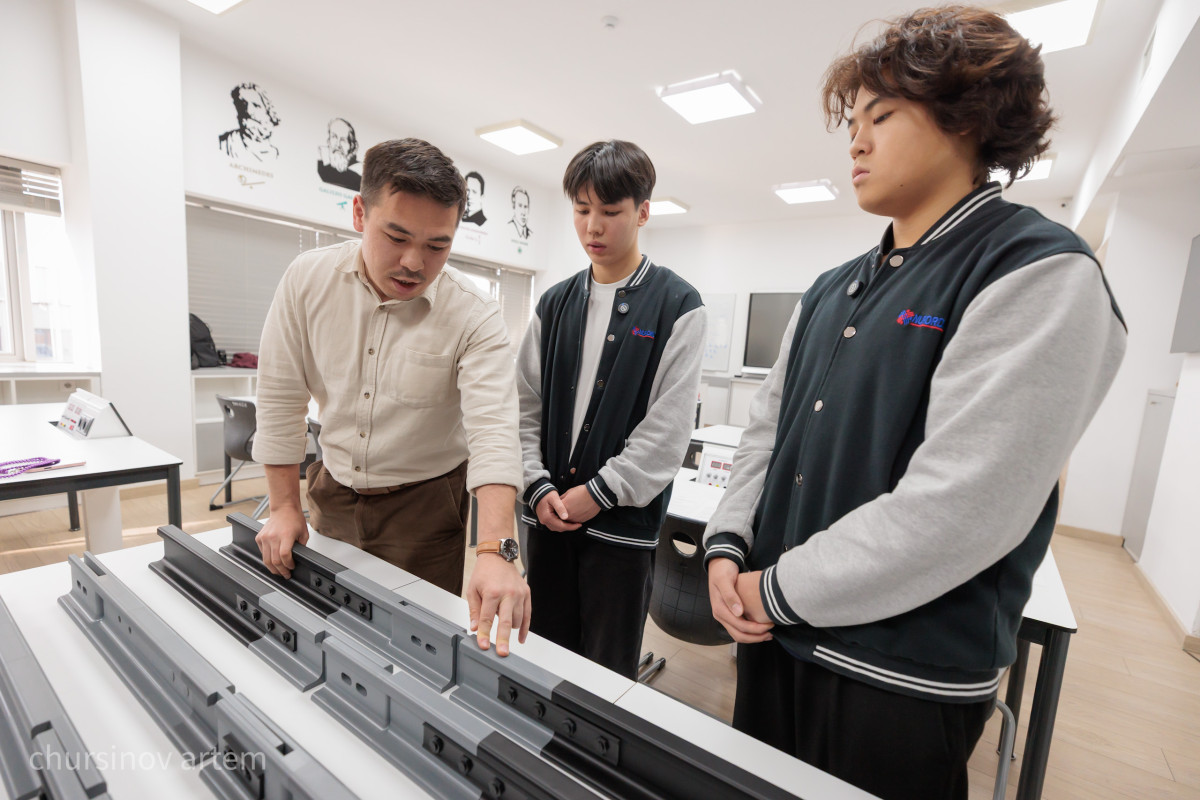
Photo: El.kz / Artem Churssinov
They plan to collaborate with Kazakhstan Temir Zholy(the National Railway Company of Kazakhstan) or launch a startup.
“At this stage, we already have a 3D-printed model, and we’re ready to move from design to real rails. After that, we can start thinking about monetization,” he adds.
Inspiration for Kazakhstan and the world
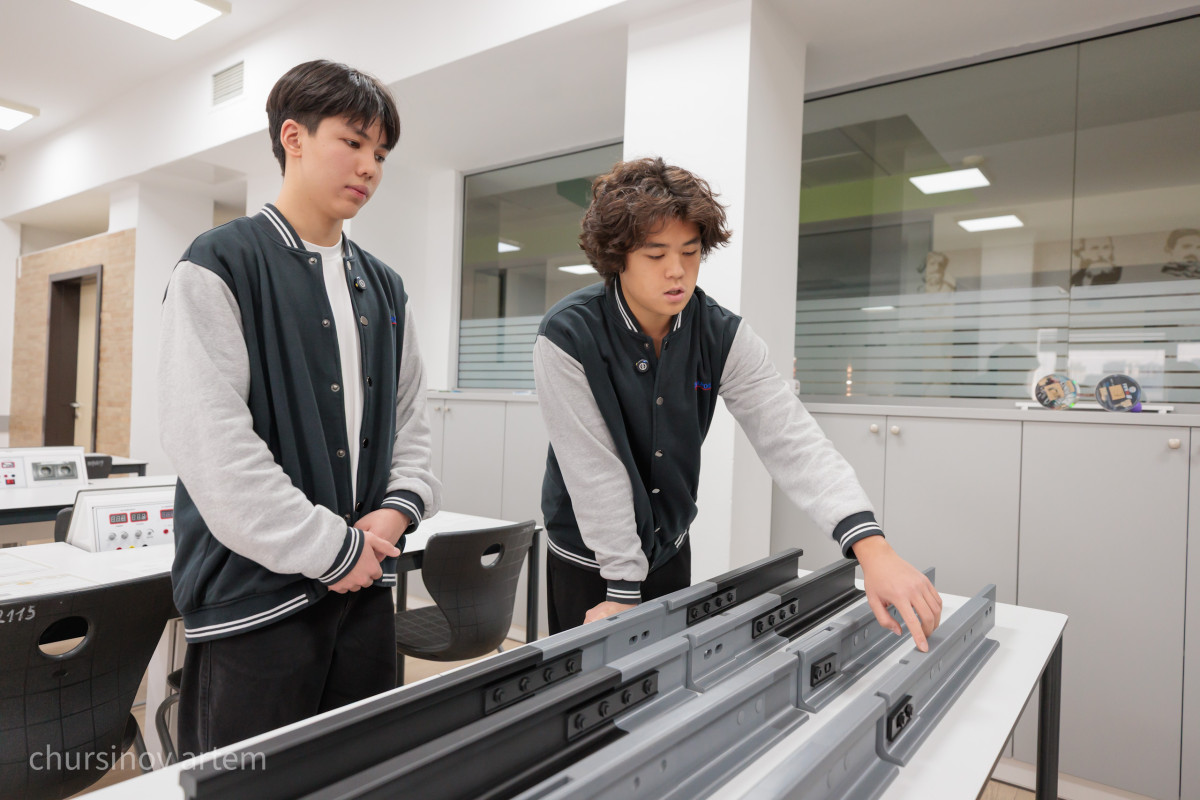
Photo: El.kz / Artem Churssinov
The story of Dinmukhamed and Amir shows that innovation can begin in a classroom. Their inventions are not only solutions for Kazakhstan but also a potential contribution to the global railway industry.
From the clatter of a train to patents in Geneva — their journey proves that age is no barrier to big ideas.

El recommends 
