

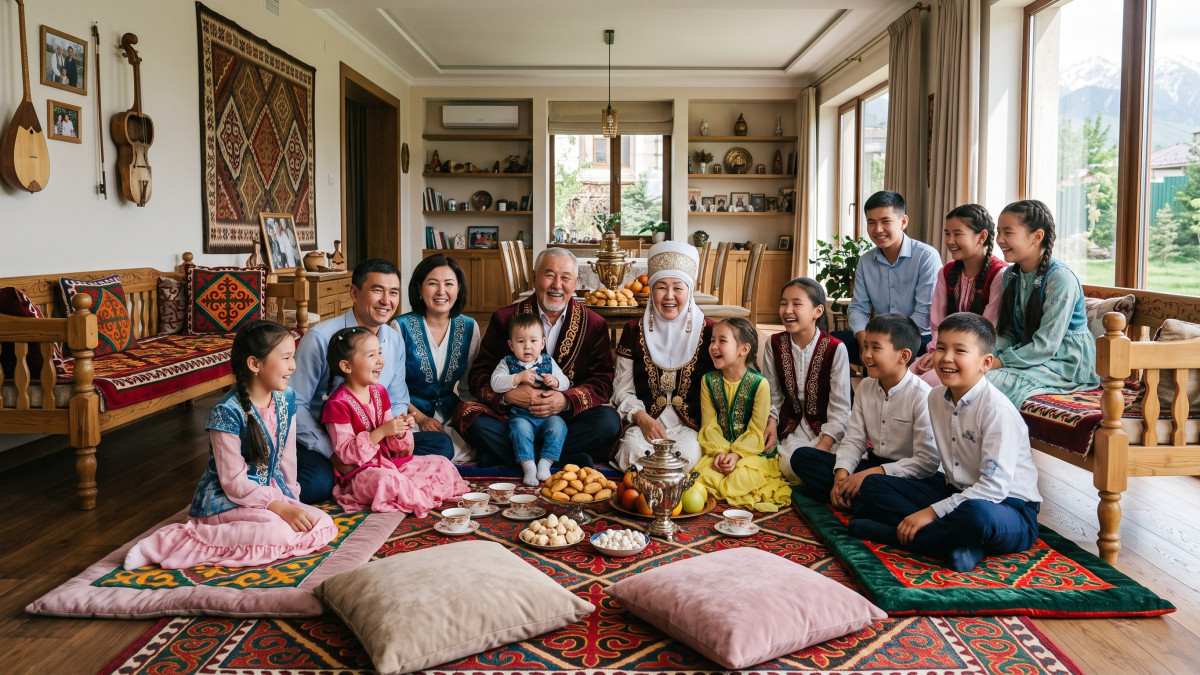
The new Constitution of Kazakhstan, adopted by Referendum on 15 March 2026 and entering into force on 1 July, introduced a separate article on the family. Article 30, for the first time at the constitutional level, expressly defines marriage as a voluntary and equal union between a man and a woman registered by the state.
Previously, this definition was contained only in the Marriage and Family Code, a lower-level legal instrument. Elevating this provision to the Constitution means that the concept of marriage is now protected by the highest legal authority in the country, rather than solely by ordinary legislation, which is more readily subject to amendment.
What exactly does Article 30 establish?
Paragraph 1 of Article 30 provides that marriage and the family, motherhood, fatherhood and childhood are under the protection of the state. This is not a new principle for the Constitution of Kazakhstan; however, it now appears alongside a more specific definition of marriage set out in paragraph 2.
Paragraph 3 of the article recognizes the care and upbringing of children as a natural right and responsibility of parents. Paragraph 4 establishes an obligation for adult able-bodied children to care for their parents who are unable to work, thereby completing the framework of intergenerational family responsibilities.
The revised Constitution also retains other provisions relevant to families. Article 27 guarantees social protection in the sphere of labour; Article 31 establishes a minimum wage and pension, as well as social security in cases of old age and loss of a breadwinner; and Article 32 guarantees citizens access to free medical care.
Why do experts describe this as strengthening the family?
The introduction of the new provision reflects changes in society itself. According to experts, urbanization, mass access to education and other processes of recent decades have prompted a renewed consideration of how the law should define the family and marriage under contemporary conditions.
Legal experts add that a clear definition at the highest legal level eliminates potential inconsistencies that could previously arise between different legislative acts. When the definition of marriage is established not only in a sector-specific code but also in the Constitution, courts, government bodies and citizens have a single legal reference point that cannot be subject to arbitrary interpretation.
What long-term consequences are expected?
The constitutional recognition of family values provides a legal basis for the further development of family-support measures. Programmes aimed at improving housing conditions, benefits for parents of large families and demographic policy measures can now rely on an explicit constitutional provision rather than solely on ordinary legislation, giving such programmes a more robust legal foundation.
Strengthening the protection of motherhood and childhood may also affect the country’s demographic situation. When the state expressly guarantees support for the family at the level of the Constitution, this creates more stable conditions for family planning and having children, particularly when combined with guarantees of free healthcare and education also enshrined in the new Constitution.
The provision establishing the obligation of children to care for parents who are unable to work also merits particular attention. It brings into the legal framework the traditional concept of mutual responsibility between generations characteristic of Kazakhstani society and emphasizes that caring for older family members is not merely a moral obligation but also a constitutional principle.
In the long term, these changes are intended to strengthen the institution of the family as a whole. Clearer legal guarantees, an explicit definition of marriage and constitutionally established intergenerational responsibilities create conditions in which families in Kazakhstan can rely more confidently on state protection in matters concerning motherhood, child-rearing and care for older generations.
All of these constitutional provisions will subsequently require amendments to the Marriage and Family Code and other related legislative acts, since sector-specific legislation sets out the concrete mechanisms for supporting families, motherhood and childhood in accordance with the revised Article 30 of the Constitution.
