

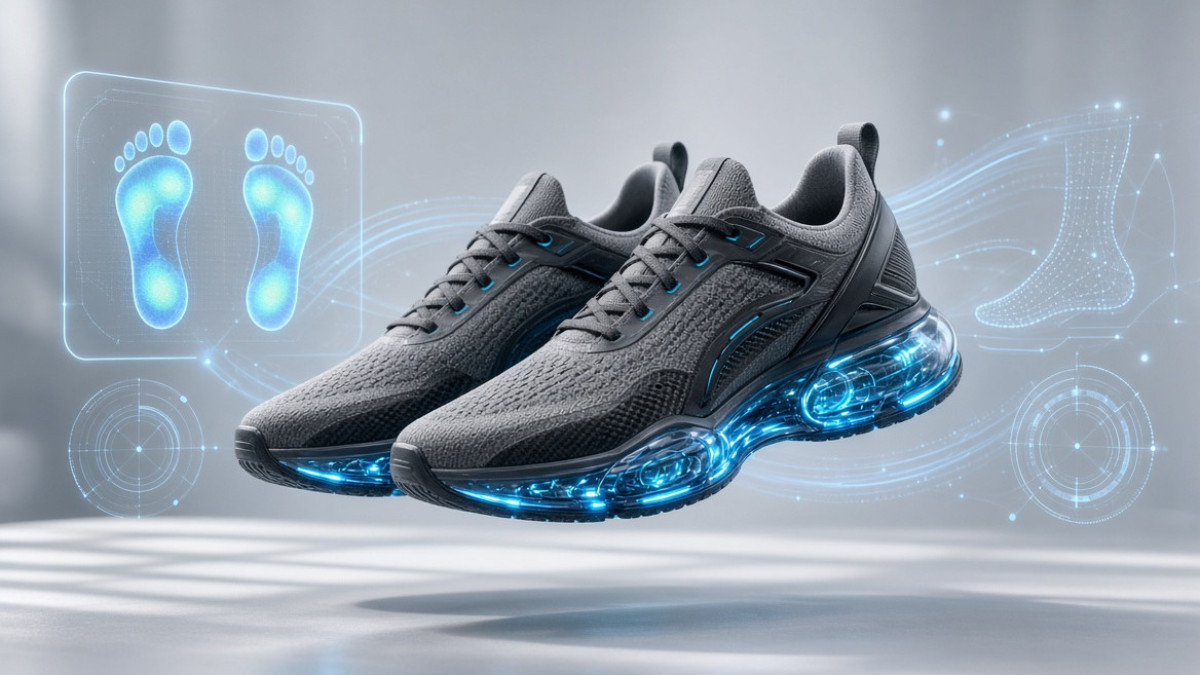
Rutgers engineers have developed a smart shoe that automatically analyzes how a person walks, a technology that someday could help monitor people with Parkinson’s disease, spinal cord injuries, traumatic brain injuries, and other movement disorders.
The prototype analyzes movement with 95.4% accuracy while counting steps and estimating calories burned.
What makes the shoe unusual is that it powers the analysis with energy generated from the wearer’s footsteps. It has no battery to recharge.
“When you are walking or running, you automatically have biomechanical energy available, so you can harvest this energy,” said Niu, an assistant professor in the Department of Biomedical Engineering in the Rutgers School of Engineering.
A shoe was a natural target, he said, because walking produces the information the researchers want to analyze and the energy needed to study it.
“When you sit down, there is no energy available, but you don’t need gait monitoring,” Niu said.
A device embedded in the sole produces electricity from the pressure and friction of each step. The process, known as the triboelectric effect, is related to the static electricity created when different materials rub together.
The electricity arrives in irregular bursts that the electronics cannot use directly. The researchers designed a power-management circuit that converts it into a useful form, increasing the usable energy by as much as 120 times compared with a conventional method.
