

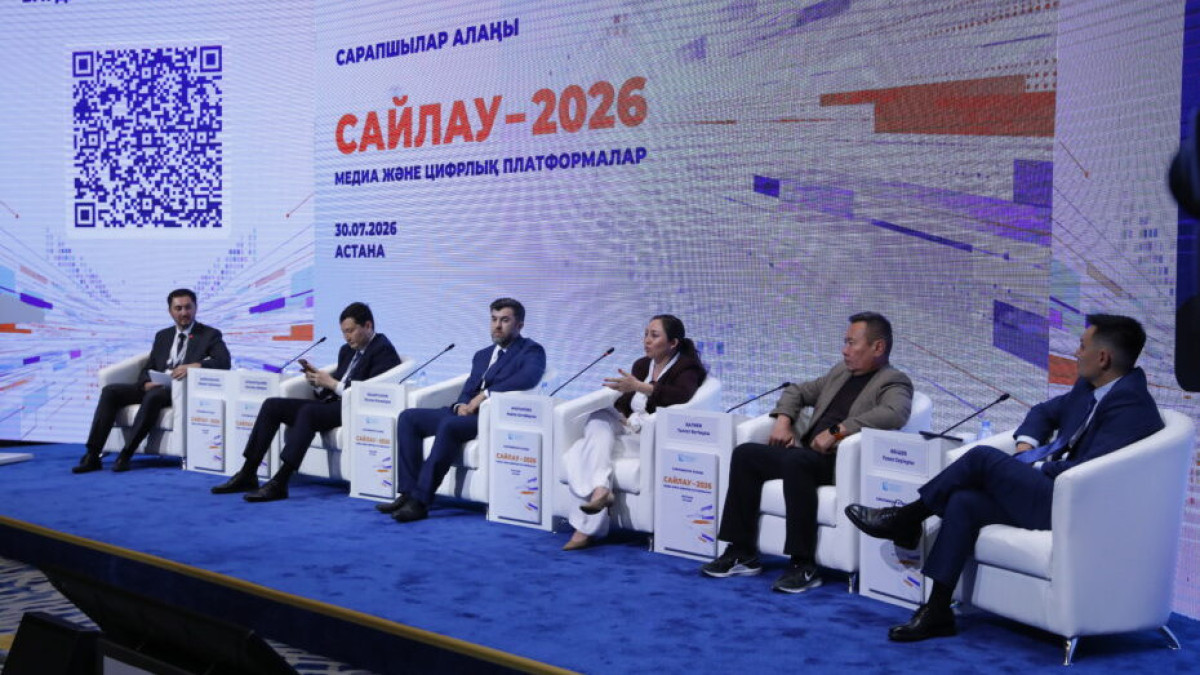
Astana hosted the expert platform “SAILAU-2026: Media and Digital Platforms,” where participants examined the impact of AI on election campaigning, countering disinformation, and evolving voter behaviour, El.kz reports citing the Kazakhstan Institute for Strategic Studies (KISS).
The event was organized by the Kazakhstan Institute for Strategic Studies under the President of the Republic of Kazakhstan (KISS). The discussion brought together representatives of government agencies, research institutions, and the expert community.
KISS Director Zhandos Shaimardanov noted that artificial intelligence and digital technologies are becoming an integral component of electoral campaigns. At the same time, he emphasized that public trust in disseminated information remains the fundamental prerequisite for effective political communication.
Vice Minister of Artificial Intelligence and Digital Development Bakhtiyar Mukhametkaliyevunderscored the need for an appropriate regulatory framework, including mandatory labelling of content generated through artificial intelligence systems. According to him, it is equally important to strengthen digital literacy and promote more responsible approaches to the protection of personal data.
Head of the Centre for Countering Disinformation at the Central Communications Service (CCS) Ruslan Bekarslanov highlighted the importance of timely communication by official information sources. He noted that combating disinformation also requires the further development of fact-checking mechanisms and greater public awareness of how false information is created and disseminated.
Participants observed that political parties are making increasingly active use of social media platforms, shifting from traditional campaign methods towards broader public discussion of policy platforms and initiatives. Debates initiated during televised election broadcasts increasingly continue online, transforming digital platforms into a permanent channel of communication with voters.
Political analyst Talgat Kaliyev linked the renewal of party leadership to growing public demand for new political figures and fresh policy ideas. In his view, citizens are becoming increasingly capable of independently assessing political platforms and critically evaluating populist rhetoric.
Political analyst Naila Mukhtarova pointed to intensifying open political competition. From the early stages of the campaign, political parties began openly challenging one another’s policy proposals, while televised debates evolved beyond presenting election platforms to demonstrating candidates’ ability to defend their positions through evidence-based argumentation.
During the second session, experts examined the factors shaping citizens’ electoral preferences. According to Marian Abisheva, Deputy Director of the Presidential Center, increasing importance is being attached to the substance of political party platforms, the professional qualifications of candidates, and their capacity to address socio-economic challenges.
Chief Research Fellow at KISS Aigul Zabirova reported that the majority of surveyed Kazakhstanis expressed their readiness to participate in the elections. Approximately two-thirds of respondents indicated that they had already decided which political party they intended to support.
Among voters’ principal expectations, experts identified the preservation of stability, effective resolution of everyday issues, justice, public security, and direct engagement between political parties and citizens. Participants concluded that the continued development of the electoral system requires the responsible application of digital technologies, enhanced civic participation, and strengthened public trust in information.
