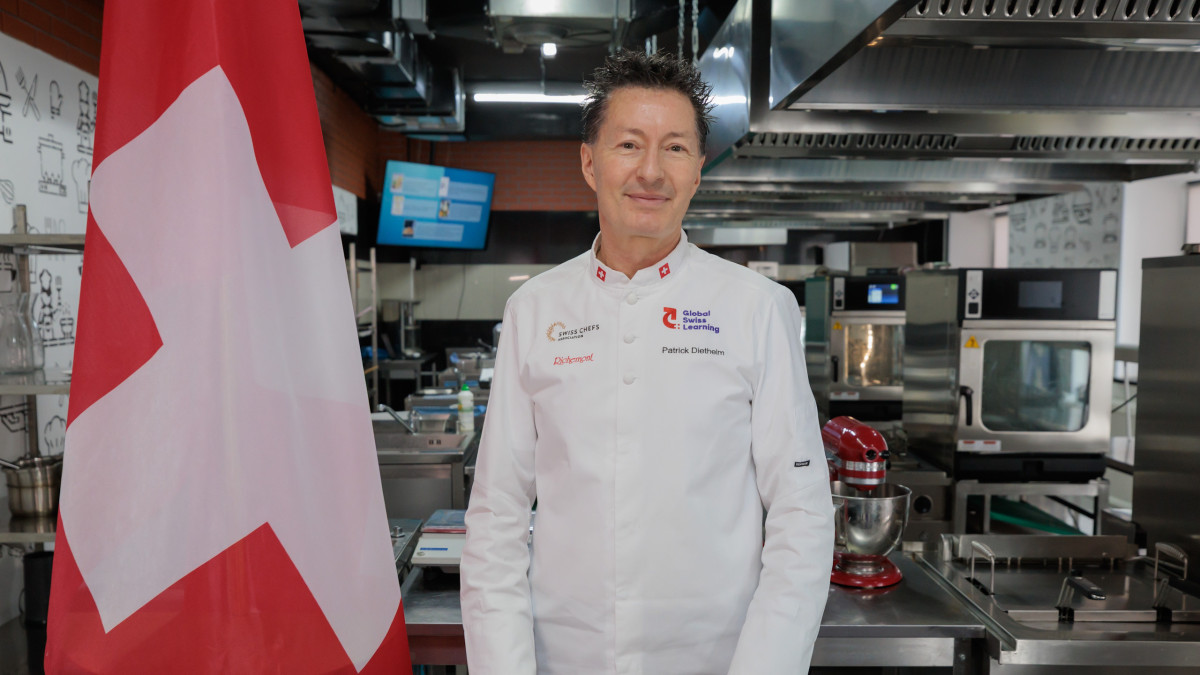
Cooking is not only an art, cooking is also a way of sharing passion and heart

Айгерім Бәбіш Журналист El.kz
Swiss chef Patrick Diethelm’s career reads like a blueprint for professional success: formal training in Switzerland, decades of international experience, a long career in education, and top honors at the Culinary Olympics. Now, Patrick Diethelm is working with Kazakhstani chefs and training a new generation. In an interview to El.kz, he spoke about his journey, philosophy, and the future of culinary education.
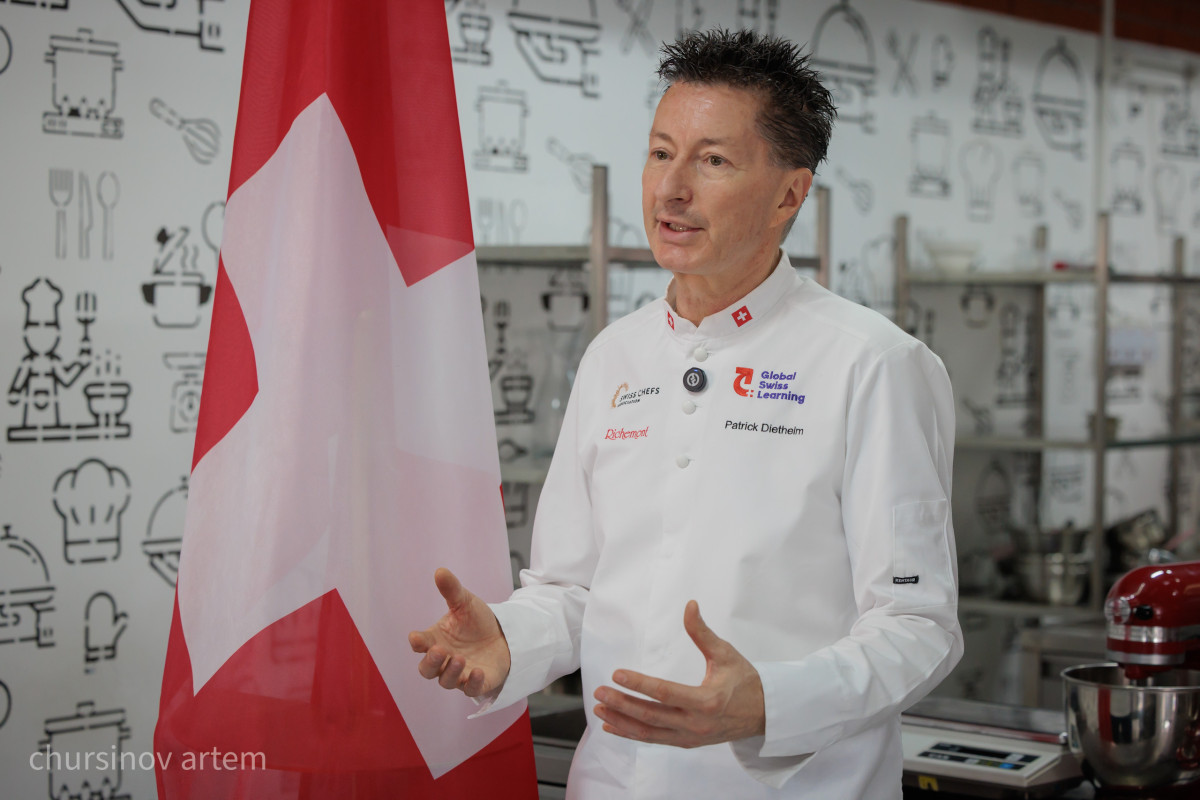
A career shaped by discipline
At 62, Diethelm has a young energy. Over the years, he has worked across continents, mentored aspiring chefs around the world, and built a reputation that extends well beyond his home country. Yet he speaks less about accolades and more about the fundamentals of the profession - discipline, consistency and a genuine commitment to the craft. There was no single defining moment that led him into the kitchen. Instead, his career began with structured training.
First, in Switzerland, you do a three-year apprenticeship. Then you qualify and go on to work in different hotels and restaurants.
A move to North America soon opened the door to international opportunities.
That’s really when my international career began. For several years, I was constantly on the move.
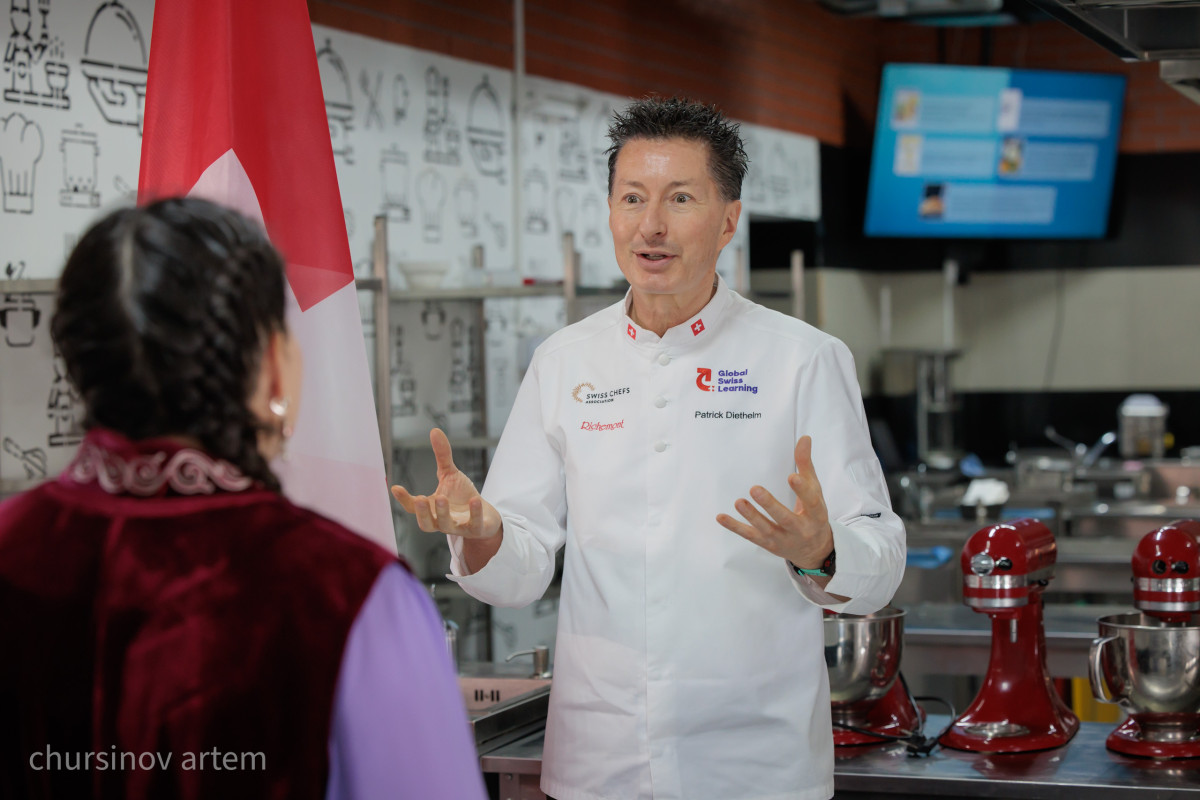
Teaching, he says, came naturally. For him, it is inseparable from the role of a chef.
As a chef, you are responsible for training the next generation — passing on the craft and the knowledge you’ve built up.
That responsibility would go on to define much of his career. Diethelm spent 25 years working in culinary education, teaching in different countries, developing programs and mentoring students at various stages of their professional lives.
Competition as a discipline
Another key chapter in his career was competitive cooking. While often seen as a showcase of creativity, Diethelm views it in more rigorous terms - as a test of precision, discipline and teamwork. He competed himself and later coached the Swiss national junior culinary team, guiding them to one of their most notable achievements.
We won the Olympic championship — three gold medals and the overall title. And once you’ve reached that level, it’s the right moment to step back.
The Culinary Olympics, held every four years, bring together teams from around the world. Young chefs, many under the age of 23, compete at a level that Diethelm compares to elite sport.
It’s very similar to sport. The preparation, the pressure, the teamwork — it’s all the same.
Even so, success is never guaranteed.
You need a strong team, and you need a bit of luck. But we performed well — we came out on top.
Bringing Swiss education to Kazakhstan
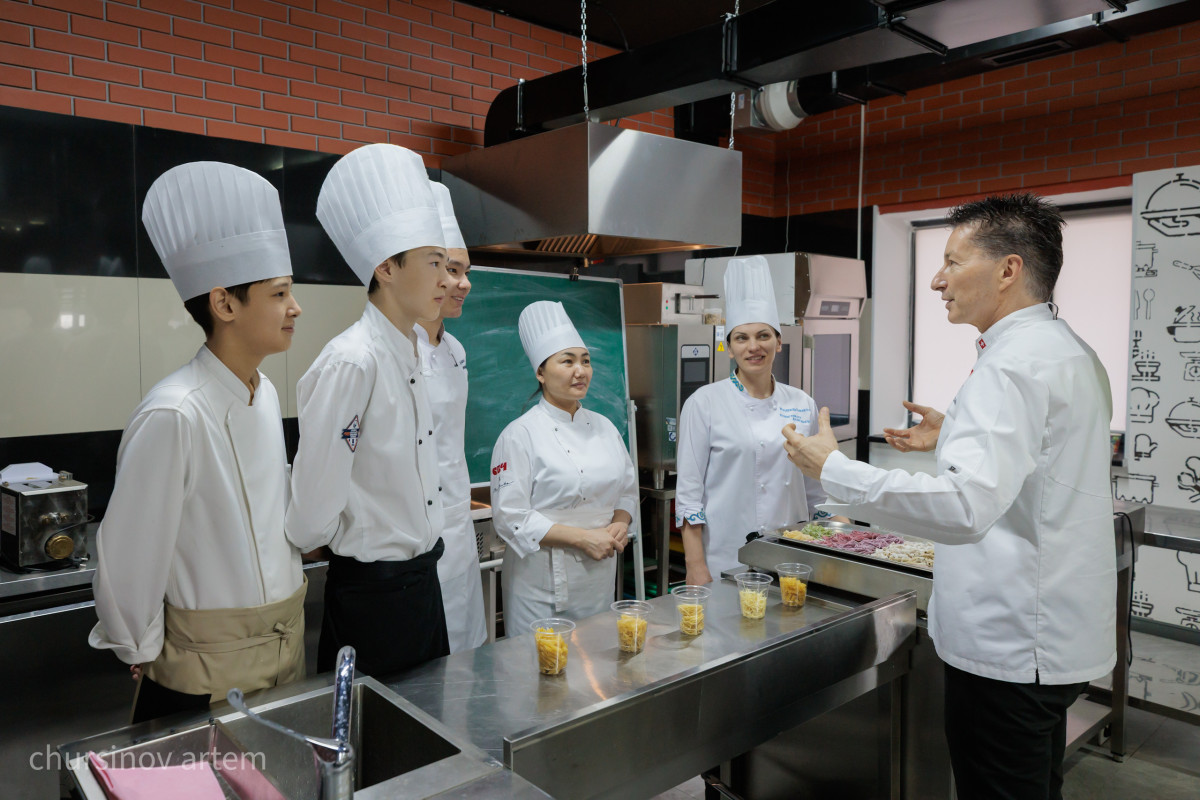
This is Diethelm’s first visit to Kazakhstan, and he says he was immediately impressed by the country’s hospitality.
What struck me straight away was the warmth of the welcome.
His trip, however, is part of a wider initiative aimed at introducing elements of the Swiss vocational education model into Kazakhstan’s culinary sector, including baking, pastry and chocolate. The emphasis, he stresses, is not on replication, but adaptation.
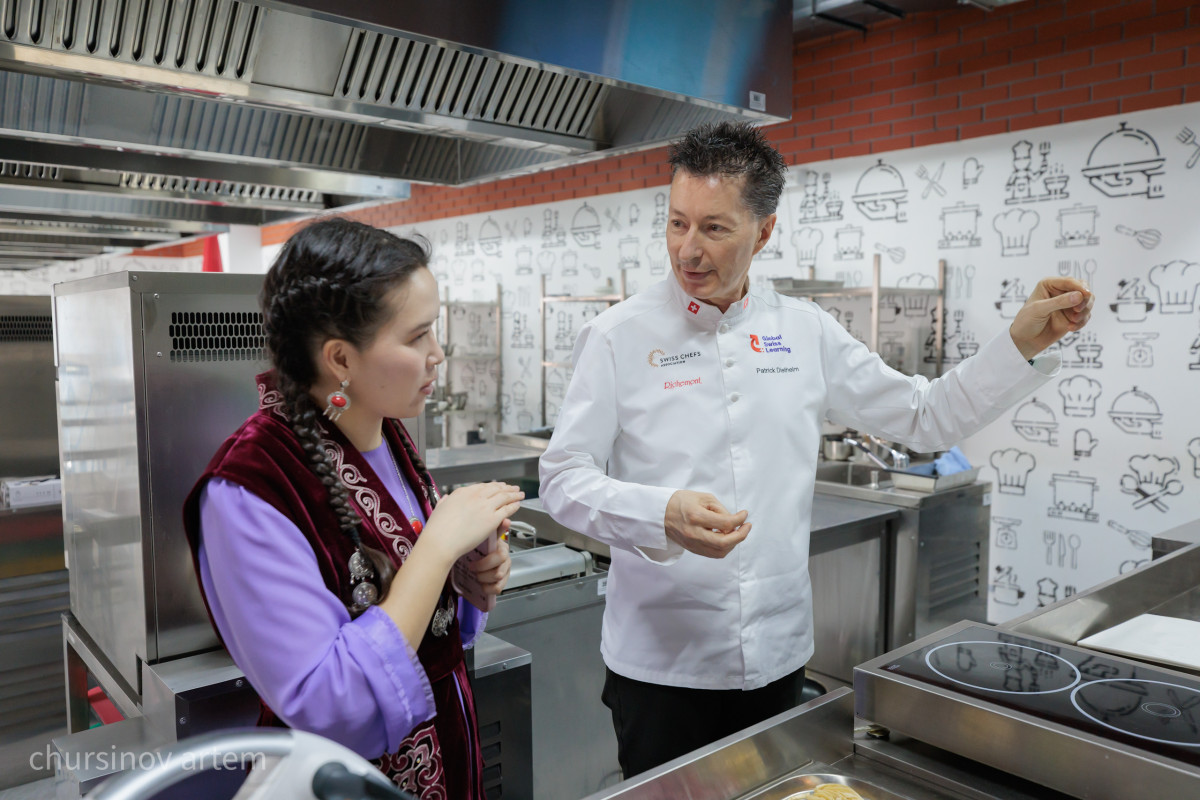
The idea is to train instructors through a programme based on Swiss standards, while ensuring it is adapted to local conditions.
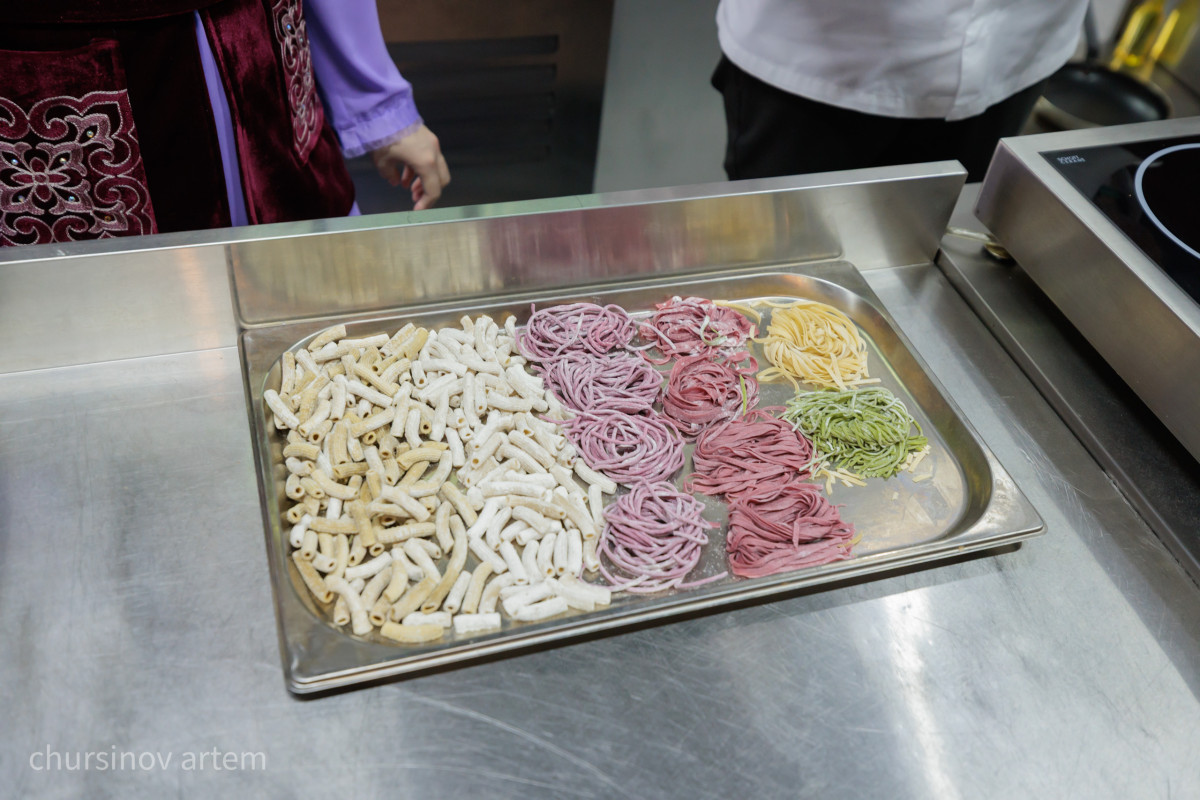
That means working with local produce and recognising existing culinary traditions.
You have to build on what is already there — using local ingredients and local knowledge.
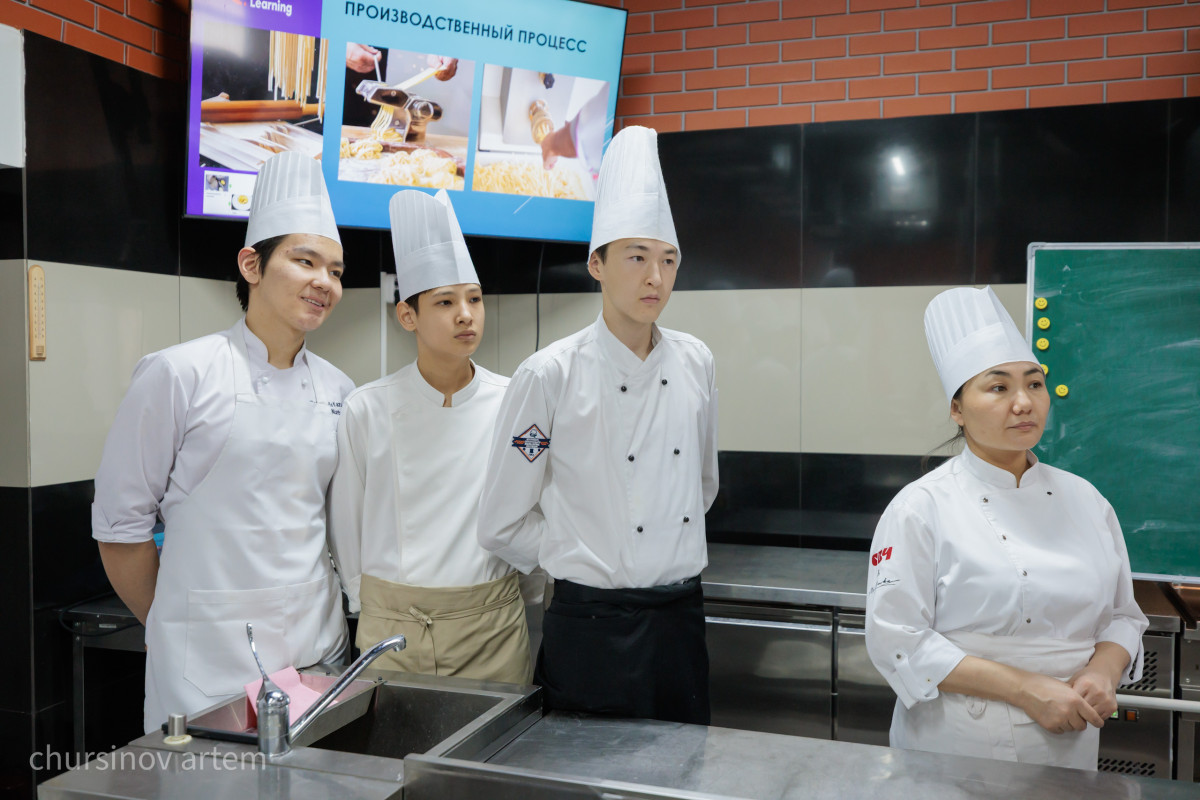
The programme combines online learning with practical training. Participants complete digital modules including webinars and assessments before moving on to hands-on work and in-person instruction.
Traditionally, training relied on textbooks or static materials. What we are introducing is a more interactive approach.
The initiative concludes with certification, after which trained instructors are expected to apply this model within their own institutions.
A broader educational vision
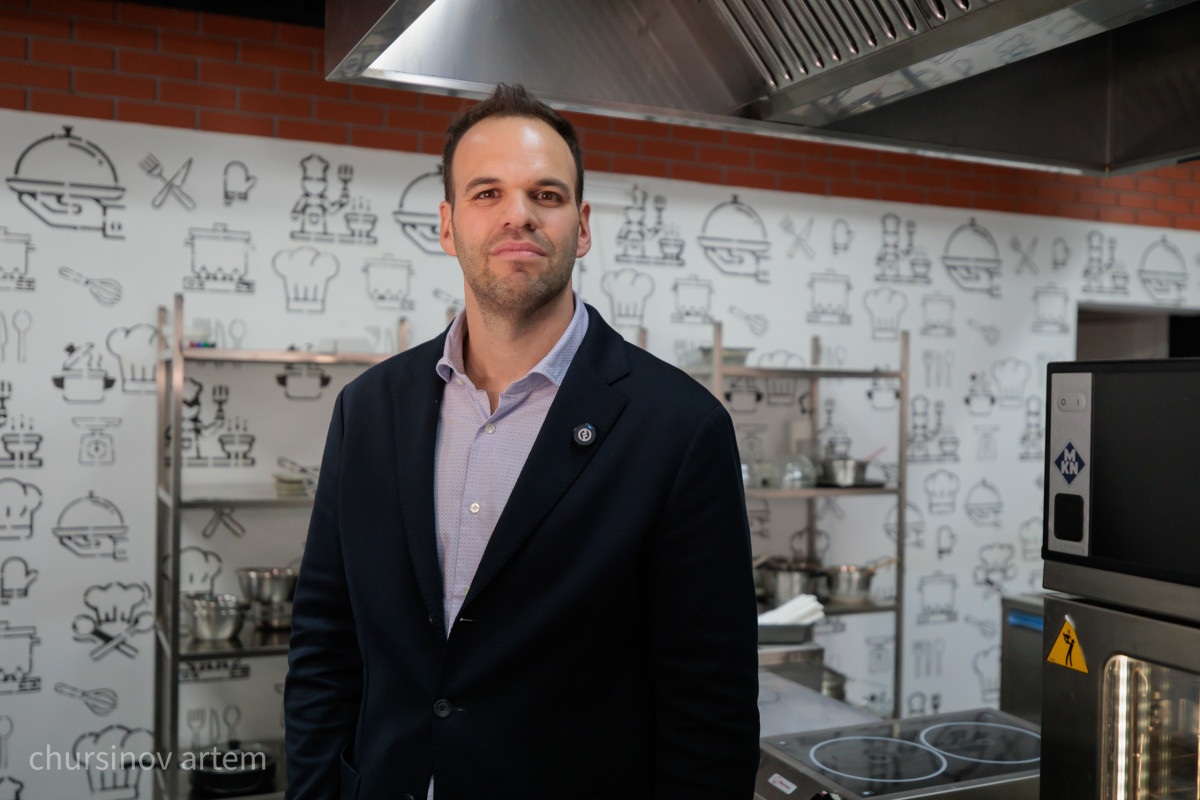
For Michele Corbi, Central Asia manager of Global swisslearning, the project is about more than culinary training.
At its core, this is a project about vocational education. Whether that is cooking or another trade is, in a sense, secondary.
Many countries, he argues, continue to struggle with vocational training systems. The aim here is to demonstrate an alternative approach, one that is both high-quality and accessible.
Too often, when international institutions open abroad, they deliver excellent education, but at a cost that makes it inaccessible to most.
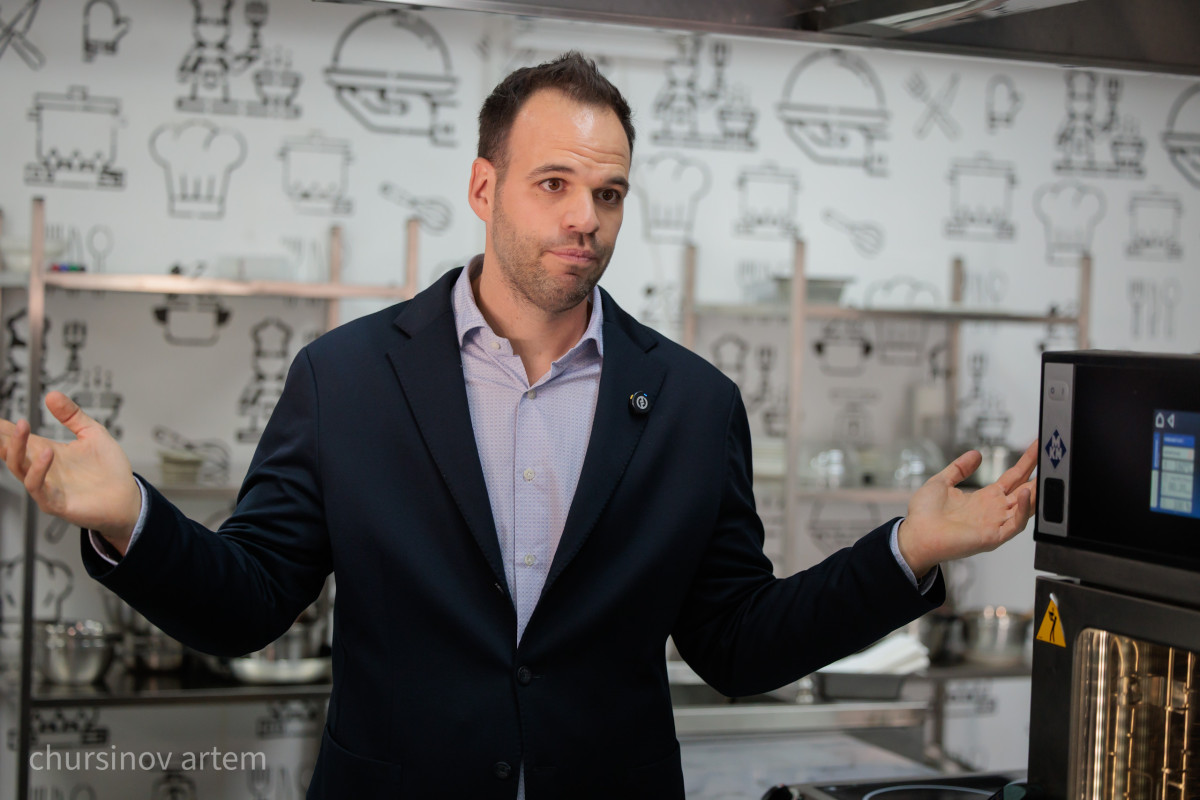
This project, by contrast, is designed to be adaptable and scalable. For Corbi, Kazakhstan is a natural place to begin. He first visited the country in 1991, and his family has longstanding ties to the region.
I’ve spent a great deal of time here over the years.
That personal connection now underpins a professional ambition.
This is a project I care deeply about, because it has the potential to open up opportunities for young people.
Tourism and the role of service
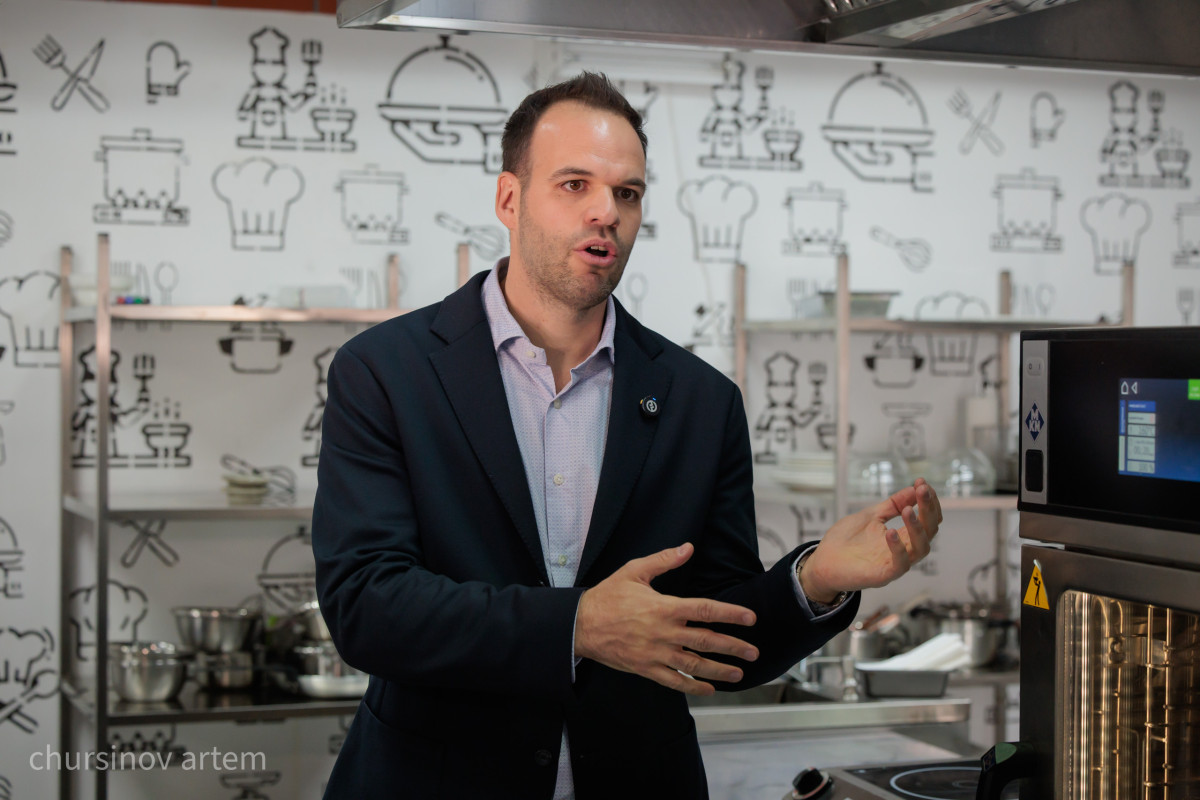
Corbi also sees vocational education as closely linked to Kazakhstan’s prospects in tourism. In his view, the country has a distinct advantage: authenticity.
Many travelers are looking for something different. They are familiar with the usual destinations.
Kazakhstan, he suggests, could position itself as a stopover between Europe and Asia.
There is an opportunity for travelers to stop in cities like Almaty or Astana and experience something new.
The country’s natural landscape — mountains, outdoor activities, winter sports — already offers strong foundations. But, he argues, this must be matched by service.
Tourism today depends on the combination of experience and service.
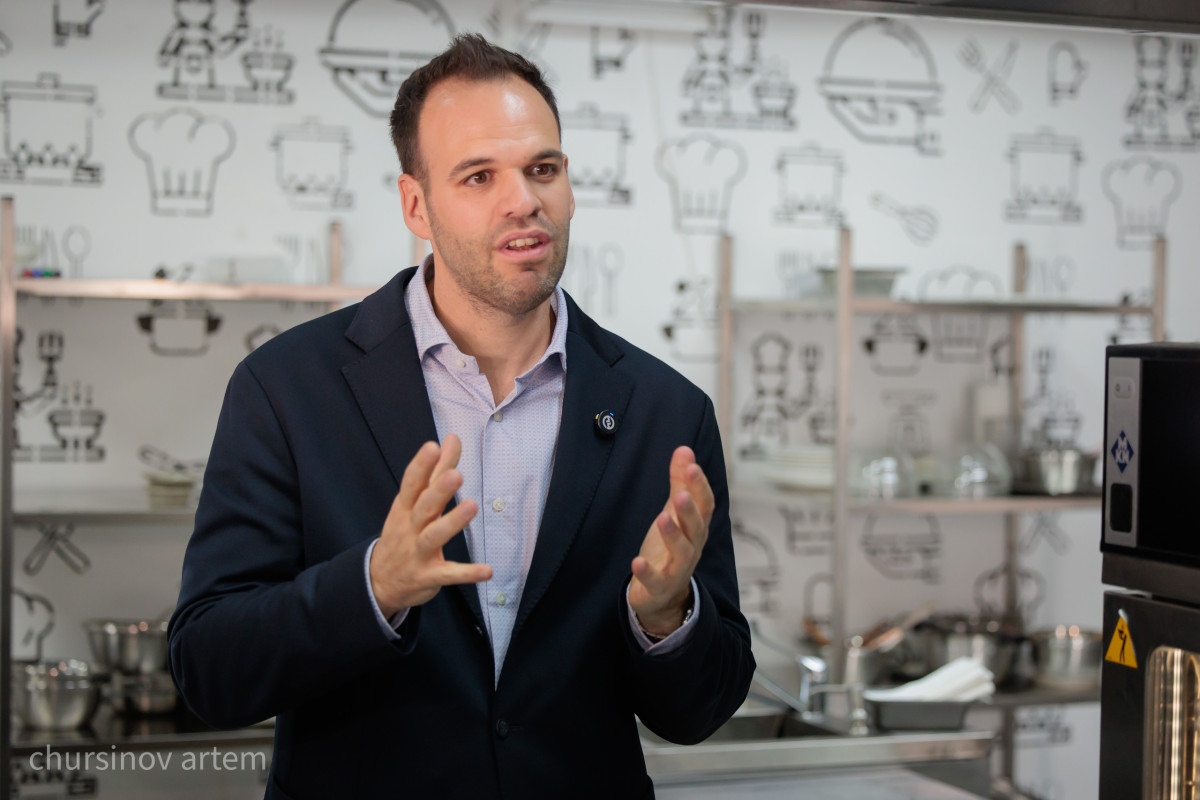
Regardless of setting, expectations remain high.
Whether it’s a luxury hotel or a traditional yurt, visitors expect quality — in service, in food, and in safety.
For that reason, the project focuses on raising overall standards, rather than producing a small number of top performers.
It’s not enough to train a handful of people to a very high level. You need to raise the standard across the board.
He draws a comparison with football in Brazil:
The strength lies in participation at every level. From that, talent naturally emerges.
Switzerland’s model, he adds, follows a similar principle — building a strong baseline before identifying excellence.
A motivated generation
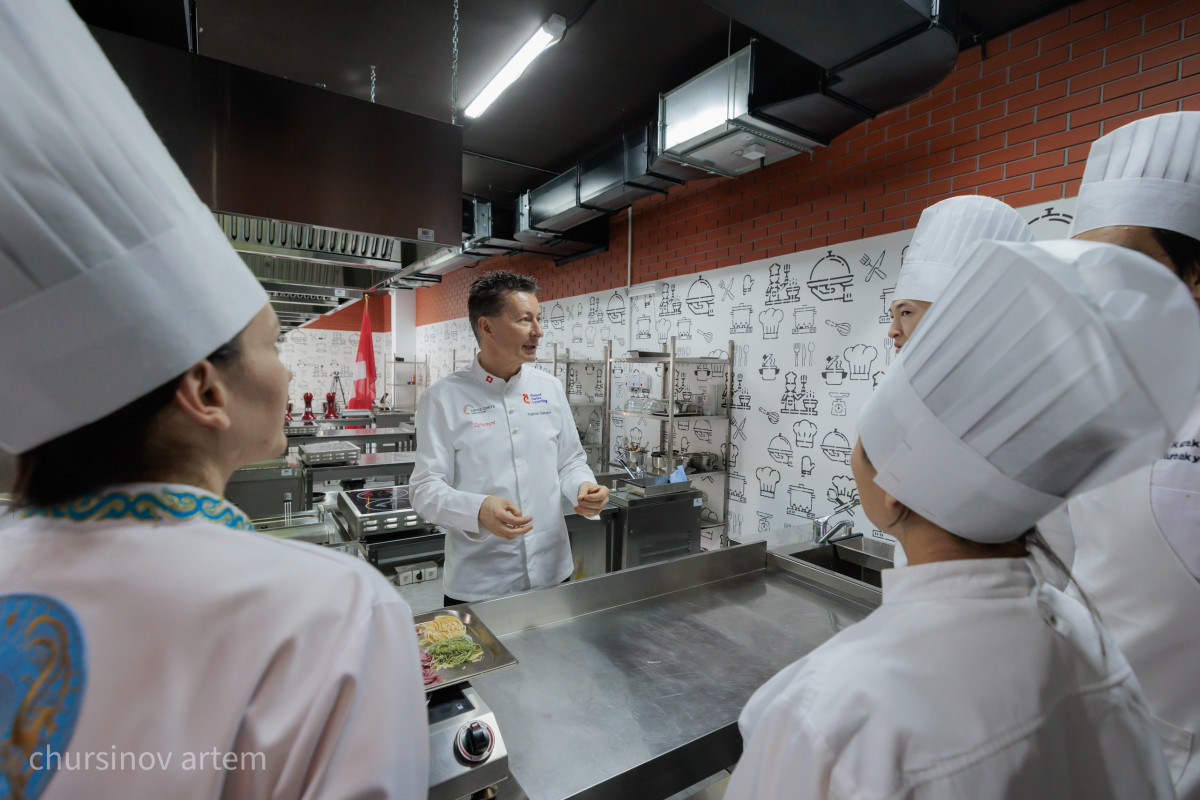
During the programme, Corbi and his colleagues worked closely with young participants in Kazakhstan — an experience he describes as encouraging.
They are highly motivated. They are eager to learn, to work, to develop practical skills.
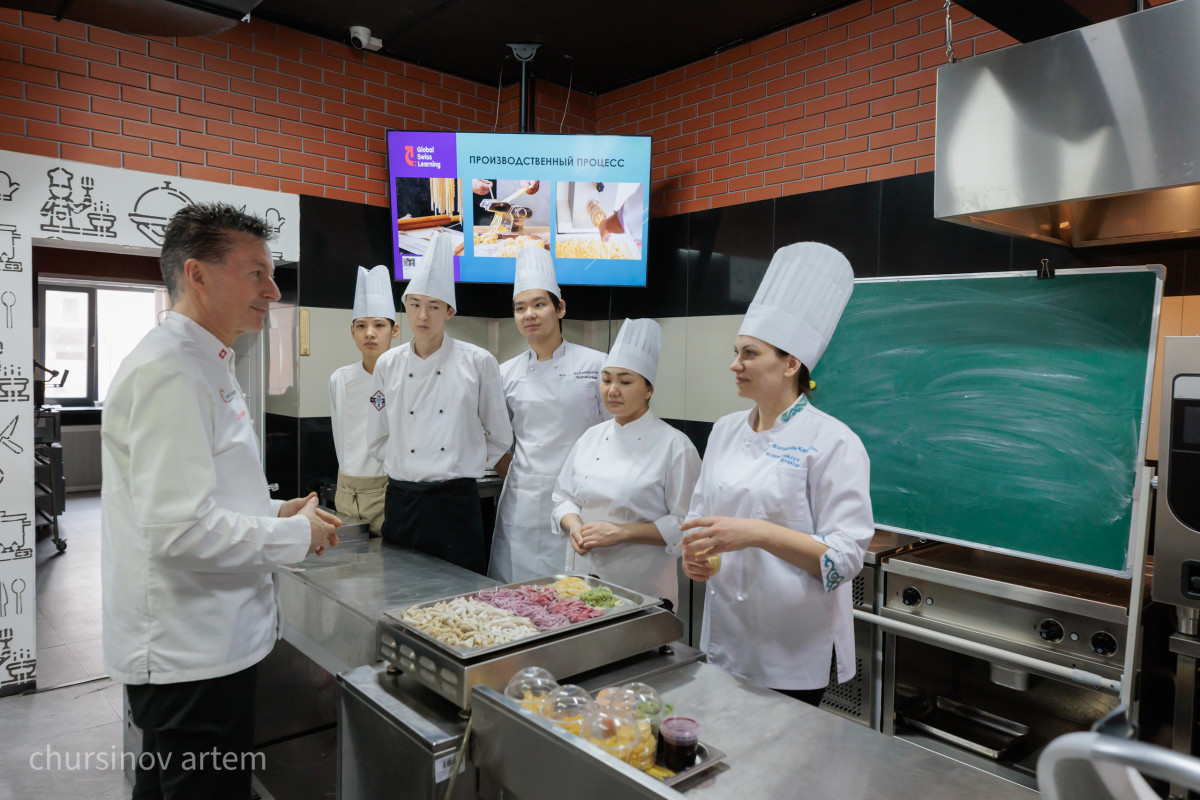
But motivation, he adds, needs support.
It has to be encouraged and sustained.
That, he believes, is one of the key outcomes of the initiative: not only to teach technical skills, but to demonstrate that vocational education can lead to meaningful careers.
The meaning of taste
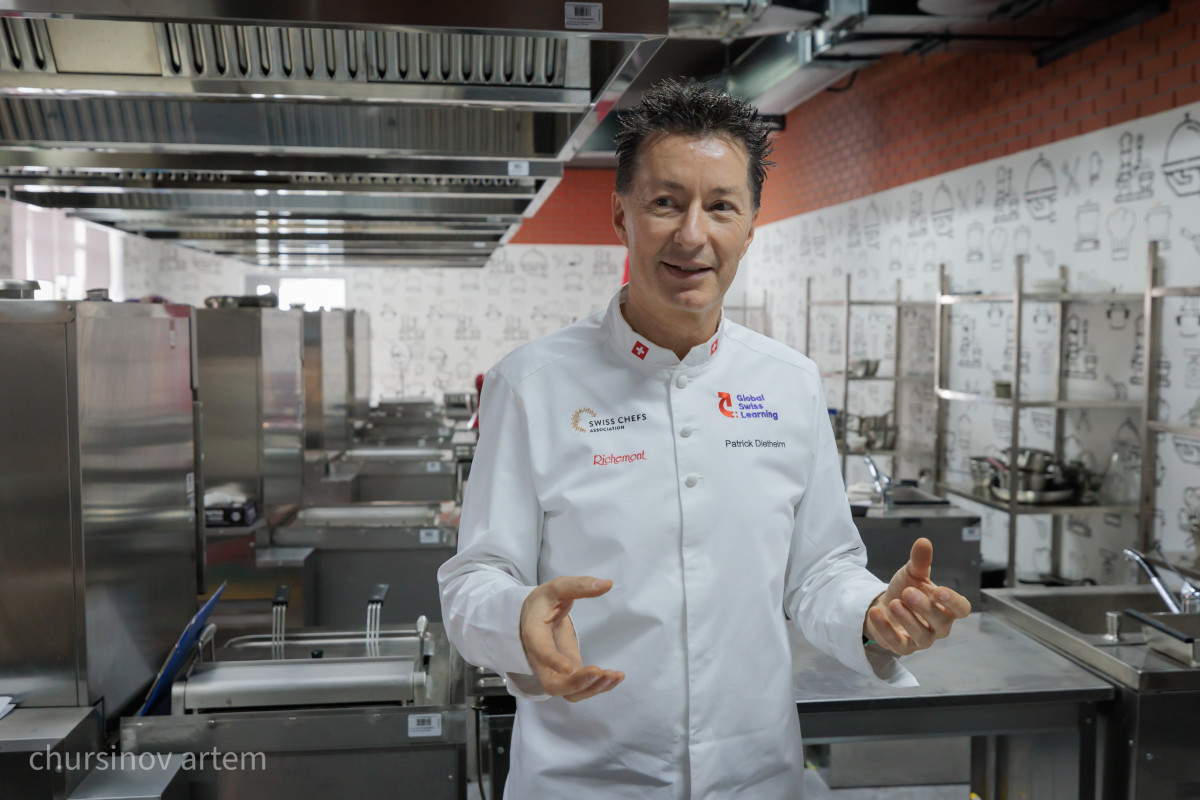
Diethelm approaches local cuisine with a sense of respect rather than authority.
Every culture has its own heritage and its own story.
For Diethelm, Kazakhstan’s culinary traditions are deeply intertwined with its history including its role along the Silk Road, where cultures, ingredients and ideas have long intersected. At the same time, he resists the notion that cuisine can be easily defined.
No one can truly explain how a culture tastes.
It is something that must be experienced - not only through food itself, but through the people who prepare it.
It’s not just about tasting. It’s about listening and understanding how chefs talk about their food.
Beyond technique

For Diethelm, cooking cannot be reduced to a set of technical skills.
Cooking is not only an art — it’s about conveying passion and emotion.
It is an approach that shapes both his work in the kitchen and his role as an educator. Cooking, in his view, engages all the senses and carries meaning beyond the plate.
No single signature
Diethelm won’t choose a favorite dish when asked.
I don’t have one. I see myself as a global traveler — wherever I am, I appreciate the local cuisine.
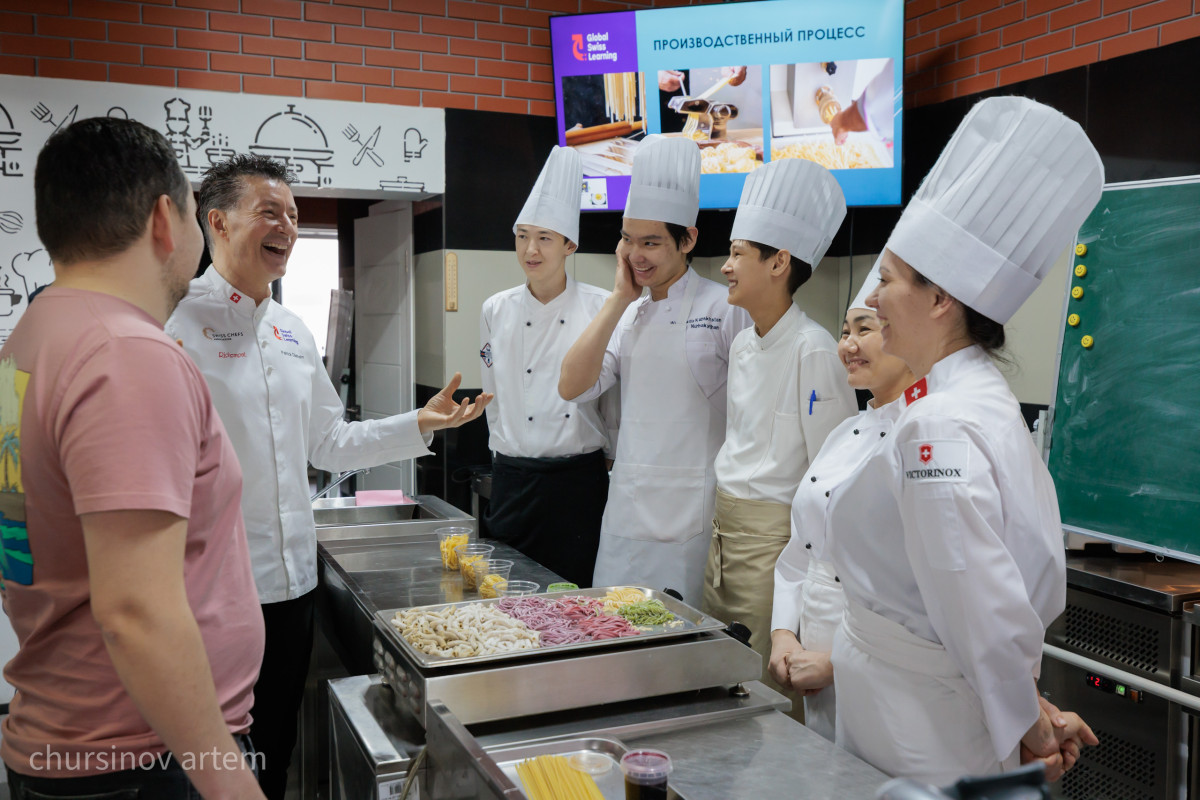
While he values the flavours of his childhood, he sees no reason to single out one dish above others.
To choose one would not be fair to the thousands of others.
It is a perspective that reflects his broader outlook: cuisine, for him, is not about personal branding or signature creations, but about respect — for ingredients, for tradition, and for the people who carry it forward.

El recommends 
