

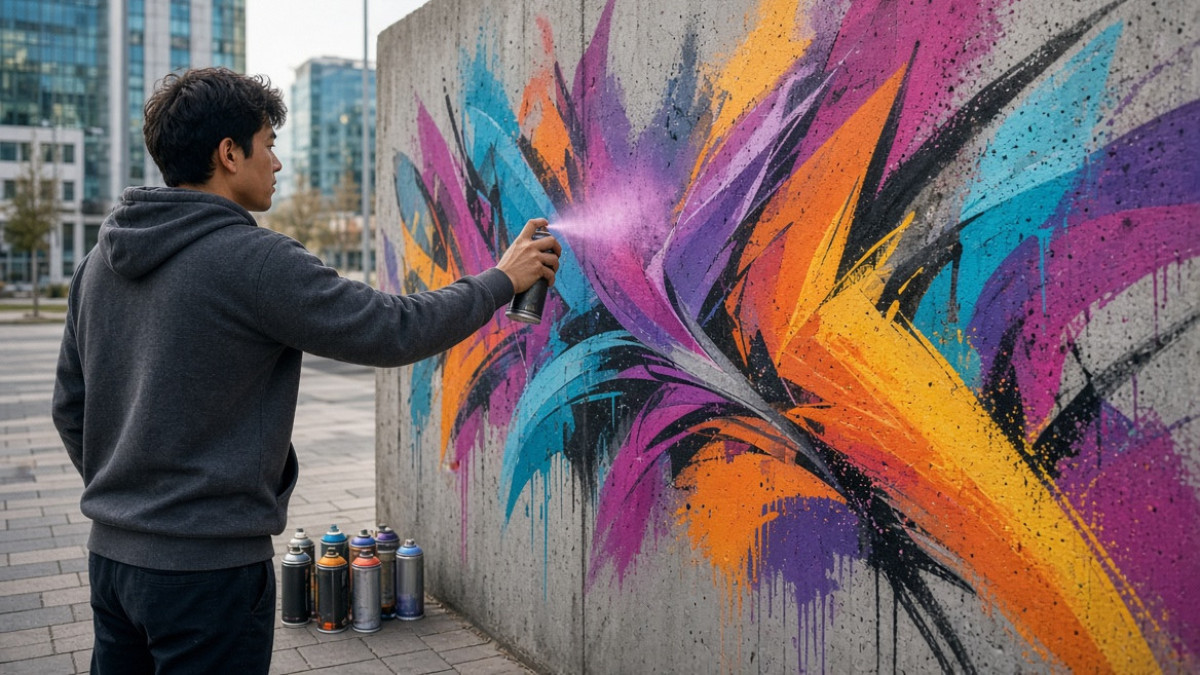
In Kazakhstan, a proposal has been put forward to strengthen measures against illegal graffiti while also establishing designated spaces for street art. The initiative was proposed by Mazhilis deputy Meirambay Kemalov, El.kz reports.
Low Detection Rate
Speaking at a meeting of the Mazhilis, Deputy Meirambay Kemalov said that damage to urban infrastructure remains a frequent problem despite tougher penalties. Under Article 434 of the Code of Administrative Offences, unauthorized graffiti is already punishable by administrative detention for a period of 20 to 30 days.
Meirambay Kemalov explained why fines and administrative detention have had limited effectiveness. Such drawings are usually made within a matter of minutes, predominantly at night, while perpetrators often wear masks and hoods. Offenders are rarely identified “in the immediate aftermath,” which contributes to a perception of impunity among vandals.
The second reason is the lack of designated places where street artists can legally create their work. In the absence of such spaces, some graffiti artists resort to painting on building facades, bus stops and underpasses simply because no legal alternative is available to them.
Zoning Map and Facial Recognition
One of the deputy’s key proposals is to create a “Vandalism-Prone Areas Map”, modeled on the existing map of criminal offences. The map would provide real-time information on areas where buildings, bus stops and other urban infrastructure are most frequently damaged.
In these areas, the authorities intend to strengthen patrols and install additional lighting and surveillance cameras. To identify offenders, Kemalov proposed integrating video analytics and facial recognition algorithms into existing systems, including Sergek.
Proposals to the Ministries
The deputy recommended that the Ministry of Education, the Ministry of Information and Culturestrengthen public awareness efforts among young people regarding the consequences of property damage.
He also recommended that the Ministry of Industry and Construction review standard rules governing the improvement and maintenance of urban areas in order to establish a regulatory framework for legal street art.
The Government, jointly with the Prosecutor General’s Office, has been asked to examine the possibility of introducing a comprehensive ban on the unauthorized application of images to building facades and other public places. The proposed prohibition is intended to prevent unauthorized graffiti from being created in the first place, rather than merely penalizing offenders after an image has already been applied.
Designated Walls and Rapid-Response Teams
Meirambay Kemalov proposed two corresponding measures for local executive bodies.
The first is to establish rapid-response teams responsible for promptly removing graffiti by repainting or restoring damaged property, so that acts of vandalism do not remain visible for weeks.
The second concerns legal street art. Akimats (local executive bodies) were recommended to designate specific sites and walls where artists could create artwork legally without facing the risk of administrative detention. The proposal is intended to distinguish between two categories of images that are currently, in formal legal terms, subject to the same provision.
