

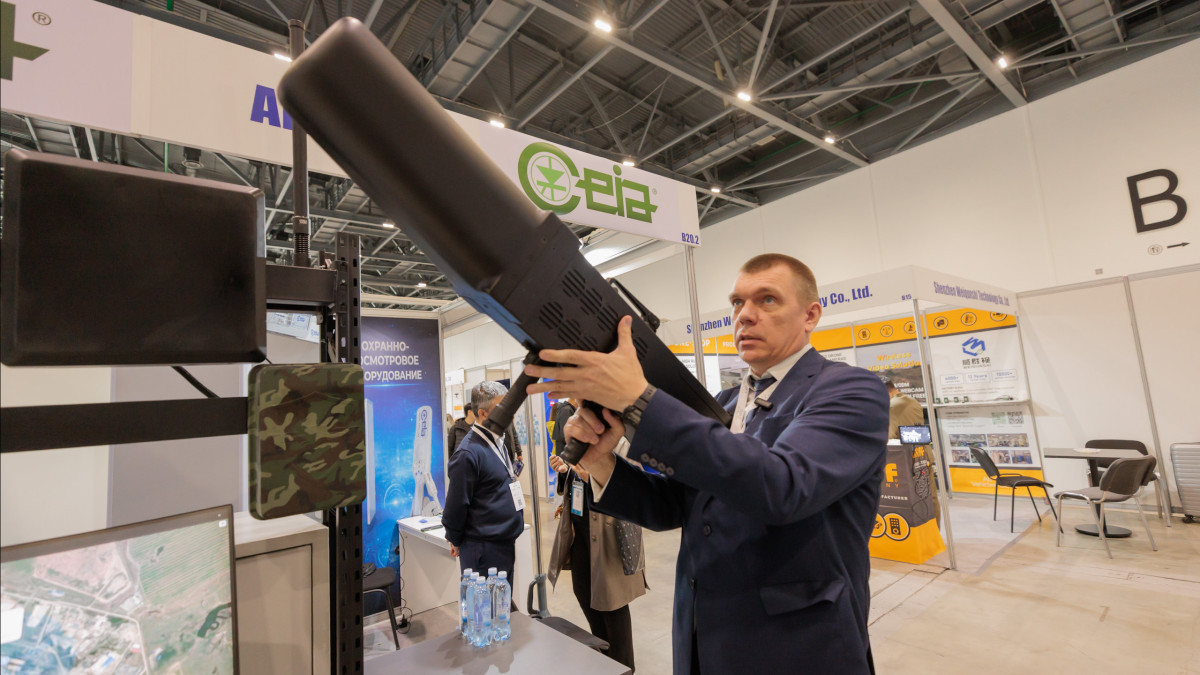
An exhibition dedicated to modern solutions in the field of security, including anti-drone protection was held in Astana, El.kz reports.
The exhibits demonstrated how rapidly the logic of security itself is changing. While facility protection was associated with physical perimeters, locks, gates, and guard posts, it is now being supplemented by digital systems, radio monitoring, automation, and remote control.
Threats can emerge not only at the gates but also in the air, in the radio frequency spectrum. Therefore, new solutions must detect risks in advance, transmit data to an operator, and facilitate rapid decision-making.
Anti-drone systems: spotting the threat before the drone does
The exhibition featured a stationary complex capable of detecting drones, tracking their movement, and deploying countermeasures. The company includes an operator workstation, signal detection equipment, countermeasures, and video cameras for target tracking. The operator can see the drone’s flight path, while the system saves incident logs. This is vital not only for an immediate response but also for subsequent analysis: determining when, from where, and how a flight attempt was recorded.
"We are not standing still. We started with a 'gun,' and now we have developed the stationary system presented here. We are also working on mobile systems for installation on armored vehicles. We are constantly adding new functions and new interfaces." the company's director, Evgeniy Lukashov explained.
The operating principle of the anti-drone system centers on monitoring the radio spectrum. Since most drones are controlled via radio channels, this signal allows the system to determine that a drone is approaching the facility. Upon detection, the system can switch to suppression mode. Depending on the drone's characteristics and operating mode, it may lose connection with the operator, perform a landing, return to its base, or change direction. This approach is particularly important for facilities where a chaotic crash must be avoided. In some cases, it is safer to lead the drone away rather than bring it down on the territory. To achieve this, additional functions are used, including coordinate spoofing.
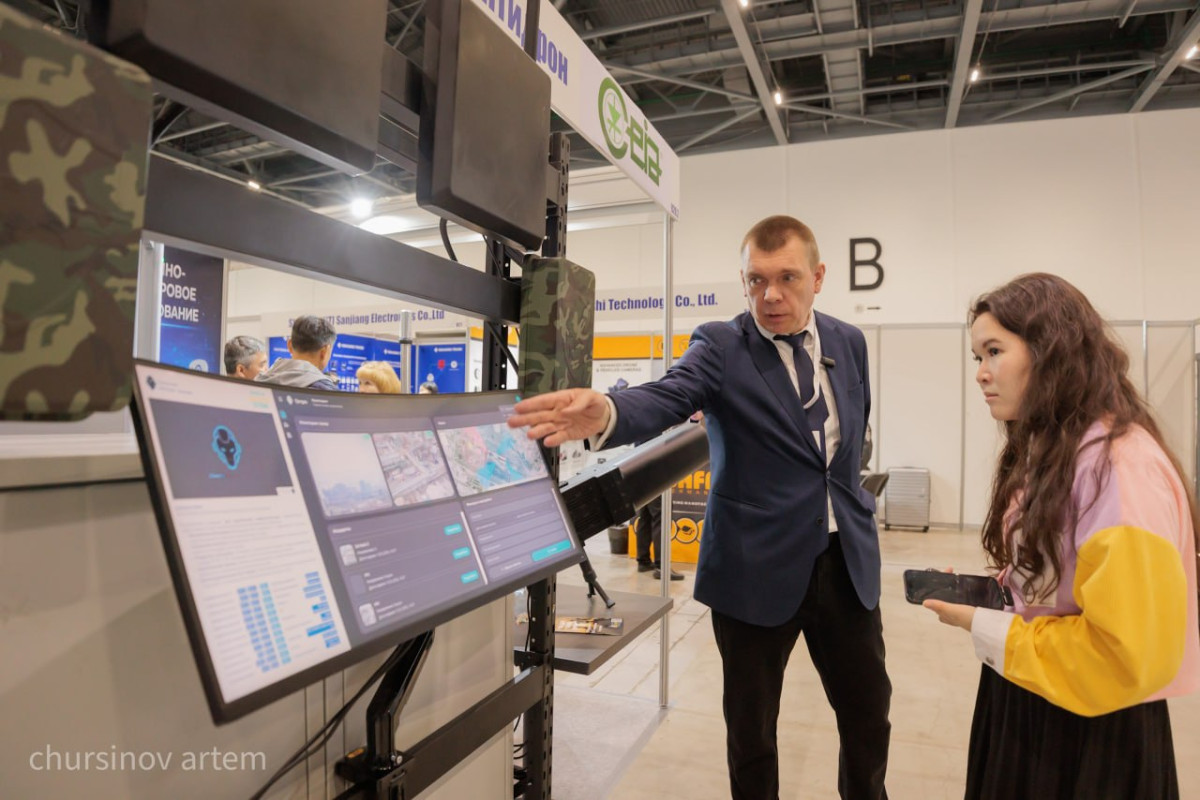
Photo: Artem Churssinov
The system features a drone detection function that scans the radio spectrum. Since the drone is radio-controlled, the system recognizes an incoming threat and automatically decides whether to initiate jamming.
Developers point out that the system is primarily designed for radio-controlled UAVs, which currently constitute the bulk of threats. For more complex devices, additional modules may be required, such as interceptor drones, or laser and electromagnetic solutions. In other words, anti-drone protection is gradually evolving from a single device into a full toolkit for various scenarios.
"The size of the drone doesn't matter. The main principle is the control: if it’s a radio-controlled drone, the system jams it. If the drone is not radio-controlled, it must be equipped with other modules."
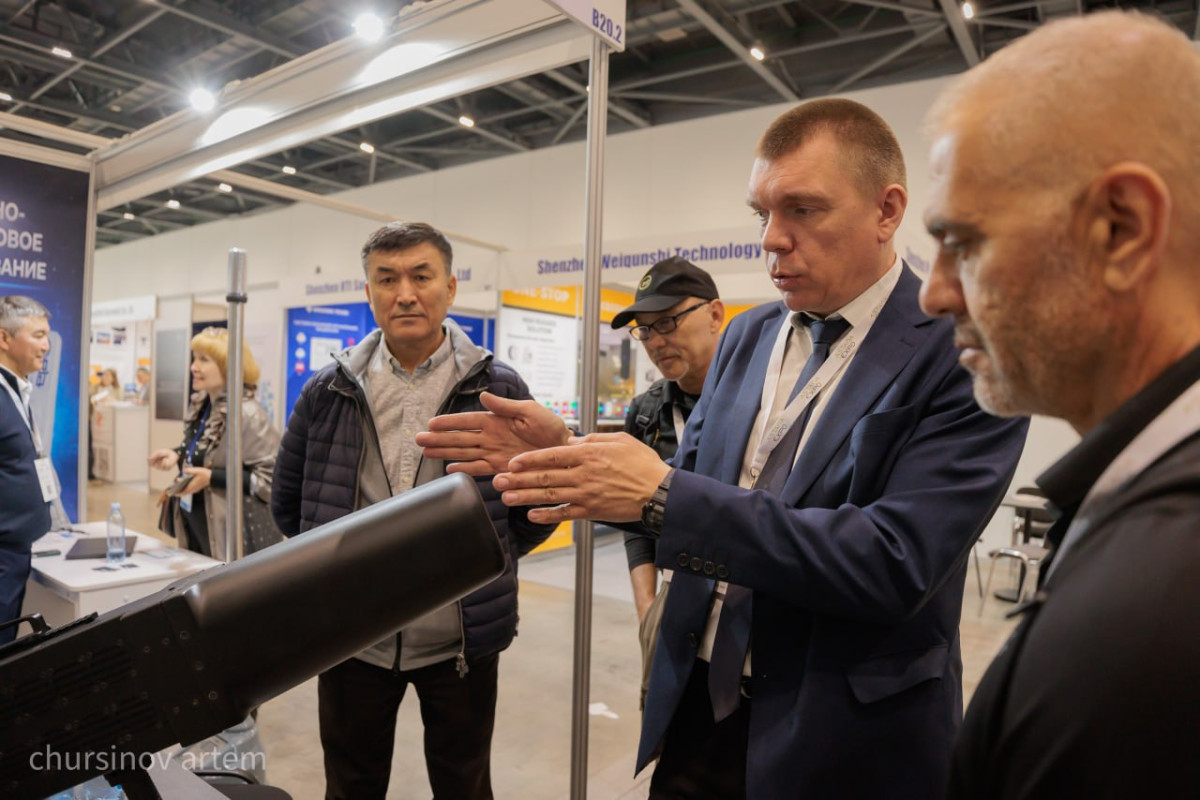
An anti-drone gun was also presented at the stand. Unlike the stationary system, it works directionally: an operator manually aims the device at the drone and activates the signal suppression. This solution is ideal for situations requiring mobility and quick response. A company representative emphasized that the equipment was tested in various climates, including extreme cold, heat, and near water.
"This is our pride. It is extremely durable. It has been tested in conditions ranging from minus 50 to plus 50 degrees Celsius. We’ve tested it in the desert and at sea."
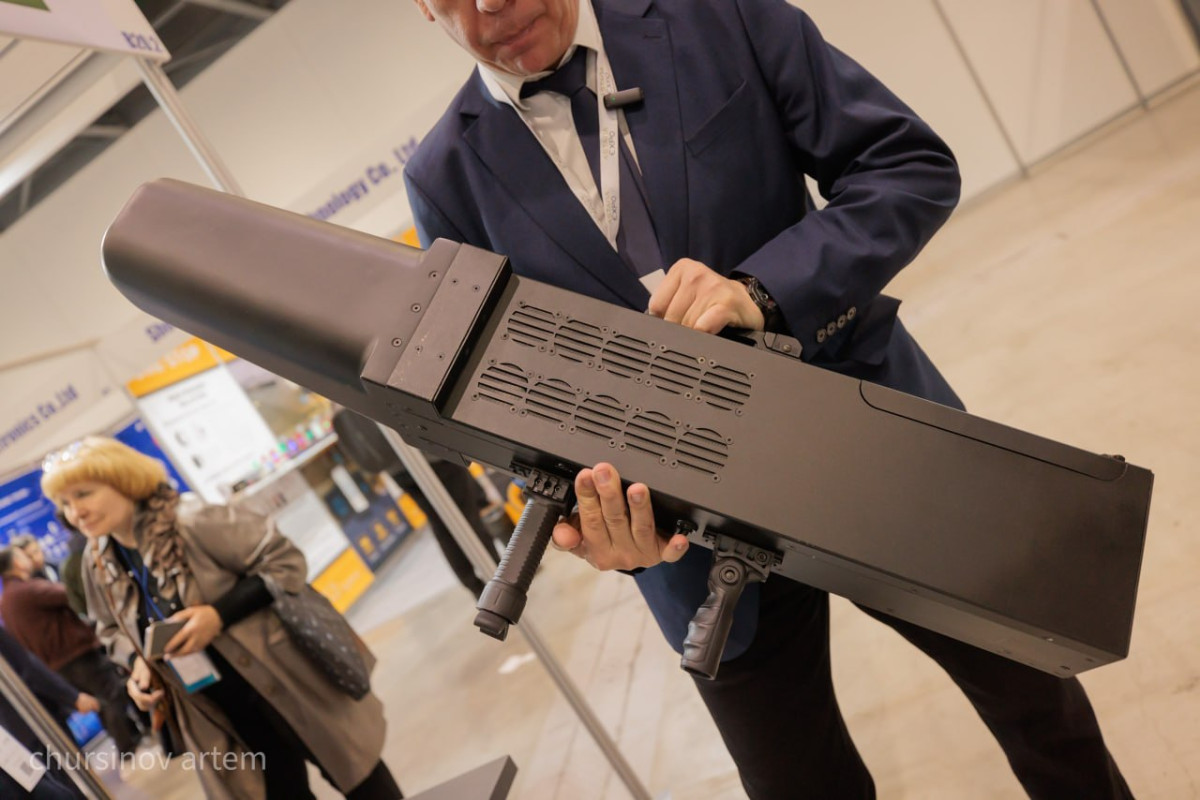
One of the advantages of the anti-drone gun is its signal range and power. While it is heavier than some foreign counterparts, the developers explain this as a result of higher efficiency. For security systems, especially at strategic or guarded sites, the weight of the equipment is often secondary to its reliability and range.
"Better that it’s heavy but effective. Our range is up to 3 kilometers."
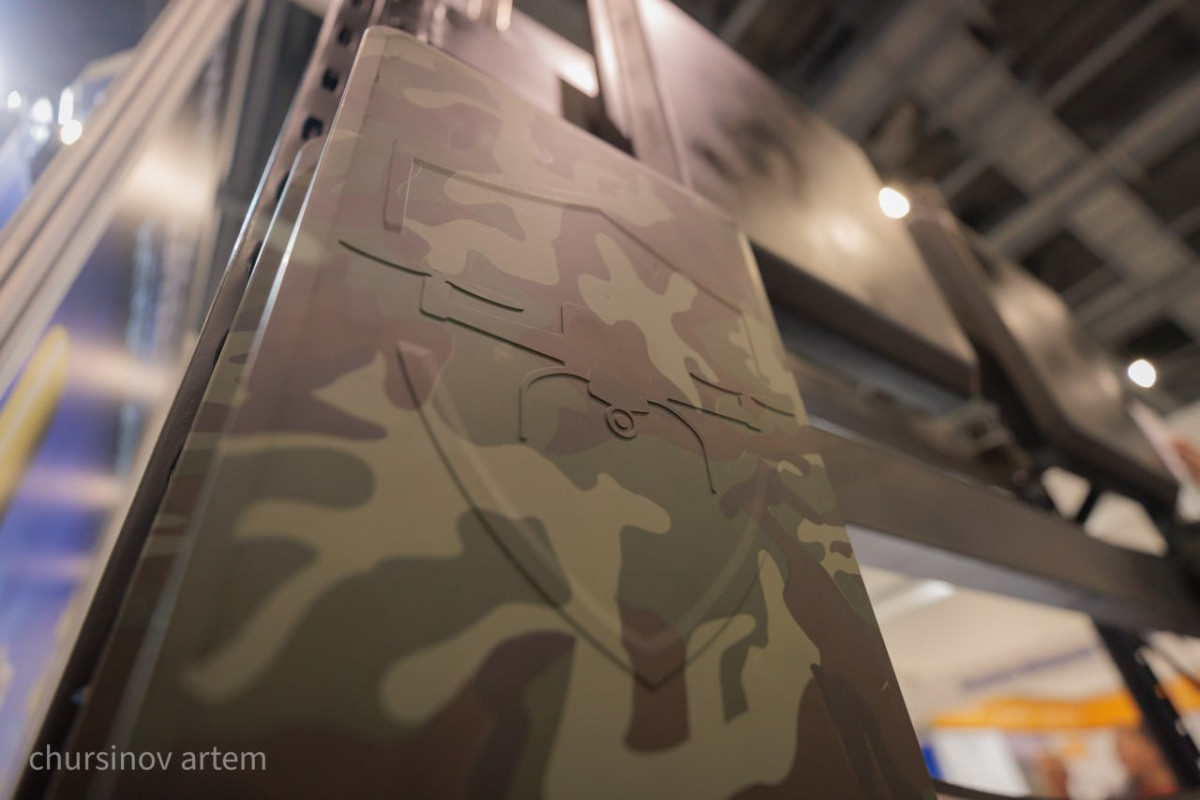
Access control
Another area presented at the exhibition included automated wickets, gates, locks, and hardware. At first glance, a gate or a wicket might seem like a standard element of a perimeter. However, modern solutions are no longer limited to mechanical locks. They integrate remote control, code panels, Bluetooth sensors, intercoms, electromechanical locks, and door closers. Such a system can be part of a "smart home," an industrial site, a residential complex, or a restricted area.
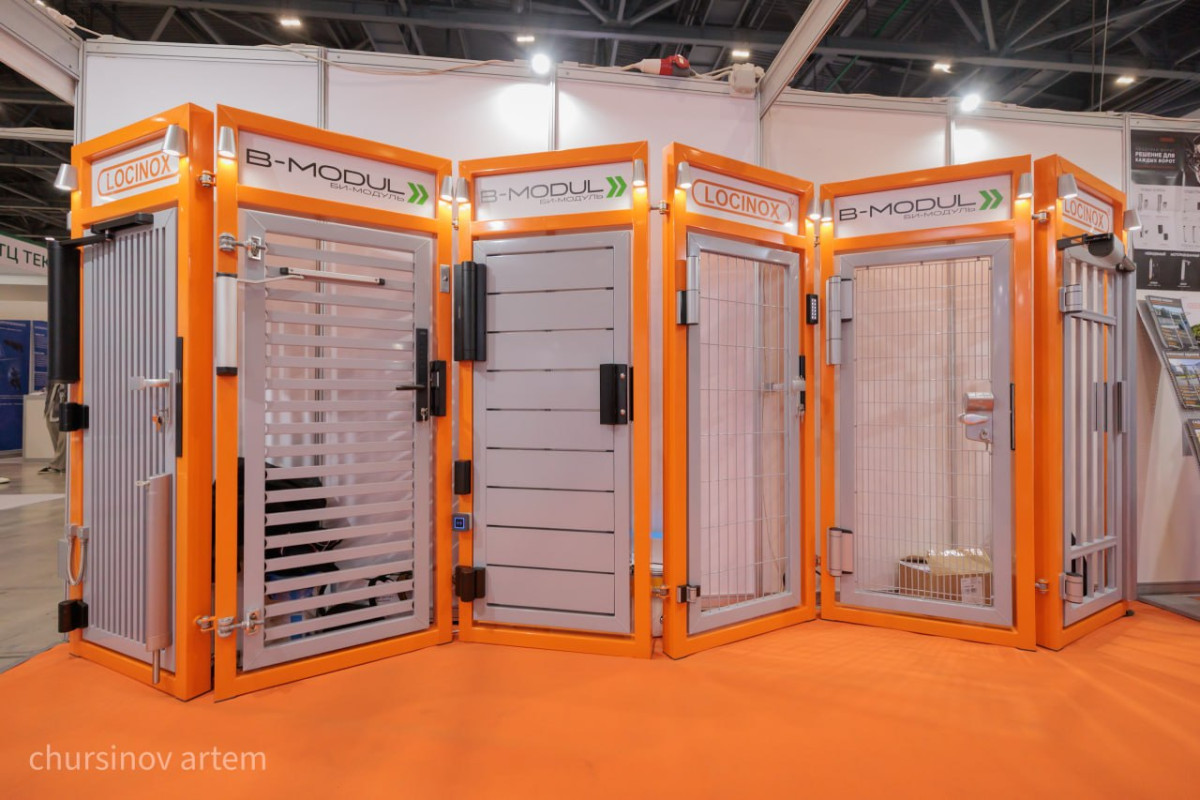
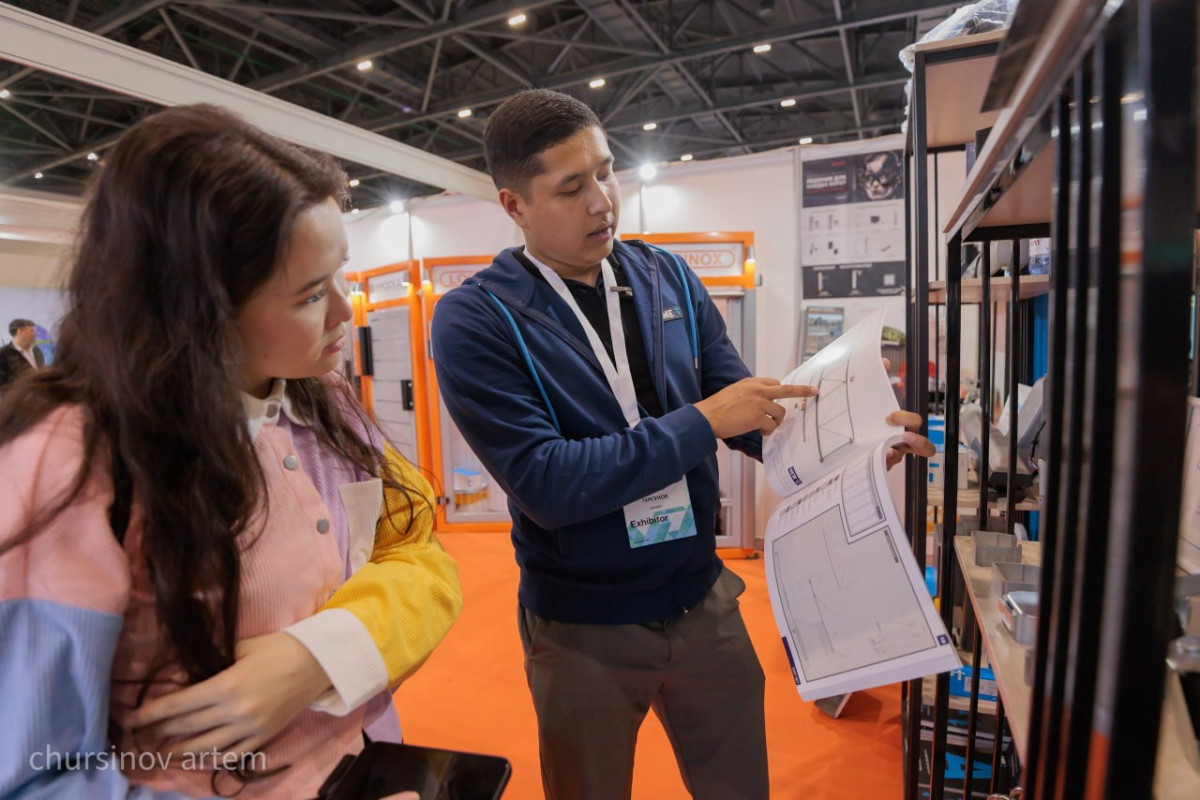
One of the featured wickets can be opened via smartphone. The user can manage access remotely, and the leaf movement parameters are pre-configured. One can set the opening and closing speed, the angle of movement, and the duration the gate remains open. Shakhmir Tursunov, a representative of the development company, explained:
"It opens remotely from a phone. It has settings for opening/closing speed, the angle, and how long it stays open. You can adjust it so that once you enter, it closes immediately behind you."
Special attention is paid to the safety of the wicket's movement. An automated leaf must not injure a person or an animal. Therefore, the drive responds to obstacles and reverses direction. This is especially important for areas with children, the elderly, people with disabilities, or pets.
Such details show that modern access systems must be not only reliable but also "sensitive" to the everyday environment. Security here is understood more broadly: it is not just protection against intrusion, but also the reduction of injury risks during normal use.
The exhibition also featured a dedicated block for locks and hardware. The mechanical and electromechanical solutions presented are designed for outdoor use. This is particularly relevant for Kazakhstan, as the equipment must function in extreme cold, heat, precipitation, temperature fluctuations, and under constant load. Manufacturers focus on aluminum, hot-dip galvanization, and structural elements that make tampering difficult. For example, some locks use a hook-shaped deadbolt, making manipulation much harder for intruders.
"The locks are unique because the deadbolt length is adjustable. Also, our "night" bolt is hook-shaped. This makes it much more difficult for intruders to manipulate the lock."
Code panels were another important element. They can be used alongside intercoms, cards, Face ID, or other access control systems. In these solutions, physical durability is as important as electronic functionality: buttons, housing, weather protection, backlighting, and the option for heating at low temperatures are all key factors.
For facilities with high foot traffic, these panels allow for flexible access management. Some users can open the gate via a code, while others use an intercom, card, or phone. This is convenient for residential complexes, warehouses, office areas, and industrial zones.
"The code panel is made of aluminum on the outside and powder-coated in ampolymer chamber. The buttons are galvanized, meaning the numbers will not wear off."
Systems for sliding gates were also showcased. In space-constrained environments, telescopic solutions are in high demand: they allow gates to open across a shorter length than classic designs. This is useful for narrow streets or industrial sites where there is no room for a full rollback.
"When a driveway is 8 meters wide, a traditional gate with a counterweight needs 12-13 meters to retract. With our telescopic beam system, it collapses by 60-70 %, requiring only 6-7 meters for the gate to roll back."
According to the company representative, demand for such solutions is growing in Kazakhstan, driven by both private construction and increased security requirements for facilities.
Chemical protection: equipment for the danger zone
The third direction of the exhibition focused on individual protection in chemical, radiation, or other hazardous environments. The company presented disposable protective suits, Type A hermetic suits, breathing apparatus, and radiation and chemical monitoring devices. These solutions are intended for emergencies rather than daily use.
In the event of an accident, leak, or contamination, specialists must be fully protected. According to company representative Vitaliy Bondarenko, the quality of the suit, its airtightness, the air supply, and the accuracy of the instruments determine not only the success of the mission but the life of the specialist.
"We are presenting products from a French company here. These are disposable protective suits designed to protect against chemical warfare agents and hazardous chemicals."
The exhibition displayed suits both unfolded and in their packaging. This format is crucial for services that store equipment until an emergency occurs. A protective suit must maintain its properties over time, be quickly deployable, and be used when the active response phase begins. After use, disposable suits are discarded, reducing the risk of re-contact with hazardous substances.
"These are modern models with EU certificates and the latest materials. They have a shelf life of 15 years in their packaging. You don't need to wear them every day. During an active phase, you take it, put it on, use it, and discard it immediately."
In addition to suits, the company presented equipment for dosimetric, radiation, and chemical monitoring. These devices can be integrated with robots and drones, allowing technology to be sent where it is too dangerous for humans while transmitting data back to an operator. Integration with mapping software makes this system particularly useful for emergency services, as data can be mapped to define the boundaries of a danger zone in real-time.
A breathing apparatus was also showcased, designed for work in difficult conditions, including confined spaces. A protective housing prevents the cylinders from damage, and the presence of multiple cylinders increases a specialist's autonomous working time.
Representatives of the company emphasized that human safety must be the priority. In a danger zone, equipment cannot be a mere formality; it must provide real protection and allow the specialist to perform their job without a threat to their life.
Security becomes comprehensive
The Astana Security Expo demonstrated that modern security systems are developing in several directions simultaneously. Anti-drone complexes address threats from the air. Automated gates and wickets protect the perimeter and make access more manageable. Chemical protection tools help specialists work in environments that would otherwise be inaccessible. While these solutions serve different purposes, they are united by a common principle: modern security must be fast, high-tech, and adapted to real-world conditions. It begins with threat detection, continues with access management, and concludes with the protection of the individuals on the front lines.
