AI vs. drought and loss: How technology is reshaping Kazakhstan's agro-sector

EL.KZ Информационно-познавательный портал
Artificial intelligence is increasingly becoming a practical tool for Kazakh agriculture, El.kz reports.
AI enters the field
Kazakhstan's agro-industrial complex is undergoing one of its most significant transformations in decades. Where decisions were once based on experience and weather signs, agricultural producers are increasingly using data and algorithms. Artificial intelligence is gradually being integrated into daily processes, changing the core of farming. According to the Ministry of Agriculture, 648 agricultural producers are already using digital solutions.
From navigation to crop management
Digitalization in crop production began with GPS navigation and basic machinery control. Today, these tools are supplemented by intelligent platforms that analyze soil conditions, moisture, crop development, and weather scenarios. Decisions are made not after the harvest, but during the season.
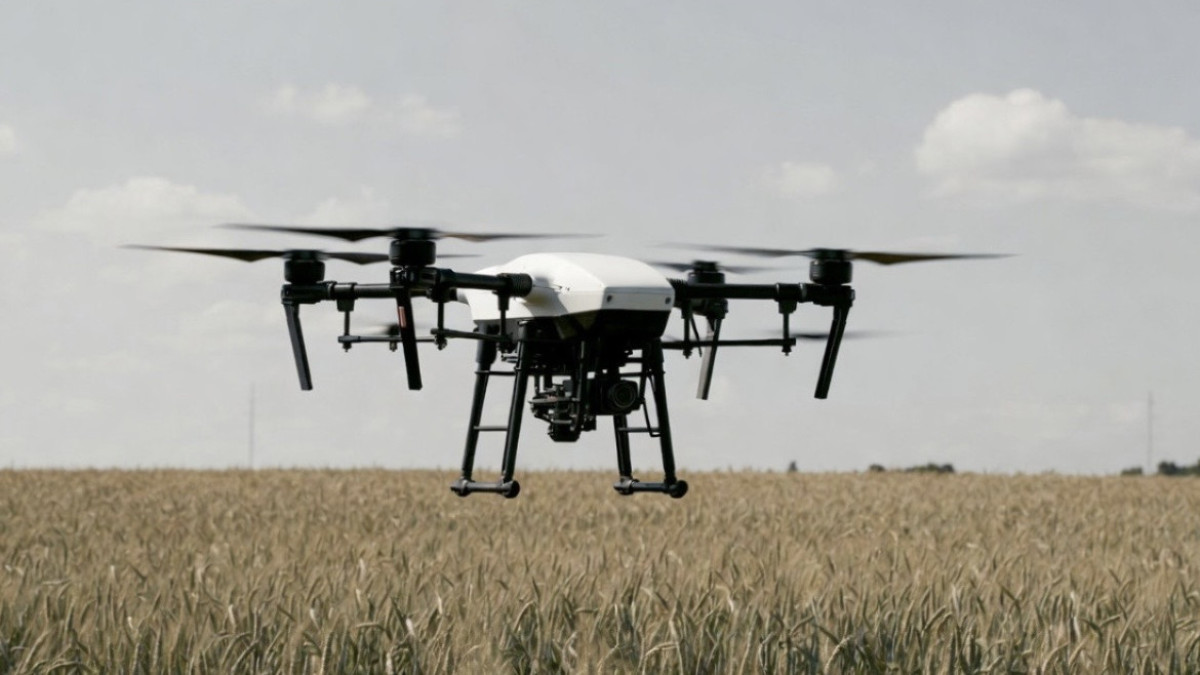
The use of sensors and drones allows for the optimization of fertilizer and pesticide application, reducing waste and loss. In a number of farms, precision agriculture is already increasing crop yields without expanding sown areas, which is particularly critical in arid climates.
Algorithms in livestock farming
On modern dairy farms, digital systems manage feeding, microclimates, and animal health monitoring. Today, 104 such farms operate in Kazakhstan, where data is continuously collected and analyzed.
IoT systems allow for the detection of deviations in livestock behavior and health at early stages, reducing the risks of disease and loss. For farms, this means not only increased productivity but also more stable product quality, which directly impacts export potential.
Land under satellite control
One of the most notable effects of AI implementation is satellite land monitoring. Analyzing imagery using intelligent algorithms makes it possible to identify unused or inefficiently utilized plots. In the North Kazakhstan region, 9,000 hectares that had previously fallen out of agricultural use were discovered this way.
Unified digital map of land resources
This data serves as the foundation for a unified digital map of land resources, which integrates cadastral information, yield rates, and long-term observations. This provides both the government and the private sector with a single framework for decision-making.
The state makes AI as a systemic tool
The digitalization of the agricultural sector is firmly embedded in state policy. Kassym-Jomart Tokayev has emphasized that satellite monitoring and data analysis have already proven their effectiveness, and further development is impossible without a unified digital infrastructure.
However, the challenge of bridging the gap between science and practice remains. Today, only 17 % of agricultural developments reach actual practical application, which limits the growth of productivity and the industry’s competitiveness.
AI as part of state support
Artificial intelligence is gradually entering administrative processes. In the agricultural sector, 93 state services are provided, 98 % of which are available online. In a single year, farmers utilized over 2.6 mln electronic services.
AI agents are already being used for the automatic verification of subsidies and applications, reducing the rate of rejections caused by document errors. This minimizes bureaucratic delays and makes the state support system more transparent.
Agrodrones are becoming standard
Globally, agrodrones are used in more than 100 countries and have already treated over 500 mln hectares. Precise spraying has saved hundreds of millions of tons of water and significantly reduced emissions.
Kazakhstan is actively developing local production of agrodrones and service infrastructure. Demonstration centers are being established, and local assembly is being organized, which reduces dependence on imports and makes the technology more affordable for farmers.
AI against locusts and climate risks
A separate focus area is the fight against pests and climate threats. Drones and analytical systems allow for the rapid identification of locust outbreaks and the prediction of their movement. This season, over 2 mln hectares of land are under monitoring.
These technologies form the basis of an early response system, especially in conditions of dry springs and unstable weather. Yield and risk forecasting allows farmers to adjust their plans before losses become irreversible.
People for digital farms
The development of AI in agriculture requires new competencies. Regions are beginning to train agrodrone operators and agro-data specialists, forming a new model of rural employment. Training is already being introduced in specialized colleges, where technology is becoming part of the core curriculum. This is reshaping the perception of the agro-industrial sector, making it more attractive to young people and specialists with technical backgrounds.

El recommends 
