

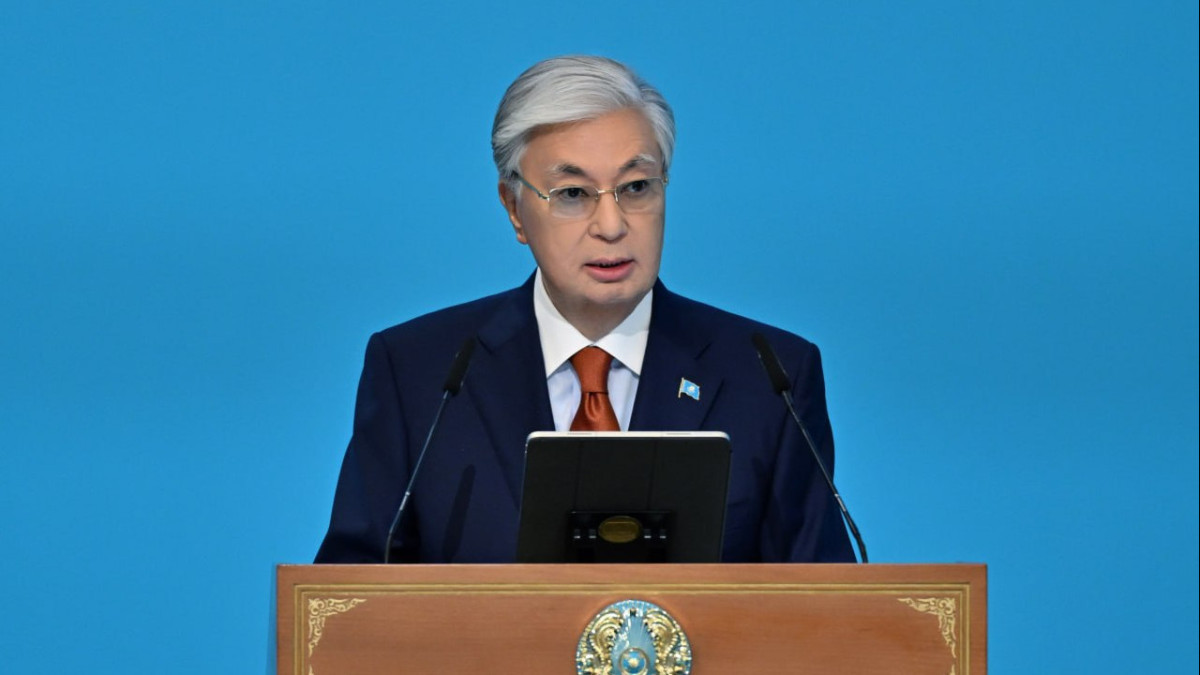
Seven years have passed since Kassym-Jomart Tokayev assumed the office of President of Kazakhstan. During this period, Kazakhstan’s economy has undergone significant changes, El.kz reports.
GDP growth
GDP per capita in the national currency has more than doubled. In the first quarter of 2019, the indicator stood at 715.5 thousand tenge, while in the first quarter of 2026 it reached 1.6616 million tenge.
Thus, nominal growth amounted to 2.3 times.
A positive trend is also observed when GDP per capita is measured in US dollars. Over the seven-year period, the indicator increased from USD 2,005.1 to USD 3,338.3, or approximately 1.7 times.
International reserves
At the same time, Kazakhstan reduced its net external debt. In the first quarter of 2019, it stood at USD 51 billion, while by the first quarter of 2026 it had declined to USD 35.1 billion. The decrease amounted to nearly USD 16 billion, or approximately 31%.
The country’s gross international reserves increased significantly. Over the period under review, they rose from USD 27 billion to USD 66.8 billion, representing an increase of almost 2.5 times.
International reserves are used to safeguard the country’s financial stability, meet external obligations, and mitigate risks during periods of economic shocks.
Gold
The volume of monetary gold held as part of the country’s international reserves increased particularly significantly. In the first quarter of 2019, its value was estimated at USD 15 billion. By the first quarter of 2026, the figure had reached nearly USD 51.8 billion.
Thus, the value of monetary gold increased by approximately 3.45 times.
Pensions
Changes have also taken place in the social sector. The minimum pension increased from 36,108 tenge in 2019 to 69,049 tenge in 2026.
Thus, the minimum pension increased by almost 1.9 times.
